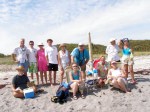
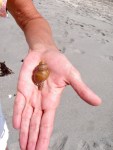
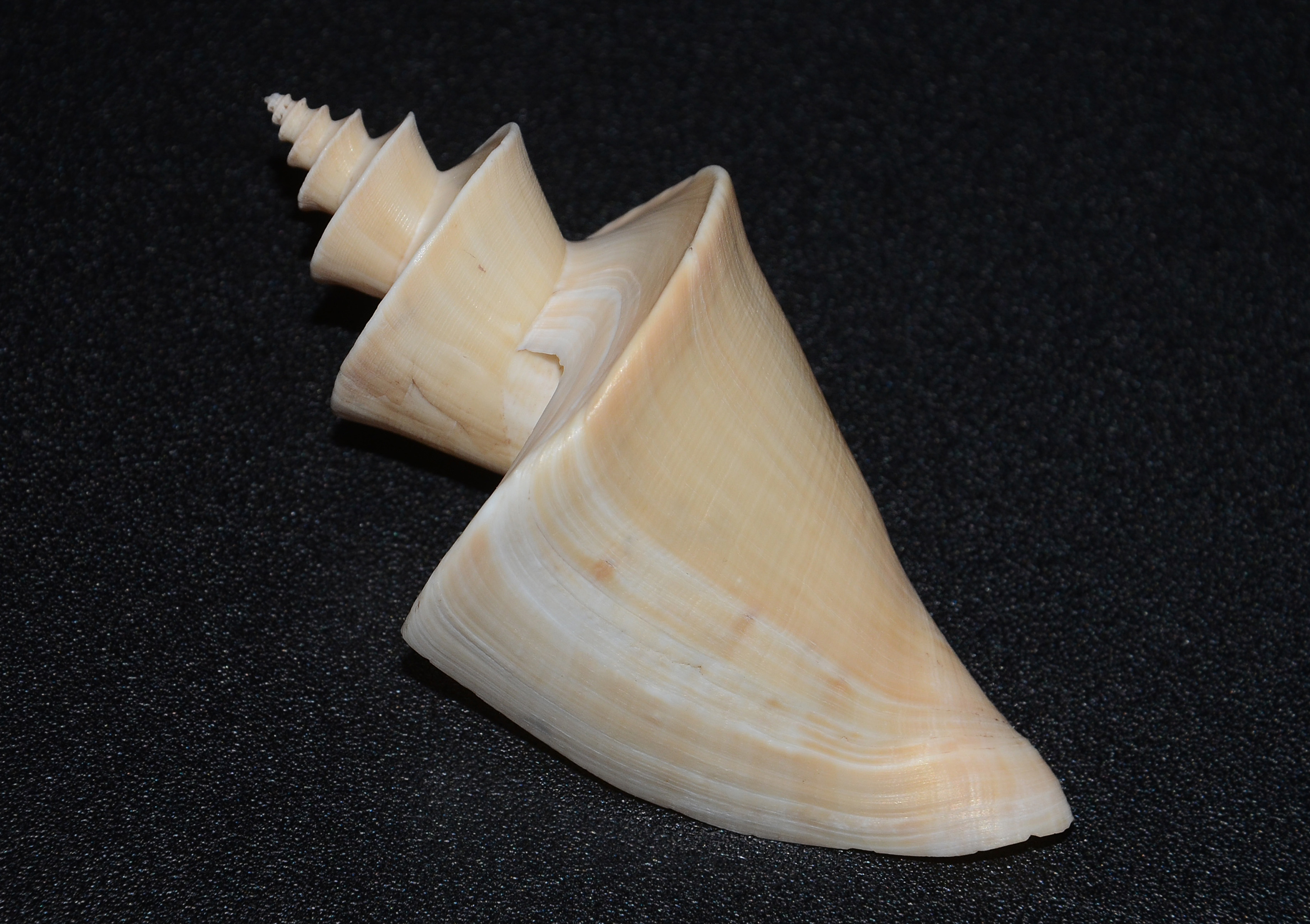
There were 15 of us who went on the field trip to Blowing Rocks Preserve. Our club were the only people on the beach for most of the morning. It was fun shelling with other knowledgeable shell collectors. Everyone seems to find great shells along the 1.5 mile beach. Heather even found a shell not native to our area that must have fallen off a passing ship!
New Posts
NOAA CORAL REEF CONSERVATION LOOKING FOR SUPPORT STAFF
The NOAA Coral Reef Conservation Program is hiring five (5) Regional Management Support staff for one-year positions in American Samoa, Florida, Guam, the Commonwealth of the Northern Mariana Islands, and Puerto Rico. While these are not fellowship appointments, the work assignment for these positions might be of interest to those looking for opportunities to work in coral reef areas. Each position has a different set of responsibilities, though all relate to coral reef conservation.
The hiring process is being handled by a contracting company; all questions related to the positions, recruitment and timeline should be directed to them. These positions are listed at: http://www.oakmgmt.com/careers.html
The recruitment process is open now and closes October 24, 2011, with work to begin January 2012. Any questions regarding the recruitment process, salary, benefits, timeline, etc, should be sent directly to the company identified in the link above who is handling this process – their contact information, detailed job descriptions (listed as NOAA NOS) and application procedures are outlined there.
BLOWING ROCKS PRESERVE FIELD TRIP
BLOWING ROCKS PRESERVE – October 15th, 2011, starting at 9:00 AM
The park is located at 574 South Beach Road in Hobe Sound. The phone number for the park is 561-843-3793. The cost is $2.00 per person at the gate (cash only). Please call Doug Fisher at 561-843-3793 to let him know if you are attending. You can also go online for more information to: www.nature.org/ourinitiatives/…/blowing-rocks-preserve.xml
Plan on bringing your own picnic lunch and plenty of water and sunscreen. There is good snorkling but NO LIVE SHELL COLLECTING – dead shells only. Drive time from Pompano is about 1hour, 20 minutes.
Coming from the south using I-95: go north on I-95, take Jupiter exit 87A (Indiantown Road), continue east on Indiantown Road to US 1. Turn north (left) on US 1 to Jupiter inlet. Immediately after crossing the bridge turn right on S. Beach Road (CR707). Drive 2 miles and look for preserve sign on right. Parking is ½ mile ahead (both sides of road)
OCTOBER PROGRAM
The Program Title is “Secrets of the Lake Worth Lagoon“. Carole Marshall has been studying mollusks for 45 years. She has given many shell programs throughout this time to Conchologists of America, American Malacologists Society, Texas and Clearwater Shellers’ Jamborees and many shell clubs throughout the United States. Most recently she has given this program at the Green Cay Nature Center and the Pratt Whitney Retirees Group.
As a docent at the John F. Kennedy Cold War Museum on Peanut Island Florida, she spent her spare time combing the beaches and was encouraged to study the Peanut Island Mollusks. She is presently writing a book on the Seashells of Peanut Island. As another docent, she got to know the rich history of Peanut Island and the Lake Worth Lagoon, along with the flora and fauna and she will share it with you.
Carole is a past president and program chairman of both the Broward Shell Club and the now defunct Palm Beach County Shell Club. She was also president of the Treasure Coast Shell Club. Her most lasting accomplishment was testifying before the Fish and Wildlife Conservation department at many committee hearings. There was a movement to abolish shell collecting in Manatee County and through her efforts she rallied several other shell clubs to testify on behalf of shell collecting. Shelling is still allowed in that county. She also testified on behalf of shell collectors during the NOAA hearings during the Florida Keys Sanctuary hearings traveling to Silver Springs Maryland and Marathon, Florida to testify.
SHELL OF THE MONTH SEPTEMBER 2011
JERSEY CAPE SHELL SHOW
The Jersey Cape Shell Club will have its 37th annual shell show August 19-21 at The Wetlands Institute in Stone Harbor, New Jersey, and everyone is welcome to participate/attend. It will be held at The Academy of Natural Sciences in Philadelphia, Scientific and artistic entries are welcome
While I am it, my other home club, The Philadelphia Shell Club, will be having their show at an earlier date this year, October 1 and 2. For more information; www.phillyshellclub.org.
I am looking forward to seeing many of you during the Shell Show Season.
Sue Hobbs
Cape May, NJ
SHELL OF THE MONTH AUGUST 2011

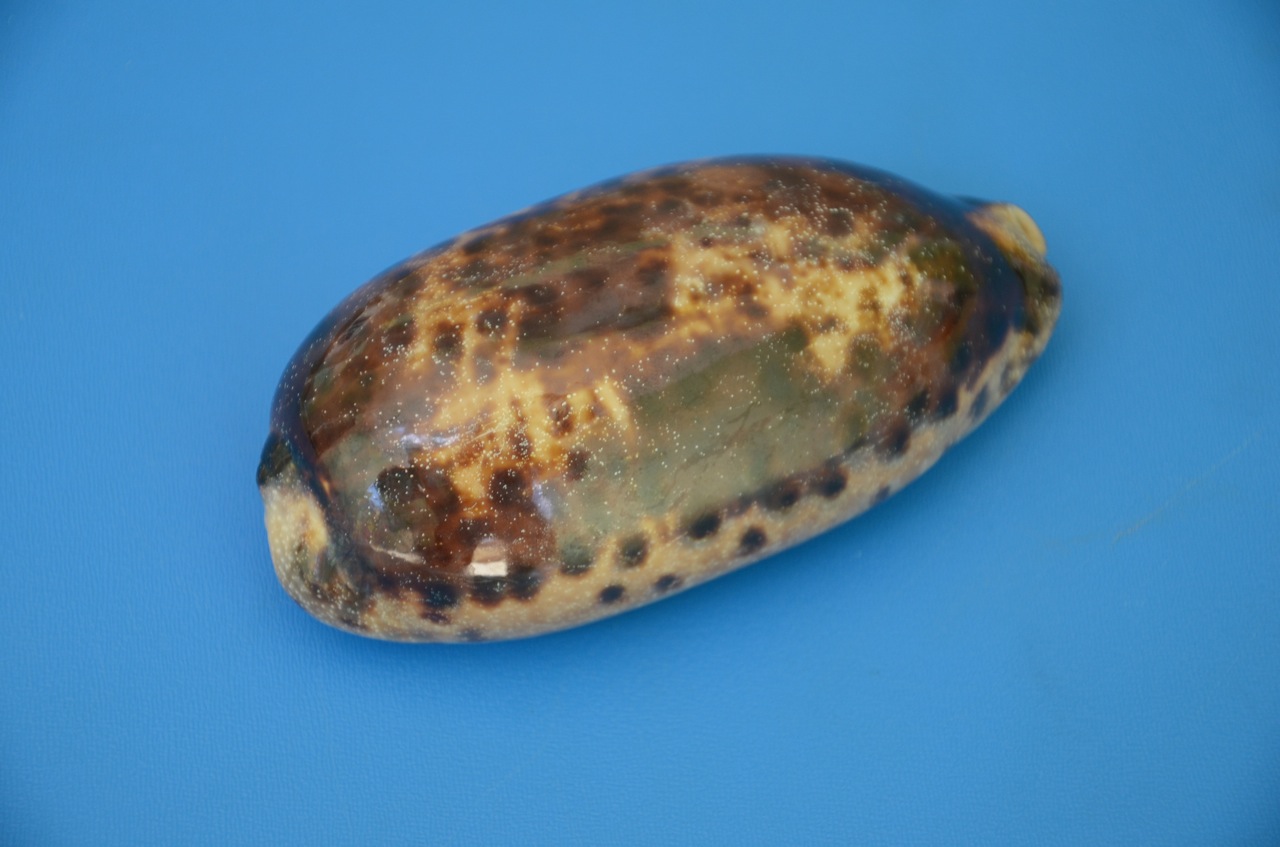
Cypraea testudinaria, Linne 1758 – the Tortoise Cowrie. It’s amazing how many shells Linnaeus classified, even more amazing that so many names remain valid today. Cypraea testudinaria is instantly recognizable. It is impossible to confuse with any other cypraea. Its shape, sizing and coloring is distinct. It is a heavy massive shell that grows up to 5″ in length. Cypraea testudinaria is cylindrical in shape, brownish in color, big irregular spots around the margins and a pattern of dark brown blotches that extend across the dorsum. It also has white flecks imbedded in the nacre making it look as if covered with dandruff. The white flecks seem to be a mystery, there doesn’t appear to be a published explanation. Outside of size, there is little variation, the pattern is rather consistent from one specimen to the next though some have larger dark area than others. The base seems to have more variation than the dorsum, ranging from light grey to almost pink to tan through shades of brown. Cypraea testudinaria is widespread across the tropical Indo-Pacific, however it is relatively uncommon. Like most cypraea it is a reef dweller. Our specimen was found exposed at night on reef rubble off Samar Island, Philippines in 2006. It is darker than average in color, fully mature and over 4″ in size. Donated by Richard Kent
SHELL OF THE MONTH JULY 2011
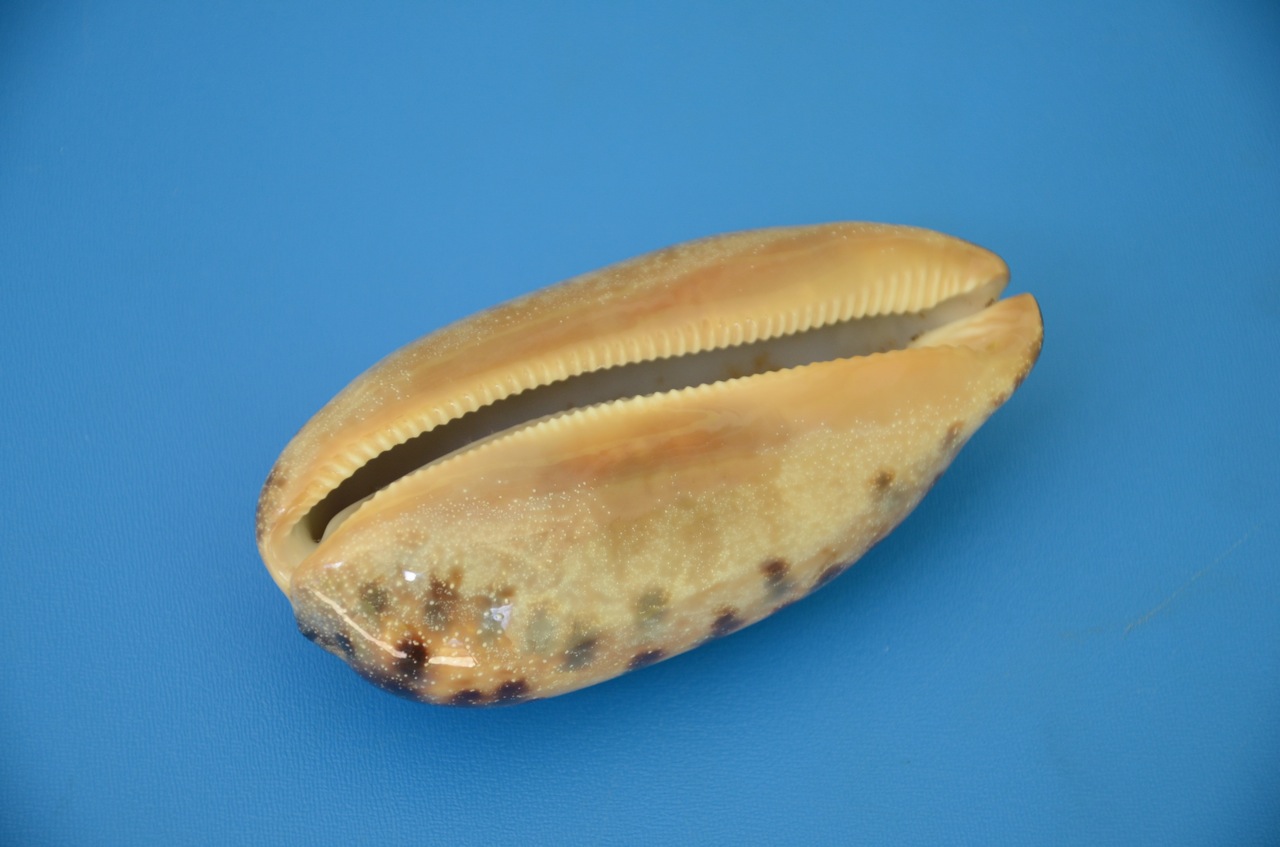
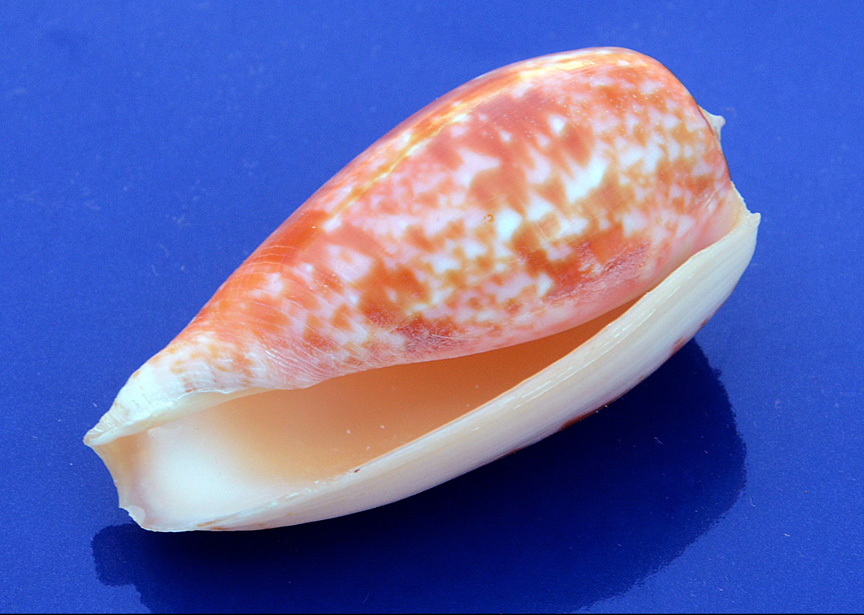
Most marginella are small shells often about 10-20 millimeters in size. There are exceptions. Our shells of the month are two of the largest, both being over 40mm. In addition they are large for their species. Thai fishing boats have been active in Burmese waters. Both specimens were collected by trawlers working off the coast of the Mergui Islands in the Andaman Sea during December of 2010
Marginella strigata (Unicolor Margin Shell) and Marginella Elegans (Elegant Margin Shell) are very similar. The obvious difference is one is patterned, the other not. Both are grey. The outer lip of strigata is tan, elegans is deep red brown.
The following description is adopted from Wikipedia:
Marginella is a genus of small tropical and warm-water marine gastropods in the family Marginellidae, the margin snails. It is the type genus of the family.
The shells of species in this genus are rounded, smooth and glossy, with a large aperture that appears to be toothed because it shows the edge of the collumellar folds. In many species the shells are colorful. The glossy surface of the shell results from the fact that the mantle covers most of the shell when the animal is active. The animal has a long siphon. When the animal is active, the foot extends much further out than the edge of the shell. Marginella are carnivorous and predatory. The shells of the species in this genus have spires which range from moderately elevated to flattened. The surface of the shell is glossy and porcellaneous, and it is often but not always colourful. The columella has four definite, subequal plaits on its anterior half. The outer lip is thickened, and generally denticulate inside, with distinct teeth or folds. The siphonal canal is not deeply incised. There is no operculum.
Marginella strigata Dillwyn, 1817 Trawled At 30-60 Meters Mergui islands, Burma Northern Andaman Sea 12/2010Marginella elegans Gmelin, 1791 Trawled At 30-60 Meters Mergui islands, Burma Northern Andaman Sea 12/2010
SHELL OF THE MONTH JUNE 2011
MESSAGE FROM THE PRESIDENT
Hello everyone!
I’d like to take this opportunity to say just a few things. First of all, a HUGE THANK YOU to Bob Pace for all of his hard work and dedication as our outgoing President. A special Thank You to Alice for her support too! Second, I want to tell you how much I am looking forward to the upcoming year. We have a wonderful organization that includes all levels of interest from beginning to more scientific collectors as well as lots of arts & craft folks. There is something for everyone.
The Board (thank you all for continuing on in your positions from last year!) and I are very interested in hearing your comments and suggestions and look forward to working together to continue the growth of the Club. If you would like to volunteer to help with any aspect of the Club, please contact me or any Board member.
We will have lots of exciting activities this year beyond our monthly meetings, including a field trip to Sanibel Island to visit the Bailey Matthews Shell Museum, an overnight trip to Gainesville for a visit to the Florida Museum of Natural History which will include a behind the scenes tour with the curator, the annual collecting/picnic trip to the Keys as well as the Shell Show in January. As you can see, we will be very busy! I hope each one of you will become more involved in YOUR club!
– LINDA


You must be logged in to post a comment.