New Posts

SHELL OF THE MONTH OCTOBER 2013

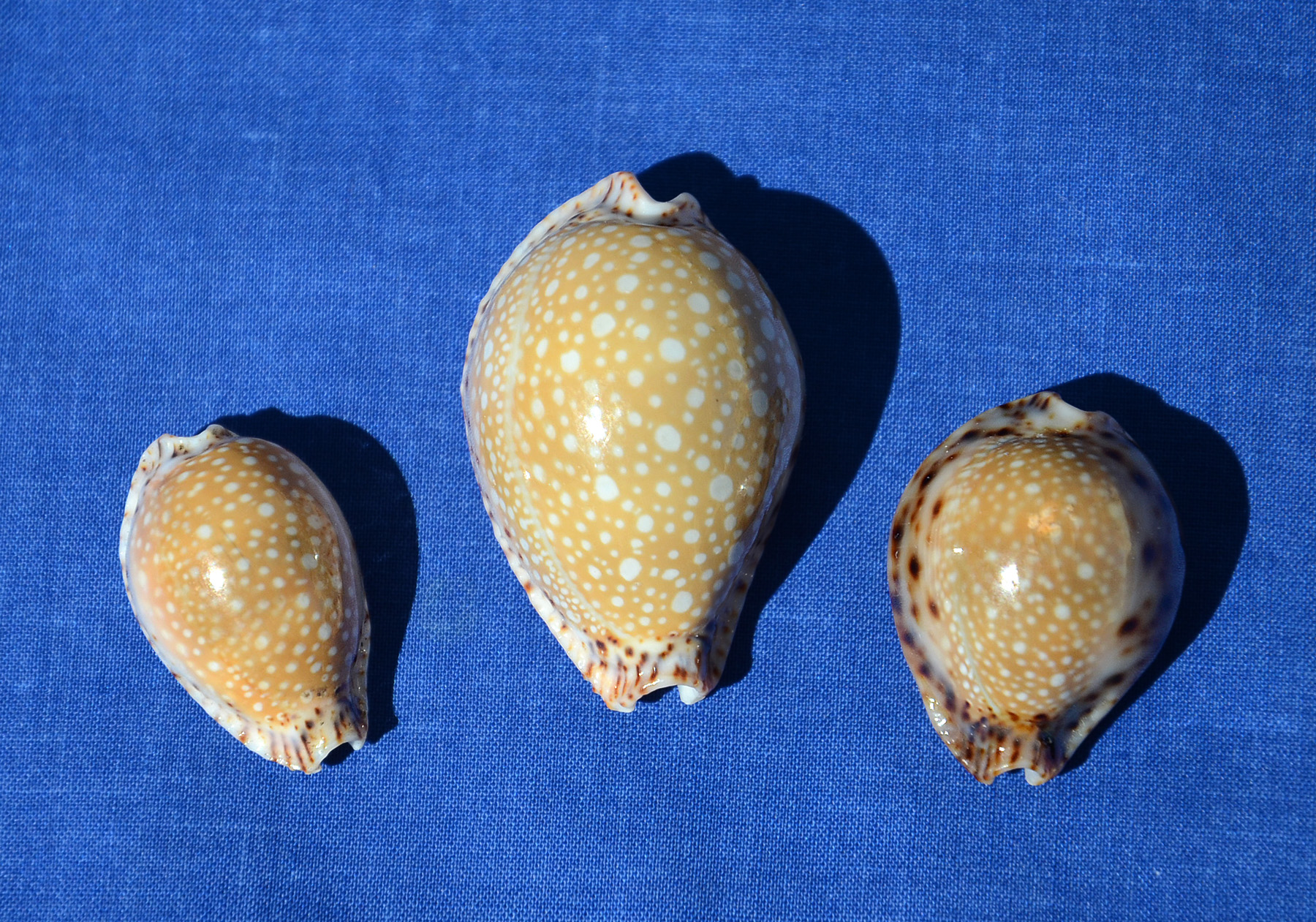
DSC_4394Cypraea (erosaria) lamarckii Gray, 1825 is named after the French naturalist Jean-Baptiste Pierre Antoine de Monet, Chevalier de Lamarck, who is commonly known simply as Lamarck.

Lamarck’s cowrie is a very attractive medium/small shell, typically 25-40mm, fawn or gold color and covered with small white spots of varying size. The margins are whitish with dark brown spots that distinguish it from the similar Cypraea miliiaris Gmelin, 1791 which has solid white margins. Although the coloring is relatively constant there is much variation of shape and size. The largest shells come from the African continent and are globose, relatively light in weight. Here Cypraea lamarckii is found in shallow water where it burrows in muddy sand, emerging at dusk to feed. This is unusual as cowries do not burrow! In Tanzania there is one population with a purple base named Cypraea lamarckii fainzilberi Lo. & Ho., 1993 and a very pale variety Cypraea lamarckii sharoni Walles, 1980. Deep water populations from the Andaman Sea tend to be considerably smaller and lack the mantle line that is universal on the African specimens.

Cypraea lamarckii reditima Melville 1888 is found in Thailand. Here it’s habitat is more typical of other cypraea, under rock and in corals. It is relatively flat, heavy with a well developed callous, large dark marginal spots and a very rounded base.

Cypraea lamarckii is an Indian Ocean species though the occasional population is found in the Philippines and beyond. It appears that in the South China Sea and Pacific Ocean lamarckii is replaced by its cousin miliiaris.

Our three specimens are illustrative of the variety lamarckii is found. This reditima along with five others, are freshly collected and just arrived this past week in a package from Phuket, Thailand. These three shells are donated from the collection of Richard Kent.
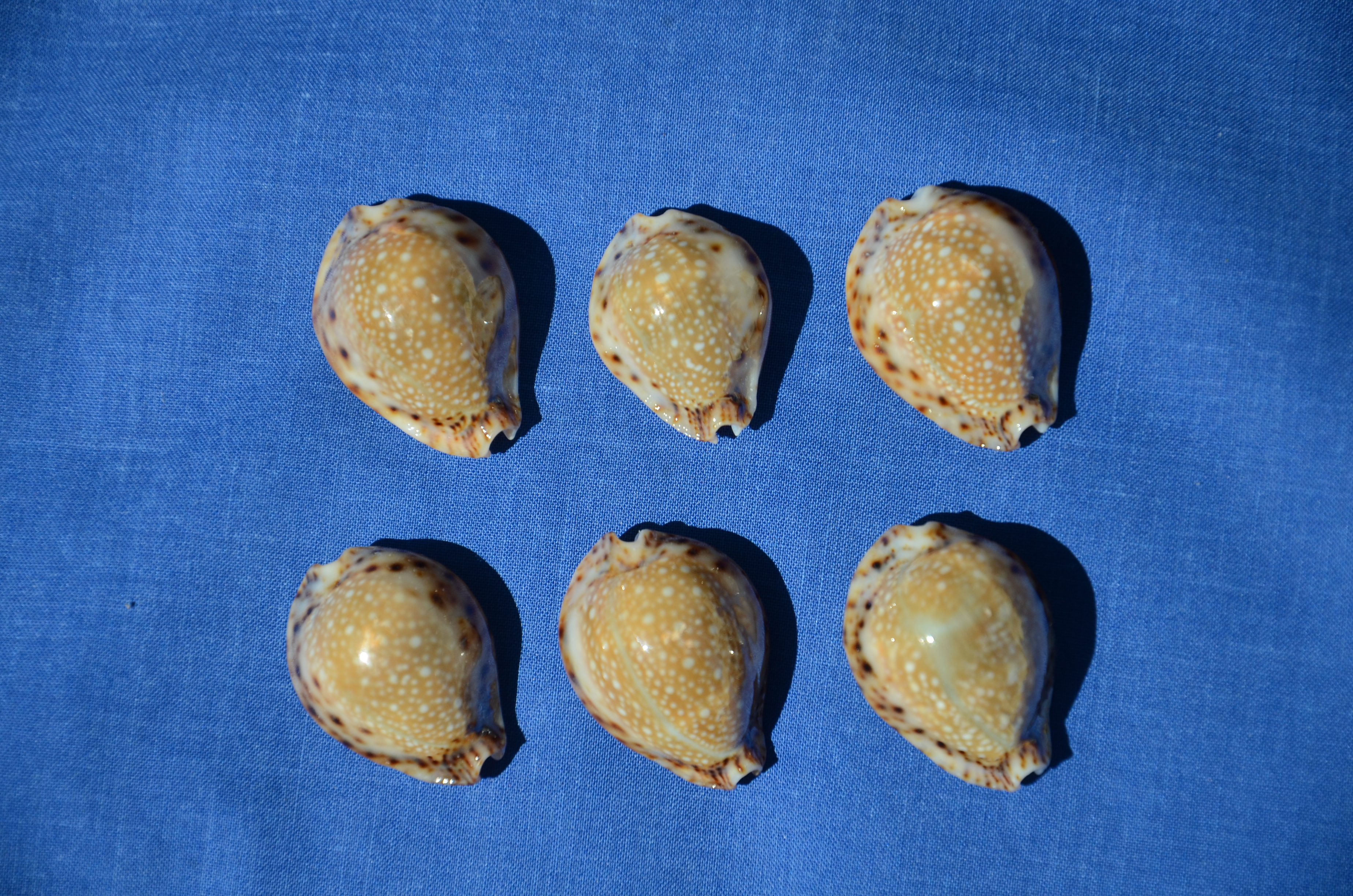
DSC_4391Six freshly collected Cypraea lamarckii reditima Mellville, 1888 from Raya Island, Thailand
SHELL OF THE MONTH SEPTEMBER 2013

Siratus beauii (Fischer & Bernardi) 1857. Richard Kent is getting a break this month. And what we mean by that is James and his Dad, Emmett Redding are supplying this month’s feature shell. And what a shell it is. Siratus beauii used to be somewhat easy to get, but no more. In the early 1970s Dr. Riley Black was very famous for his dredging excursions in the Gulf of Mexico….and one could buy a bushel basket of dredged mud and goodies, set up a big tub of water, grab a sieve of some sort and have a ball. Nothing was guaranteed with each bushel but it was a wonderful gamble to see what might be discovered from the mud. I, myself got enough rubles together to

purchase one and found cones, murex and so much more.

Jean Redding, our past president from 1973 purchased many bushels and this month’s shell is the result of that, being from her collection.

Siratus beauii is now very hard to find, and especially in this condition. The varicies are just about all intact and it has its operculum. For you Heavy-Duty collectors, this shell has not had its exterior cleaned and oiled which gives you the opportunity for either cleaning it (a very easy task with this specimen) or leaving it as is!

Dredged by Dr. Black June 1971. It was taken in 125 fathoms (750 feet) west of Cape San Blas. This would put it near/in the Desoto Canyon.

CORAL COVE FIELD TRIP

Coral Cove, October 19th, 2013, starting at 9:30 AMThe park is located at 1600 Beach Road, Tequesta (Jupiter area). Please call Richard Sedlak at 954-296-5633 / email sedlaki1@comcast.net if you plan to attend…..or sign up at the September / October meetings.

Plan on bringing your own picnic lunch (remember that there are picnic tables, restrooms, and showers) and plenty of water and sunscreen. There is good snorkeling but NO LIVE SHELL COLLECTING – dead shells only. Drive time form Pompano is about 1 hour, 20 minutes.

Coming from the south using I-95: go north on I-95, take Jupiter exit 87A (Indiantown Road), continue east on Indiantown Road to US 1. Turn north (left) on US 1 to Jupiter inlet. Immediately after crossing the bridge, turn right on South Beach Road (CR707). Drive about a mile and a half and look for the park sign on right. Parking is free.

The sign-up sheet will be at the September and October meetings. We already have quite a group going so don’t miss out on the fun!

SHELL CRAFTER’S CLUB UPDATE

For those of you wondering if you missed the first shellcraft get together tentatively scheduled for August 4th-You didn’t miss it. Too many unexpected things happened this past month for me to organize our first get together.And I somehow managed to lose the list of those members signed up for shell crafts. I apologize for this. I’m hoping those who want to do some crafts will please sign up again at our next club meeting on August 14th. There will be a sign up sheet at the raffle table.

Several members have expressed interest in learning how to make shell flowers. We have a very experienced club member, Patty Jenkins, who is willing to teach small groups how to make a variety of flowers. There will be a second sheet at the raffle table for those interested specifically in flower making.

We still have not found a meeting place for the shellcraft group. If you know of a place we could meet, please let me know. Thank you for your interest in shell crafts.

Linda Laurin llaurin@gmail.com

SHELL OF THE MONTH – AUGUST 2013

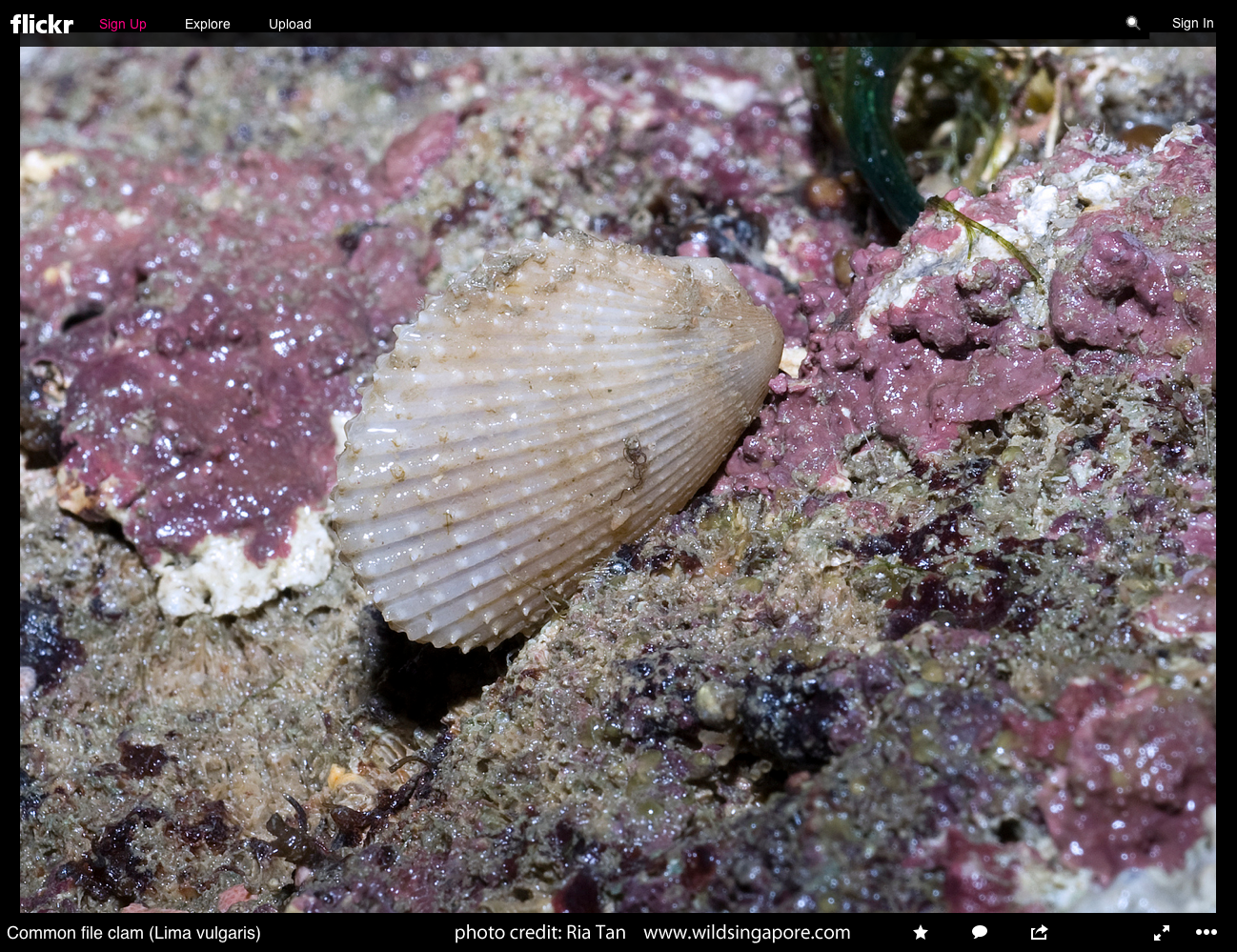
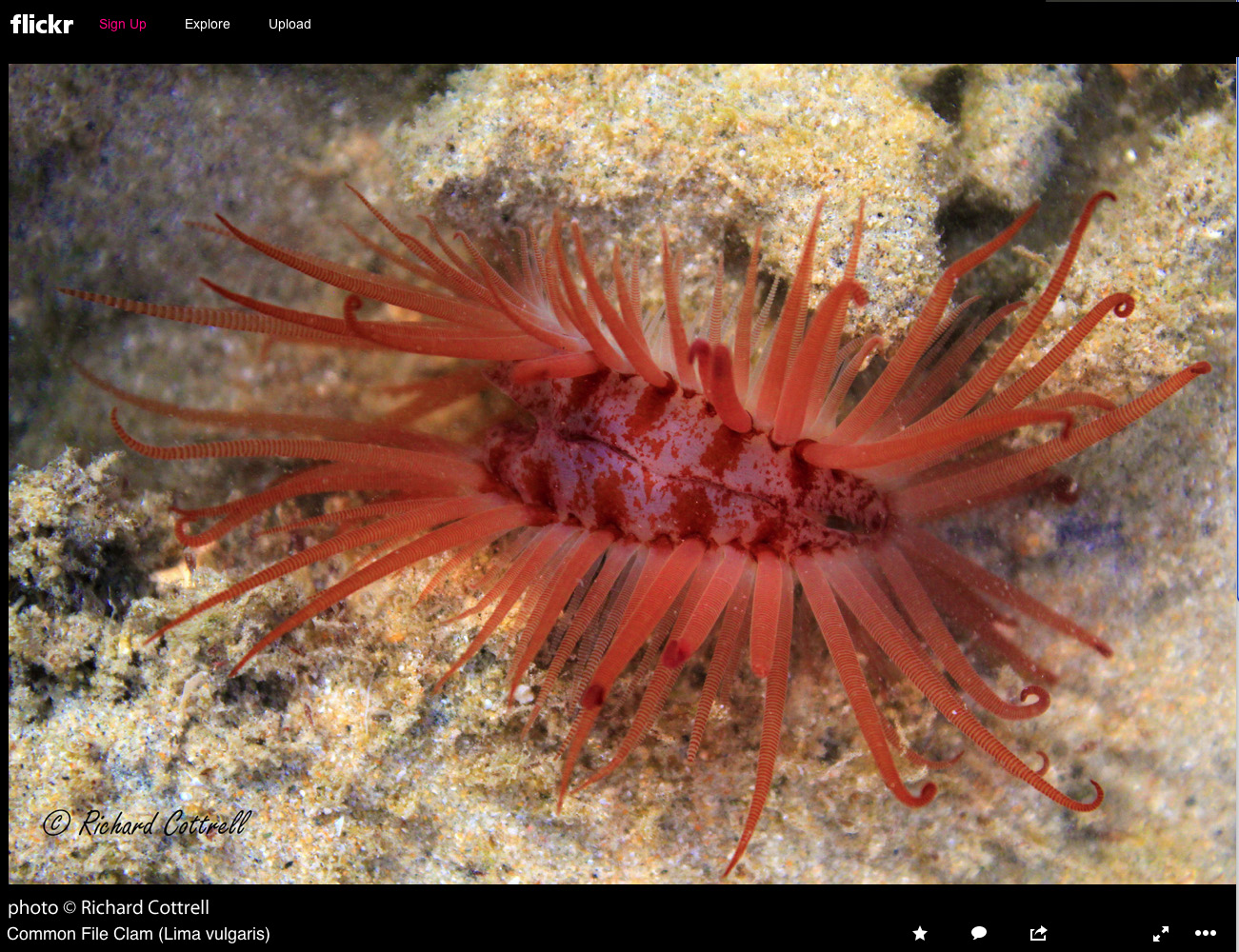
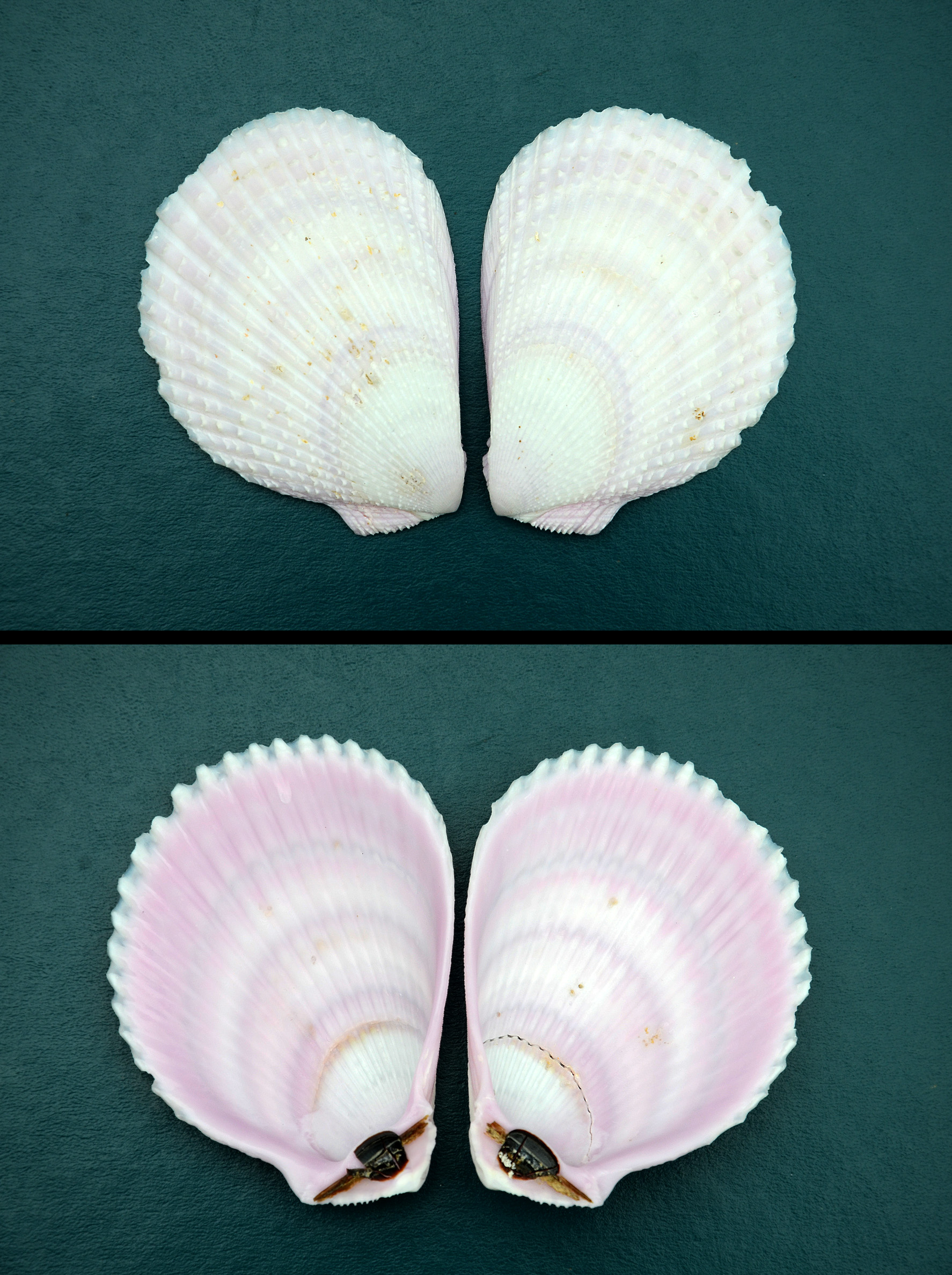
LimaVulgarisLima vulgaris Link, 1807 is a bivalve from the order Limoida, family Limidae. Its common name is File Clam or Spiny File Clam.  It is world wide is distribution in tropical waters. Originally our shell was named Lima lima Linnaeaus, 1758 and Philippine dealers used the name Lima lima vulgaris Link. 1807 to differentiate the populations with a pink interior from those with a white interior. Today Lima lima is reserved for Caribbean and Mediterranean shells while Lima vulgaris to those from the Indo-Pacific. There is no difference in the shells and not all vulgaris have pink interiors.

Lima vulgaris is a filter feeder and is capable of free swimming propelling itself by clapping its valves open and shut expelling water.  Normally they settle down between rock or reef rubble where they display their long tentatcles. The live animal is very attractive.

The top and bottom valve mirror each other and according to the literature the interior color comes from the pigment hemoglobin.

This specimen is a giant being over 4 1/2″ (113mm) and is about as large they come.  It was collected by Philippine divers nestled in rocks off Dawaho Island, Leyte, Philippines. It was donated by club member Richard Kent from his collection.

limavulgaris Screen shot 2013-07-14 at 2.28.28 PM

DORRIE HIPSCHMAN APPOINTED NEW DIRECTOR OF BAILEY-MATHEWS SHELL MUSEUM

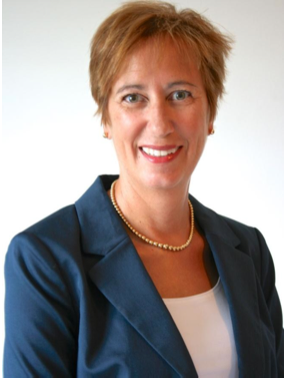
Screen shot 2013-07-08 at 12.06.25 AMSanibel, Fla. (Thursday, June 27, 2013) – The Board of Trustees of the Bailey-Matthews Shell Museum is proud to announce the hiring of Dorrie Hipschman as the Museum’s Executive Director. She brings a wealth of experience with more than 20 years leading non-profit organizations. Most recently, Hipschman was the Executive Director of the Cade Museum in Gainesville, Florida. Additionally, she has served as Executive Director at The Building for Kids in Appleton, Wisconsin, the Children’s Museum in Stockton, California, and the Flathead Convention and Visitors Association in Whitefish, Montana. She was also Development Director at the Plains Art Museum in Fargo, ND. Hipschman is a cum laude graduate of Georgetown University with a degree in American Studies and additional MBA courses at the University of Hawaii. The Museum will greatly benefit from Hipschman’s extensive skills in strategic planning, museum expansion, major gift fundraising and grant writing, and experience in managing staff and volunteers, according to Board President Clair Beckmann. Hipschman has received several museum awards including the American Library Services for Children Award, MetLife Promising Practices Award for children’s health programming and the Wisconsin Convention & Visitors Bureau Destination Builder Award. “Dorrie Hipschman is a lifelong enthusiast of both shells and the ocean environment that they represent. Having come from a large, scientifically-minded, sailing family, she has spent much of her life hunting for, cleaning and collecting seashells along the Atlantic coast, while scuba diving in Hawaii, on Sanibel Island and while snorkeling in Saipan.” Beckmann said. The Board also said Dr. José Leal will transition to become Curator and Director of Education. “From the unique perspective of a marine scientist, it will be great to have the opportunity to expand on and interpret new findings to our visitors and followers worldwide. With Dorrie taking on the Museum management, I will be able to devote my time, as Curator, to the very specialty that introduced me to museum activities in the first place—collection-based research and organization. My thanks to our supporters for their continued assistance and support of the Shell Museum and its efforts,” Leal said. Dorrie Hipschman (dorriehipschman@gmail.com or 352-682-292 Of the more than 17,500 museums in the U.S., The Bailey-Matthews Shell Museum is one of approximately 800 institutions accredited by the American Alliance of Museums. The Museum features more than 35 exhibits of shells and mollusks from around the world. Exhibits are devoted to shells in art and history, shell habitat, rare specimens, fossil shells, common Southwest Florida shells, and more. The learning lab features a hands-on play area for children, displays, games, and a tank with indigenous mollusks. Two half-hour videos, “Mollusks in Action” & “Tales and Trails,” are shown throughout the day, and a children’s video is shown continuously. The Museum Store offers a wide selection of shell books. The Museum is open 7 days a week, 10 a.m. – 5 p.m. LIBRARY NEWS

SHELL OF THE MONTH – JULY 2013

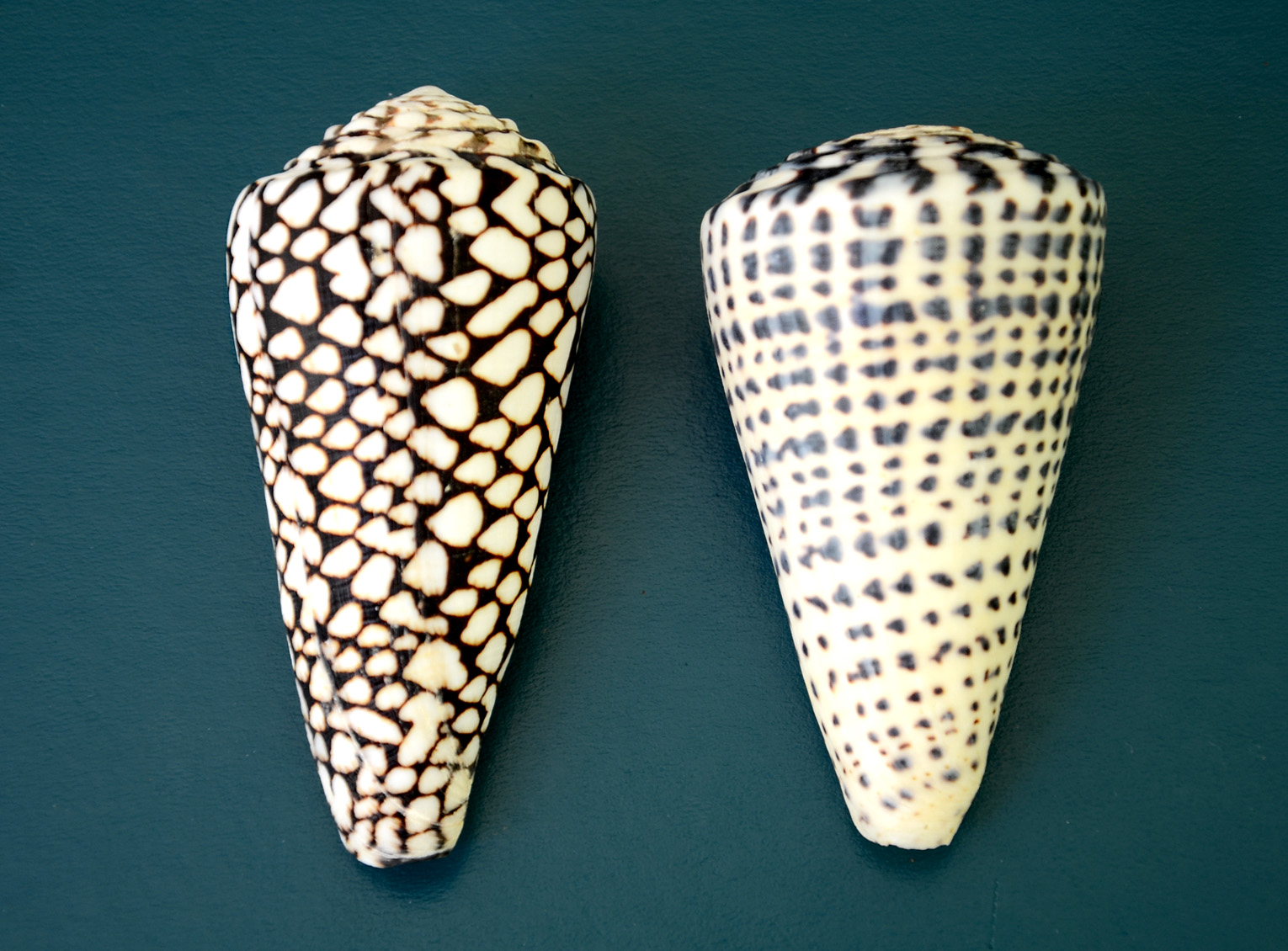
DSC_9964This month we have two large cones which are almost opposites. Both are favorites of collectors and artists alike. Any still life of shells is likely to include one or both!

Conus marmoreous is one of the classic shells described in Linnaeus’s monumental 1758 “Systemtema Naturae.” The marbled cone is about the most striking of all shells, black in color covered with uniformly sized white tents. It has an elegant ice cream cone shape. Younger shells up to about 60mm are especially beautiful with a high gloss but as the shells grow in size the surface changes from waxy to dull.  Conus marmoreous is predatory, living on other molluscs and inhabits the coral reefs in shallow waters across the Indo-Pacific range. This specimen is a larger shell of about 100mm.
Conus Leopardus was named by Roding in 1798. The shell has a cream colored waxy surface and is uniformly banded, top to bottom, with evenly sized and spaced black spots. Sadly larger specimens tend to loose the regularity of pattern making most specimens over 120mm less attractive. The leopard cone is one of the largest growing up to 200mm. Giant specimens today are quite rare and then they look like they have gone to war and lost, having lost their spots, turned chalky, and are marred by irregularly spaced growth lines plus heavy spire and body erosion. Conus leopardus too is predatory and is found across the entire Indo-Pacific range. Our specimen is small for a leopardus but is quite attractive and clean.
Both specimens are from the Philippines and were collected by local divers in sand pockets, inside coral reefs and in shallow water.

COA CONVENTION CONTEST

COA Convention Contest – For Broward Shell Club members only. Win a prize and grab the glory!!!

BSC members, put your thinking caps on! The club board announces a contest to submit a name and a logo for our 2015 COA Convention.

The title should be representative of something in South Florida pertaining to shells or nature and the logo should have a shell motif or at least a shell of some type in it. The logo should be a drawing (not a photograph) that can be utilized in color and/or black and white. We will utilize the name and logo in all print and on various pieces of merchandise we manufacture to sell at the COA. Those of you who attended our special May COA meeting saw various bags, t-shirts and hats adorned with various years’ logos and themes. We will be adding the following to our printed material/merchandise: 2015 COA Convention or 2015 Conchologists of America Convention.

Please submit your name/logo entry to either Nancy Galdo or Linda Sunderland. The contest deadline for submission is November 1st, 2013. We will present our 2015 COA name, logo and event plans next summer at the 2014 COA Convention in North Carolina!

There will be a very exciting prize for the winner (TBD). The board will announce the grand prize in the near future. The Broward Shell Club board of directors will choose the winner at its November board meeting. Good luck to all!!!

Examples of previous COA titles are:

2013 – Sarasota – A Circus of Shells

2011 – Melbourne – Space Coast Treasures

2010 – Boston – Shellebration

2007 – Portland, OR – Chardonnay & Shells

2003 – COA logo created in Seattle – The Watchman (see top of next column)

This year the COA will be in Sarasota, Florida and next year (2014) it will be in North Carolina. Our club has had the honor of hosting the Convention two times previously in 1977 and 1986. This annual event has taken place annually since 1972 and is the ultimate shell experience. Meeting other collectors from all over the world, fantastic programs, banquets, field trips, and the ultimate “shell-collecting-orgy” the dealers’ bourse. This is an overload of the senses where shells are concerned….but what a way to go!!

BROWARD SHELL CLUB TO HOST 2015 SOUTH FLORIDA COA

Many of our club members know already, but just in case you haven’t been around lately…….. the Broward Shell Club will host a shell convention in 2015!!! The COA (Conchologists of America) convention will be held at the beautiful, newly refurbished Bonaventure Golf Resort and Spa in Weston, FL from July 14-19, 2015! The annual Convention features lectures, symposia, field trips, auctions, shell dealer’s bourse, exhibits, banquet, and other exciting activities. Our club is already hard at work planning the initial stages and organizing committees. If you would like to participate with us in this exciting event, we’d love to include

you. Nancy Galdo an