New Posts

SHELL OF THE MONTH – JULY 2017

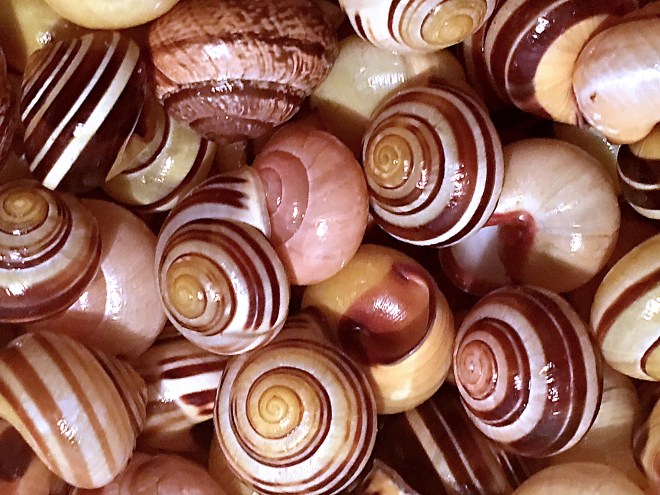
LANDSNAILS – SET OF MINIMUM 100 BELGIAN LAND SNAILS

Quality: Great quality.

Collected: ARIANTA ARBUSTORUM (minimum 20) On the ground between dead leaves at the edges of the forest.

CEPAEA HORTENSIS & CEPAEA NEMORALIS (minimum 80) On the ground and on trees.

All collected in the forest on the left bank of the river Schelde, Antwerp, Belgium.

Comments: Self collected Belgian soil land snails by Willy Van Damme

SHELL OF THE MONTH – JUNE 2017

Tutufa rubeta Linnaeus, 1758
by divers on coral reef at 15-20m
Poro Island, Camotes, Cebu
Philippines

Shells from the family Bursidae are commonly known as “Frog Shells.” The inhabit the tropial seas and live in the coral reefs. As such, they can end up encrusted with coral growths making them well camouflaged and difficult to cleanup. Tutufa rubeta, Linne, 1758 is but one of the many varieties of frog shells found in the Philippines. Relatively few specimens reach the market making Bursa a challenging family to collect.
Bursa are heavy for their size, are beige or tan in color and interesting detail in their mouth or aperture. Tutufa rubeta is named for its red mouth, although only young specimens exhibit the red coloring. The larger the specimen, the paler the mouth. This specimen is about 4″. Occasional specimens grow to just over 5″. This one was live collected and comes with the preserved operculum.
The most sought our member of the family is Tutufa Bubo Linne, 1758 which grows to a whopping 10″.
Donated from the collection of Richard Kent

SHELL OF THE MONTH – MAY 2017

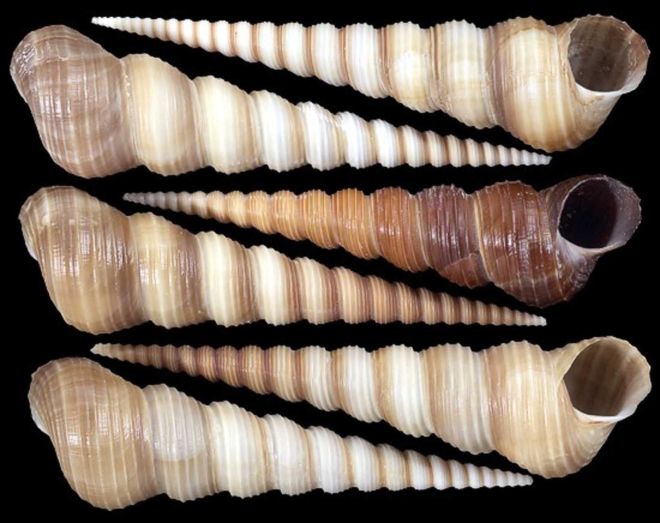
Turritella terebra (Linnaeus, 1758)

Lucky is the shell crafter who wins this raffle. Imagine all that can be created with two dozen (24) of these magnificent shells!

Commonly 5-7cm, they can can grow to 15-17cm long. Turritella terebra is a very tall elegant shell with regular spirals which are finely ridged. The color ranges from cream to chocolate brown with all shades in between. It is the largest of Family Turritellidae where most are small and seldomly collected.

Turritella terebra is herbivorous and lives on sandy and muddy areas of the intertidal zone. In the northern Philippines, they are regularly collected and marketed as food.

Although these are offered as craft shells they are of high quality and not seconds. They are from the Philippines. Donated by Richard Kent

Craft meeting March 27, Monday, 6pm

A reminder, we will learn encrusting of either boxes, birdhouses or letters, which will be really a GLUE lesson one week from today. Before you begin, you will be shown how to properly use the following:

Tacky Glue
Hot Glue
Loctite Super Gel Glue

These three glues are allowed in the Civic Center, but keep in mind, there are numerous others which, when properly ventilated, provide excellent adhesion. We will not be covering these but for an on line lesson, please visit http://ThisToThat.com

There will be a limited number of birdhouses for sale along with letters, which some of you have reserved from Linda Ebeling. The club will have smaller letters also on a limited basis for use on the craft table next year.

If you have a box, letter or birdhouse you would like to cover, please bring it along. There will be two small boxes for practice available.

SUPPLIES NEEDED:

Loctite Gel Glue
Hot Glue Gun and pad
Tacky Glue
Paint brush approximately 1/4 inch in width (to apply tacky glue evenly)
Good tweezers, preferably serrated (to pick up small shells)
Very thin “poker” such as a dental tool is helpful or toothpick
(this to align your shells perfectly)

Please come when you can, but we will begin glue instructions at 6 pm for the first group.

Many shells are available for sale especially with encrusting in mind. As is our motto, these are sold to members below your retail cost, one of our benefits for you.

Looking forward to a fun night.

SHELL OF THE MONTH – APRIL 2017


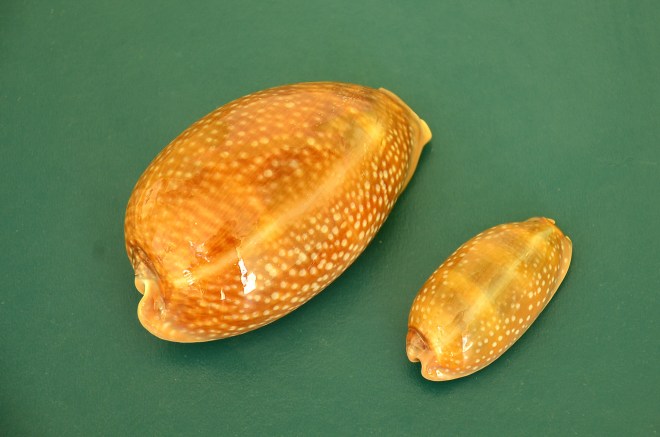
Cypraea cervus Linne 1758
under ledge by diver at 60′
Off Madiera Beach, Florida 2004

Cypraea cervinetta Kienner, 1843
under dead coral slabs,
shallow water at low tide
Pedro Gonzales, Panama


Deer Cowrie and Little Deer Cowrie. This month’s specimen shells are very closely related. They are near identical in color and pattern, both having fawn colored dorsums covered with hazy white spots and a clear area formed by the mantle line. Looking at the two side by side they are easy to separate. Cypraea cervus Linne 1758 is “plump” whereas Cypraea cervinetta Kienner, 1843 is “lean”. As a rule cervus is the much larger of the two. Cervinetta’s teeth are more strongly defined. Cervus is found in the Florida keys, the Florida gulf coast, Cuba and the Yucatan. Cervinetta lives on the west coast of Central America, most commonly found in Panama.

Both are noted for their extreme wide range in size. Cypraea cervus grows to the largest size of all cypraea, reaching a whopping 190mm (7.5″). Giant specimens which are very few and far between bring jaw dropping prices as they just don’t grow so large anymore. Today, typical specimens are 80-100mm. Cypraea cervinetta has dwarf populations going down to just under 30mm in size. Juveniles of both are banded. The banding gets glazed over in adults although most specimens of cervinetta will show some banding on the top of the dorsum. Fresh specimens have brown dorsums that fade rapidly to fawn even when stored in darkness.

The two specimens are close to “gem” in quality and are typical in pattern. They are donated from the collection of Richard Kent.

Craft Meeting – Monday, February 27, 2017

Are you ready to make some mirrors? We are ready for you with blank frames
either to assist in creating for the craft sales table or to buy to take
home, or bring your own! If you bring your own, it is advisable
to remove the mirror to avoid scratches and glue drips while creating your
project.

If you go to Pinterest, and ask to see shell mirrors and you will get
endless ideas to inspire you.

There is a new shipment of craft club shells for sale from a purchase and
two nice donations we have received this past week. As usual, they are
priced to sell at very low prices so that you can select your favorites to
make mirrors.

Donna Clarke and Sandy Diezel made a large mirror last year during our
meeting and finished it at home. This mirror brought the club over $400 on
the raffle table! Everyone wanted a chance to win this beauty.

We will have examples of three different type of mirrors for you to see.
If you are a novice, our experts will be on hand to direct mirror projects
for the craft table so that you can learn.

Mirrors are flat. This allows us to use Tacky Glue in lots of places, so
please add this to your supply list which is as follows:

Glue gun and sticks
Glue pad
Tacky Glue (can be purchased at Joanne’s, AC Moore or Michaels)
Forceps or tweezers

I will have a Dremal tool or nail tool and a wire brush on hand to insure
your shells are in good condition for your use. Almost all shells need a
little care before applying and you can learn how to make your shell
collection at home even prettier.

Thank you to those who have done this before for your assistance in
directing a mirror project! We are no club without our volunteers so big
hats off to you for your help.

I am looking as well for a volunteer to handle the sales table. There are
LOTS so this will probably be a full time job for the night.

Remember, we begin at 6pm but come when you can. At 8:30pm we will begin
to clean up our mess so as to exit the Civic Center by 9pm.

Hope to see you!
SHELL OF THE MONTH – FEBRUARY 2017

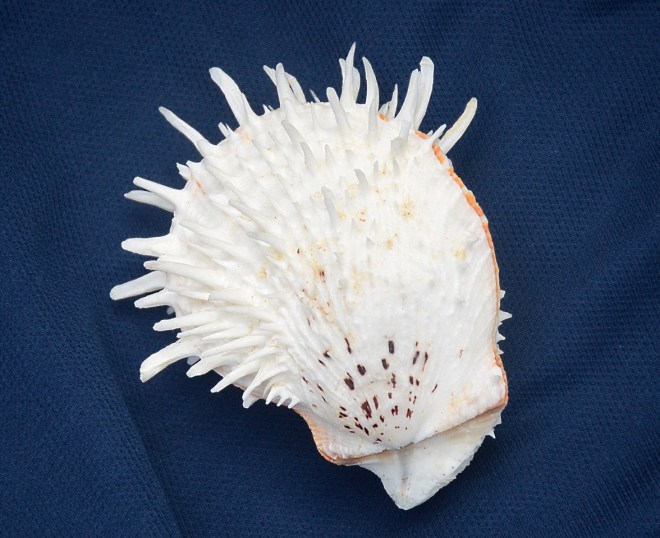
dsc_6983Spondylus versicolor Schreibers, 1793 by diver on rock and coral wall. Racha Islands, Thailand, 2014

Thorny oysters do not have much in common with the the true oyster. They hardly resemble each other. True oysters live in huge colonies whereas the thorny oyster tends to be a loaner. One is collected to be consumed as a delicacy. The other because of its attractive and delicate spines. They do have two things in common. Both attach themselves to a solid surface with a byssus. Both have a ball and socket that joins the two valves together rather than a toothed hinge as in other bivaves.
Spondylus in the only genus in the family Spondylidae. There are about fifty members in the genus and often are very confusing to classify. They are found in tropical waters around the world. Spondylus versicolor Schreibers, 1793 is called the “golden thorny oyster” though the color is more likely to be orange and never golden. This specimen is an albino but a look at the margin where the valves come together and one will see orange color.
Spondylus are highly collectible and eagerly sought out. Anyone who has collected live specimens can attest to how challenging many specimens are to clean.
This very attractive specimen came from the Phuket Islands area of Thailand and is about three and half inches across. Donated by Richard Kent and originally purchased from a Thai dealer.

Craft Meeting – January 23, 2017

Our beginning shell flower demonstration night went very well. All who attended made shell flowers and learned to stem them. Our gratitude to the teachers who stepped in to help our new members:

Linda Laurin, Cindy Treece, Shanti Moore, Debbie Anderson

It takes a club to be a club. Volunteers are always appreciated.

We sold quite a few shells last night and hope to use the proceeds to order more shells in the future. We will be ordering wholesale from the following company:

Atlantic Coral Enterprise, Inc
atlanticcoralenterprise.com

Please take a moment to browse if you wish and let me know what shells interest you from this site.

UPCOMING FIELD TRIPS

Our next, and very highly anticipated trip will be to the fossil pits in Ft. Myers. The date is Saturday, February 25th, 2017 and you must be at the staging area by 8:30 AM. The cost is $25 per person, and the trip is limited to 20 participants only. Due to legal restrictions we cannot give you the information as to where the fossil pit is, nor the staging area. All of that will be supplied to those who are attending.

Cash is fine and checks are to be made out to Gary Schmelz. After the outing we will meet at the Country Roads Café for a wonderful lunch of your choice….. and there will be “contests and prizes”.

Again, an information packet will be given to the attendees. For reservations contact Richard Sedlak at sedlaki1@comcast.net / 954-296-5633 and there will be a sign-up sheet at the January meeting. I might remind everyone that there are only 7 spots left.

Our next outing will be to the Sanibel Shell Show on Saturday, March 4th and for this the club will rent a van so everyone can arrive at once. There is room for a maximum of 12, but if there is enough interest we will rent a second van. The cost for the trip is $30 per person with the only other expense being the $5 “donation” for the show plus whatever you want for lunch.

We will leave at 7:30 AM from the Coral Ridge Mall parking lot, the side facing US 1, at the base of the AMC Theatre sign. The location is very secure and the Target security carts patrol until after 10 PM. We should return by about 9 PM.
Upon arrival to Sanibel we will go directly to the show, followed by lunch at the popular Island Cow located right next door. We can then go back to the show for a while and then go to one of the local beaches for some shelling and if there is time stop at one of the shell shops. On the way home (we leave Sanibel about 6 PM) we will have a special “refreshment” stop.

The only thing I have to mention is that if you commit to the trip you must pay up front, and unless you are in the hospital “gasping for breath” there are no refunds. This trip has to pay for itself. But come along….you won’t regret it.

SHELL OF THE MONTH – JANUARY 2017

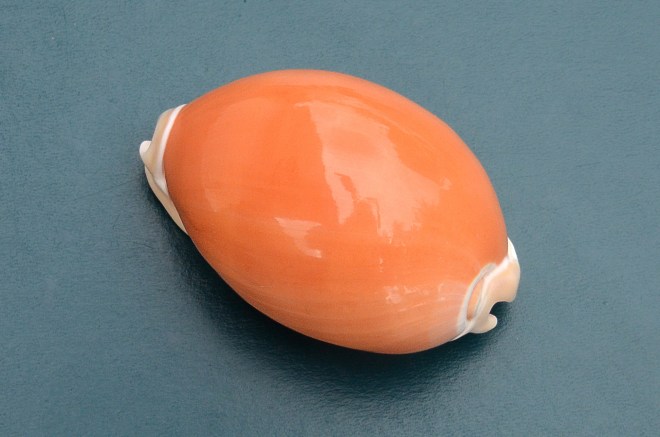
aurantiumCypraea aurantium Gmelin, 1791 was until recently the most prized of all cowries and the centerpiece of a collection. Today, now that its habitat is known, the Golden Cowry is available to collectors. This however does not diminish in any way its beauty or desirability.

The current taxon is in Lyncina Troschel, 1863 whose type shell is the common yet beautiful Cypraea lynx Linn,1758. A comparison of the bases makes the relationship obvious. Lynicina includes the ultra rare Lyncina broderpii, lucodon and porteri, along with such common specie as carneola and vitellus.
Lyncina aurantium is a big, heavy and beautiful globose shell with a solid orange dorsum and white base. It is Indo-Pacific found in the Philippines and Fiji with an apparent gap in between. They grow up to 100MM and slightly larger.  A giant one is is spectacular. Unfortunately, the majority of specimens are marred by stress growth marks. The marks are readily obvious to the person harvesting and should have been left alive to reproduce, but since these inferior specimens will still bring a fair price, they are taken.

Lyncina aurantium is a nocturnal, deepwater reef species and we’re giving away a secret here, a cave dweller that likes to hang upside down suspended on the roof of the cave. As SCUBA divers most often looked straight ahead, they failed to observe to aurantium above their heads! Most specimens today are collected by hookah divers who stand rather than swim. It is virtually impossible to get specific collection data and maybe that is a good thing so as to protect from over collection.

This specimen is a fine example, though not quite gem as it has faint growth lines that are only noticeable upon close inspection. Its size of three and a had inches is slightly below average. It will be a prize shell to the person that wins the raffle! Donated by Richard Kent

Cypraea aurantium Gmelin, 1791
collected by hookah diver
50 meters deep, Albay Gulf
Philippines. 2011
.