September Program

Biography:

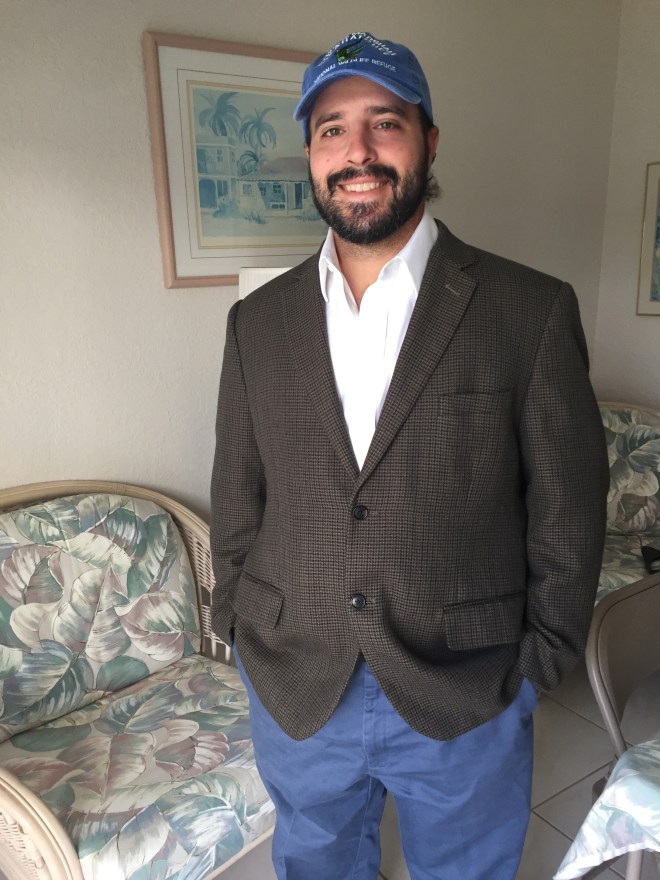
My name is Michelot Michel, a South Florida native, and first-generation Haitian-American. I grew up in Miami as an only child. Without any siblings to amuse me, I developed a curious mind for the world around me. As I grew older, this curiosity transformed into an immense appreciation for science and discovery. I later attended high school at Maritime and Science Technology (MAST) Academy because of its strong marine science and college preparatory program. My time at MAST allowed me to explore my love for science while developing a desire for community service. This led me to pursue a career in medicine as it effortlessly combined my passion for science, discovery, and service. Four years later, I graduated with my Bachelor’s Degree in Biological Sciences with Honors, having completed several research projects that encompassed biomedical sciences and marine conservation. After graduating from college, I joined the EM Papper Clinical Immunology Lab at the Miami VA Medical Center as a Clinical Research Assistant. My work currently focuses on elucidating molecular markers and therapeutic targets for immune-related disorders such as Chronic Fatigue Syndrome and Gulf War Illness. The latter of which is focused directly on the US military veteran population who served in the Gulf War. As of late, I am in the process of applying to medical school, where I hope to continue my pursuit of a medical career filled with service and the advancement of knowledge.

Synopsis of Research:

The Environmental Epigenetics lab at Florida International University is a research group devoted to understanding the epigenetic mechanisms in marine organisms in response to changing environmental conditions. Epigenetics is defined as the study of heritable phenotype changes that do not involve changes in the DNA sequence. Some notable epigenetic mechanisms include histone modifications, DNA methylation, and RNA silencing. This particular study aimed to characterize the seasonal patterns in DNA methylation in the gill tissue of the flat tree oyster (Isognomon alatus) and its response to temperature, pH and salinity variations in Miami’s Northern Biscayne Bay. The results of this work will help pave the way for expanding environmental epigenetic analyses and their application to the management and conservation of diverse ecologically and commercially relevant marine species.

 

August Program

Synopsis:

The relationship between corals and Symbiodinium dinoflagellates is sensitive to elevated sea-surface temperatures, which are projected to increase 2.6 to 4.8°C by 2100. One mechanism that may allow corals to persist through ocean warming is an association with thermally-tolerant symbionts. During early life stages, many coral larvae or juveniles will uptake multiple phylotypes of Symbiodinium through horizontal transmission. This diversity is maintained for months or years, but over time the juvenile coral will select a dominant Symbiodinium phylotype reflective of the local environment. It is unknown at what age or size selection occurs, and whether environmental factors drive this selection. To determine this, field and laboratory studies will be conducted using the massive starlet coral, Siderastrea siderea

Bio:

Sarah is a native Rhode Islander and earned her bachelor’s degree in Biology from Southern Connecticut State University in 2015. While studying temperate corals as an undergrad, she was also a collegiate athlete, playing DII softball for the Owls. In 2016, she moved to Florida to start her M.S. in Marine Biology at Nova Southeastern University. When not working under the guidance of Dr. Joana Figueiredo in the Marine Larval Ecology lab, Sarah can be found teaching in the Department of Biological Science or working at Gumbo Limbo Nature Center.

July Program

Our presentation for the July 11th, 2018 program will be by one of our scholarship recipients from last year Doors open at 6:30 PM at which time the Library, Raf e Table and Sand Flea Market start business. The main program commences at 7 PM.

Title: Using a functional group approach to monitor invertebrate diversity in red macroalgal mats, Deering Estate, Biscayne Bay.

Synopsis: In shallow coastal systems, macroalgae is fundamental as both an indicator of environmental conditions and a contributor to habitat complexity. Biscayne Bay, localized close to a metropolitan area in south Florida, is undergoing heavy management and restoration activities outlined by the Coastal Everglades Restoration Project (CERP). Among the effects of CERP-planned activities and water

management, the bay is impacted by freshwater ‘pulses’ that can cause periodic changes in salinity, and subsequently, macroalgae community composition. However, the invertebrate epifauna that inhabit macroalgae are very little studied. The vast diversity of invertebrates that live in macroalgae also poses a challenge as to how they should be classi ed. These invertebrates would not only be sorted at an appropriate taxonomic scale, but should also answer ecological questions effectively. While this research is an opportunity to survey the diversity of invertebrates that reside in red macroalgal mats, I also propose a functional group approach to classify and monitor these invertebrate epifaunal groups. We want to investigate whether changes in salinity can change species composition and distribution of macroalgae and their associated invertebrate epifauna.

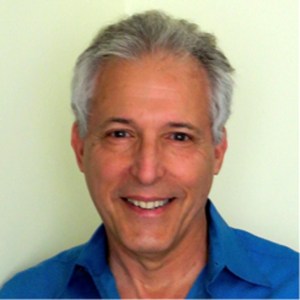
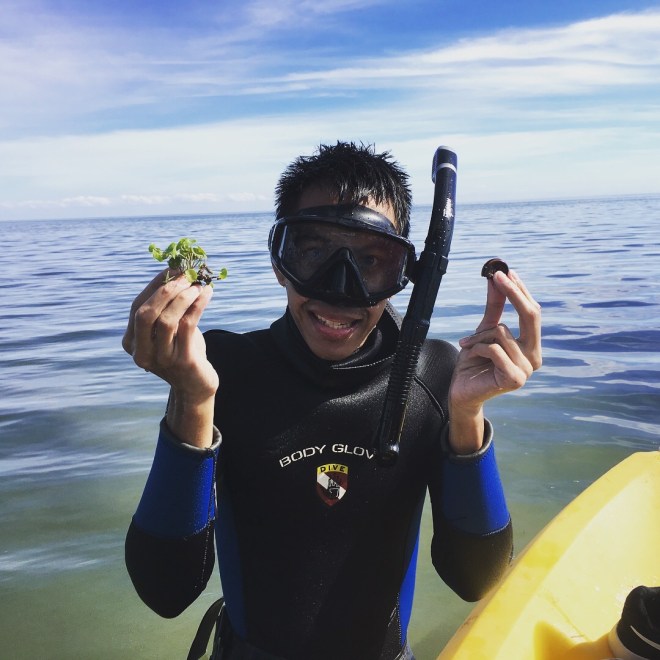
Biography: Lowell Andrew Iporac is a Ph.D Student at Florida International University’s (FIU) Biology Doctoral Program. Lowell obtained his B.A. in Biology from California State University, San Bernardino, where he completed four different undergraduate projects. Among those four research projects, it was an internship at Shannon Point Marine Center, Washington State that sparked his interest in marine biology. Upon transitioning to FIU, he joined the Marine Macroalgae Research Lab (MMRL) with Dr. Ligia Collado-Vides in 2016. His dissertation focuses on marine plant-animal interactions, and strives to understand the characteristics of macroalgae and invertebrates that drive these interspecies interactions. When not reading scienti c literature or conducting bench work, Lowell likes to snorkel at the beach and walk along botanical gardens.

May Program

My name is Bradley Rosendorf. I have been living near the Arthur R. Marshall Loxahatchee National Wildlife Refuge since 1993. I have spent tremendous amount of time in my life hiking and photographing at the Refuge.

My discussion with your group will focus on the following:

1. The origins of the National Wildlife Refuge system. What is a public land? The importance of citizen involvement with public lands. The upcoming public meetings at the Refuge regarding current and future public use and management of natural resource.

2. I will provide general overview of range of native and invasive species present at the Refuge and what species can be seen and photographed on a usual day spent at the Refuge trails.

3. The main subject of my discussion will be “Rapid species adaptation in the Everglades”, an exciting discussion about the Everglades Snail Kite biology and the impact of invasive apple snail.

4. The final part of my discussion will be on the really nice and meaningful range of activities the shell club can get involved with at the Refuge including special guided tours for specific species such as Snail Kite, night walks, tram tours, and exciting volunteering opportunities with US Fish and Wildlife.

Our Refuge Rangers are very hardworking people who are a pleasure to interact with. Volunteering can be a very meaningful life experience and i will discuss how much I cherish the opportunity to wear a US Fish and Wildlife volunteer shirt and how my experience of volunteering has been an important part of my life.

The Arthur R. Marshall Loxahatchee National Wildlife Refuge is a very very special and truly MAGICAL place, i am very excited to meet your shell club and talk about the Refuge!!! :)

Bradley Rosendorf

April Program

With NOAA Okeanos Explorer to the Deep Gulf of Mexico
Charles G Messing, Ph.D., Nova Southeastern University

From 29 November to 21 December 2017, Professor Messing accompanied NOAA’s research vessel Okeanos Explorer to use the Remotely Operated Vehicle (ROV) Deep Discoverer to explore deep-sea habitats and associated marine life in the Gulf of Mexico. The 17 ROV dives ranged from depths of 300 to 2,321 m and investigated deep-sea coral and sponge communities, bottom-fish habitats, canyons, shipwrecks, and chemosynthetic habitats such as methane seeps, asphalt seeps and brine pools. Operation goals included surveys of areas identified by the Gulf of Mexico Fishery Management Council and Flower Garden Banks National Marine Sanctuary for baseline data to inform conservation priorities and possible expansion of managed areas. The expedition observed hundreds of different species of invertebrates and fishes, from carnivorous sponges to chimaeras, some never or rarely observed in their natural habitat, and collected dozens of specimens, including a few species new to science. Scientists from around the world participated via telephone or chatroom, and the video feed from the ROV on the seafloor, accompanied by Charles’ and colleagues’ narration, was transmitted live via the Internet and viewed by over a quarter of a million people.

Dr. Charles G. Messing is Professor of Marine Science at Nova Southeastern University. His research centers on the evolution, taxonomy and ecology of living crinoids (sea lilies and featherstars) and on the ecology of deep-sea coral communities and rocky-substrate habitats. He has also been involved in assessment of both shallow and deep-water habitats for fuel pipelines, fiber-optic cables, artificial reefs, and beach renourishment. Charles has led 14 deep-sea submersible expeditions funded by NSF and NOAA, and led or participated in over 30 other research and educational expeditions as far afield as Papua New Guinea and the Bahamas. He has written or co-authored 61 peer-reviewed scientific journal articles and has 47 years’ experience as a scientific illustrator. Currently, he is also a Research Associate at the Smithsonian Institution and at Scripps Institute of Oceanography and has been a repeated Visiting Scientist at the Muséum national d’Histoire naturelle, Paris. He has also written or hosted several science educational television programs. More at http://charles-messing.squarespace.com/

Charles G. Messing, Ph.D.
Professor
Department of Marine and Environmental Sciences
Halmos College of Natural Sciences and Oceanography
Nova Southeastern University

October Program with Jesene Aquino-Thomas

Jessene Aquino-Thomas is a Ph.D. candidate in Integrative Biology at Florida Atlantic University (FAU). She has a M.S. in Biology, a B.S. in Biology, and a B.A. in Anthropology/Sociology. Jessene has previously worked on several assessment and restoration projects including; The Deepwater Horizon oil spill: Assessing impacts on a critical habitat, oyster reeds and associated species in Florida Gulf estuaries, and St. Lucie and Loxahatchee Rivers Restoration project. She was part of a group at FAU that constructed a nature trail, butterfly gardens, and a community vegetable garden. Integral to the construction of these projects was education; on the natural trail grade school children were informed about Florida’s natural environments, and the community gardens were used to teach underprivileged children about sustainable agriculture. Jessene has worked extensively in the mangrove ecosystem, recently publishing one of the first papers on oysters residing on mangroves. Her current research focuses on a modification to current theory, this revision pioneers new study into interactions between foundation species and how these interactions facilitate biodiversity and resilience in near shore ecosystems. Fundamental to appreciating the role of foundation species, such as mangroves and oysters, is understanding what ecological functions are lost when foundation species are replaced with man-made structures. An off shot, of her dissertation research is a side project that has received a lot of public notice is artificial prop roots sea walls. The construction of shoreline armoring systems that benefit both the near shore ecosystem and humans is a logical extension of her research. A central theme to Jessene’s research is that coastal regions are an interface where not only the needs of the marine species, but also the cultural needs of humans have to be considered and understood.

Ecological foundation species are critical to community structure and ecological functions. However, the combined consequences of multiple foundation species co-occuring are poorly understood. My research investigates the connections between a primary foundation species (mangroves), dominant secondary foundations species (oysters, sponges, and barnacles), and the resulting biodiversity. Foundation species are habitat-modifying species that form the base of the community, have a disproportionate large effect on a community and typically promote increases in abundance, diversity, resilience, food web complexity, and productivity. Secondary foundation species are categorized as foundation species, but in a particular ecosystem are residing on another foundation species. The main objective of the research is to analyze the effect of the dominant secondary foundation species on mangrove prop roots along a latitudinal gradient and how these different species may affect the ecological functions within the system and test it against the current ecological theory for foundation species and my modification to the current theory.

MINUTES OF CLUB MEETING JUNE 18, 2014


Broward Shell Club Board Meeting Minutes
June 18, 2014

The meeting was opened at 7:10 pm by club president Sonny Ogden. Thirteen members were present. Sonny made a motion to nominate Bob Pace to become an “Honorary” club member. She said that Bob’s outstanding service to the shell club over the years warrants this designation. The board voted unanimously to honor Bob with this title.

Scholarships- Tom Ball confirmed the names of three students selected for the $750.00 scholarships for a total of $2,250.00. He will send checks with a cover letter.

Programs- Tom Ball said that the July program will be given by Lucas Jennings, a previous BSC scholarship recipient. He is working on programs for August and September.

Treasurer- Tom Ball said there is $8,900.00 in the club’s checking account. Warehouse storage units are paid.
The BSC Facebook Page- Nancy said that the picture from the June meeting of Bob Janowsky from MDM Shell Books she put on the club’s Facebook page resulted in several new BSC Facebook “friends”. The BSC Group Facebook page now has over 200 friends from around the world.

Field Trips- Nancy Galdo said that Richard Sedlak will schedule a field trip in August for lunch and some shell/ocean related movie. Library- Alice Lustig met Richard Sedlak at the warehouse to get some books in storage and move them to Richard’s house. The books will be kept at Richards climate controlled home until needed for a variety of auctions. Alice went through the books and selected five to add to the club’s library. She will write reviews of the books for the newsletter. She is looking for a new lockable, roll able cabinet for the library books.

Recent Shell Donation- Bob Pace met Sonny at the warehouse to take a few boxes of the shells to take home and go through. He is deciding how to split the shells between the club’s annual auction, the COA auction and the COA silent auction.

COA- Linda Sunderland reminded the board members to keep a detailed list of all COA related donated items for her COA records. Nancy Galdo said plans were coming along. The first “hard deadline”, a three page tri-fold highlighting the plans for our COA, is due June 30th. Nancy confirmed the names of club members going to the 2014 COA convention and will order their t shirts. She said she is working on the video for the 2015 COA which will be shown at the convention in North Carolina. A few club members recently visited the Bonaventure Hotel and reported they liked everything about it. There will be future COA meetings to discuss the status of volunteer activities.

Newsletter- Everyone said the latest newsletter was wonderful.

Membership- The board members said they liked the new club roster. Sonny Ogden mentioned a few minor details to change for any reprints.

Shell Show- Alice Pace said that the shell show judges are finalized. Scientific judges will be Bill Lyons and Randy Allamand. Artistic judges are Sharlene Totten and Shannon Webster. The board voted to increase vendor table prices. Six foot tables will be increased from $120.00 to $130.00 and eight foot tables will increase from $125.00 to $135.00. The group discussed ways to “spruce up” the next show since it will be the club’s 50th shell show anniversary. The show program will include some color pages this year. The board voted to increase the program ad prices. There will not be a quarter page option. Ad sizes will be third page size at $25, half page at $40 and full page at $60, and inside front and back covers in color at $100. Linda Sunderland is getting estimates for the printing the program. The board discussed types of new tablecloths for the scientific and craft sales tables and will research club members with sewing skills. Sonny said she wants to get some boxes for the club’s scientific shell sales and the “look” of the craft sales tables will also be upgraded.

Hospitality- Patty Jenkins is out of town so Sonny asked board members to bring refreshments for the July meeting.
Craft Club- Linda Laurin said everything is going well. At the next craft club meeting the

members will discuss plans for making items for the shell show sales table. She will ask members about shells and supplies needed for making crafts. Linda is also going to discuss artistic exhibit entries and encourage all craft club members to enter artistic exhibits in the 2015 shell show. She will assist those entering exhibits for the first time and will help them complete their entry forms.

New Business- Sonny Ogden said she was having new keys made for the storage units. Members with storage unit keys should see Sonny to exchange them for new ones. Alice Lustig is donating a few new shelves to the club. They will go in the craft storage unit. Sonny needs new club business cards with her name and phone number. Linda Sunderland will order


MINUTES OF CLUB MEETING MAY 21, 2014

Treasurer- Tom Ball said the paid the bills for both storage units and the state sales tax due from the 2012 Shell Show.

Library- Alice Lustig said she gave the old publications that were removed from the library to Jose Leal after his presentation at the May meeting. The publications will be added to the Sanibel Museum’s library.

Education- Richard Sedlak said that he would be at the Museum of Science and Discovery on May 31st and June 1st. COA- Nancy Galdo said that “drop dead” deadlines are beginning. These are various deadlines for activities required by specific dates by the COA. Linda Sunderland said the flier announcing the 2015 COA is due to the COA for approval during the first week of June. Mary Bukstel brought examples of COA programs for the board members to see. Tracy Dale will be overseeing the internet site for the 2015 COA. This site will include current information about the 2015 COA Meeting.

Club TShirts- Mary Bukstel said she has not been able to find any women’s scoop neck or v-neck tshirts that match the colors of men’s tshirts. The search will continue until a purveyor can be settled upon.

Civic Center Liason- Sonny Ogden said she had arranged for there to be a podium and microphone at all future meetings.

Hospitality- Patti Jenkins will be gone in June and July. Board members said they would bring snacks for the club’s regular meetings.

Newsletter- Richard reminded members to be sure to send submittals for the newsletter to BOTH RICHARD SEDLAK AND TRACY DALE.

Programs- Tom Ball said the program presenter scheduled for June is Bob Janowsky of MDM Books. The July and August programs will be presented by the club’s scholarship recipients.

Craft Club- Linda Laurin said the craft club has been doing well. The May activity was jewelry making which included demos on drilling shells and various other jewelry making tips. One of the funniest parts of the craft meetings each month is seeing the creations club members bring to share with others This always results in lots of “oohs and ahhs” as the members admire each other’s work. The June activity will be Club Picnic – John U. Lloyd State Park April 26, 2014 (Nancy Galdo) Bob Pace is judging the entries for the rarest shell of the day. Cindy Murfey was the winner! Meeting opened by Sonny Ogden, our newly elected president, at 7:10 pm. Sixteen club members were present.

Club Scholarships- The board agreed to fund all three applicants at $750.00 each. Checks will be sent right away to the recipients. Mary Bukstel is working on a grant application that would match the scholarship amounts funded by the club. Mary is waiting for a 501c(3) letter of determination from the IRS confirming the club’s nonprofit status which is required for the grant.

SPECIAL RAFFLE! Starting last month we began to sell tickets for a special raffle for a wonderful set of Liguus. There are about 100 specimens, some rare and some now extinct in the wild. This was set up by Bob Pace from shells procured by our president, Sonny. Tickets are $5.00 each and are available at the monthly raffle table (or you can contact Cindy Murfey at 954-797-2855 / dazeydragon@gmail.com). The drawing for this magnificent set will take place at the August meeting. making shell wind chimes or shell garlands. All members are encouraged to attend. It’s FUN and a good way to get to know your fellow club members better. Annual Budget- The majority of the board meeting was dedicated to developing the club’s 2014/2015 budget.

New Business- Board members said there have been some club members asking about the possibility of having their shells identified and getting answers to their shell collecting questions at the monthly meetings. Several board members said there used to be what they called “mini education” sessions prior to the regular monthly meetings. These sessions included fifteen minute discussions on various shell collecting topics. The sessions were given by the more experienced shell club members willing to share their expertise with newer club members. The board agreed to begin the “mini education” sessions at the June meeting. The first session will be given by Bob Pace, the club’s vice president. There will also be someone available to identify shells at each monthly meeting. A few board members were concerned about the time constraints that the club has been experiencing lately. One solution was to limit the monthly programs to 45 minutes. Another idea was to extend the two hour meeting to two and a half hours. Sonny Ogden, the club’s Civic Center Liaison, said she would inquire about extending the club’s meeting time and find out what the cost would be to do so.

Meeting adjourned at 8:40 PM. Meeting Minutes by club secretary, Linda Laurin.

JANUARY PROGRAM – TURTLES OF FLORIDA

At this month’s meeting on Wednesday, January 9th, we welcome back an enthusiastic speaker Christopher Boykin to give a program entitled “Turtles of Florida”.  His talk will review the seven families of turtles found throughout the Florida peninsula, as well as the five species of sea turtles that frequent our waters. The speaker will briefly share some natural history characteristics of each species before elaborating on diamondback terrapins, which are a small euryhaline species found exclusively in mangrove and salt marsh habitats. We hope you will come out to learn about one of the world’s most interesting animals, who like you, have a strong interest in keeping their shells :)

Bio: Christopher Boykin has resided in Florida for twenty-two years and works for the Department of Environmental Protection’s Coral Reef Program. He participated on research projects as the principle investigator or assistant for more than fifteen species. His primary efforts with chelonians involved nine years of survey efforts with the ornate diamondback terrapin (Malaclemys terrapin macrospilota), which is found along Florida’s west coast.

HOLIDAY PARTY DETAILS

Our Holiday party will be held on 12/12/1/2 (Wednesday) this year which is our regular 2nd Wednesday meeting night. Appetizers will be at 6PM and dinner at 6:30. It is a pot luck style with the club supplying the meat, ham and turkey. We will have a signup sheet at the November meeting. If you will not be at the meeting please call Carolyn @ 954-545-3657 by November 24th. Some important facts to remember- If you are bringing an appetizer, you need to plan to be there BEFORE 6PM. If you are bringing a dish that requires serving utensils please include
them. If you are bringing a cake that requires cutting, please bring a cake knife. GIFT EXCHANGE GAME: The ever popular Richard will be our game host. Since we are a shell club, we kindly request you purchase a shell related item in the $15-$20 range although liquor and chocolates have been popular. This is always a fun event. If for some reason you do not wish to participate in one part, come for the other!