LETTER FROM THE CHAIRPERSON ON SHELL SHOW

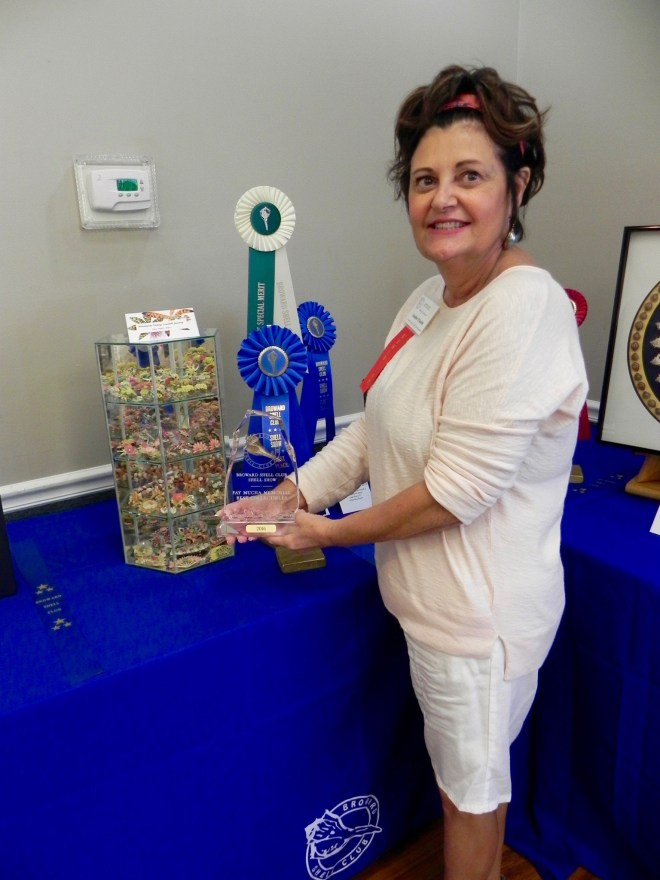
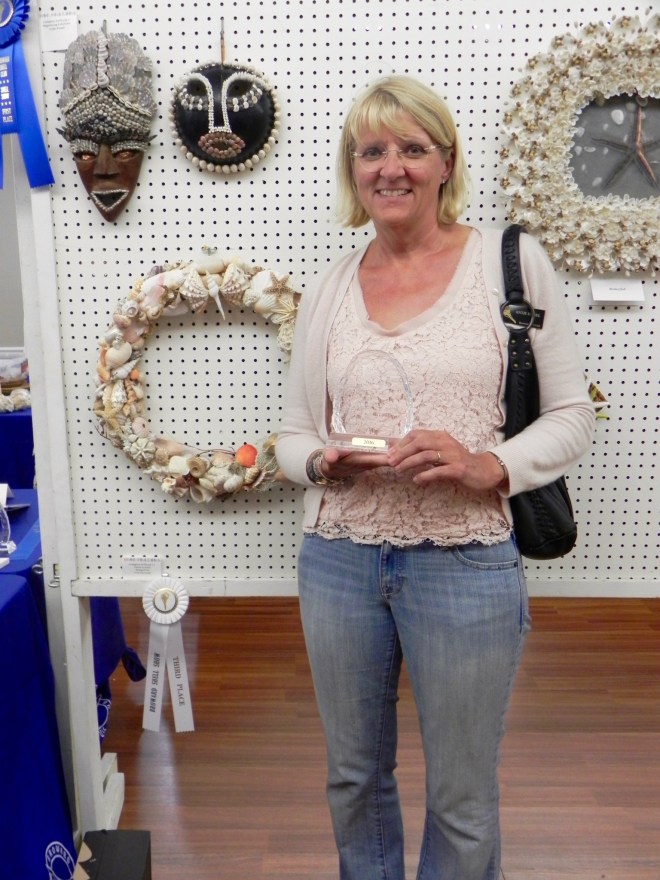
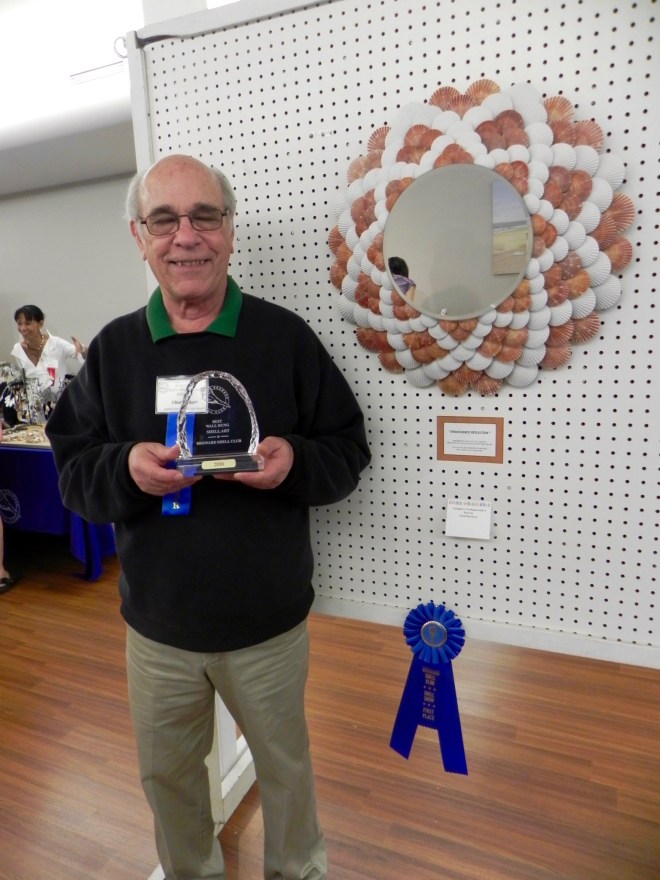
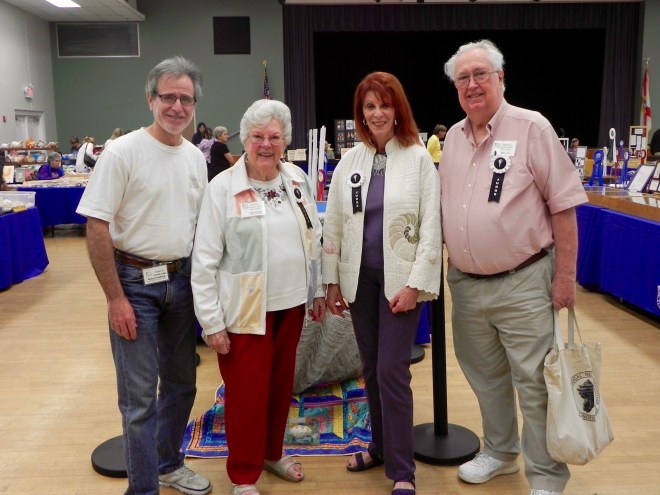
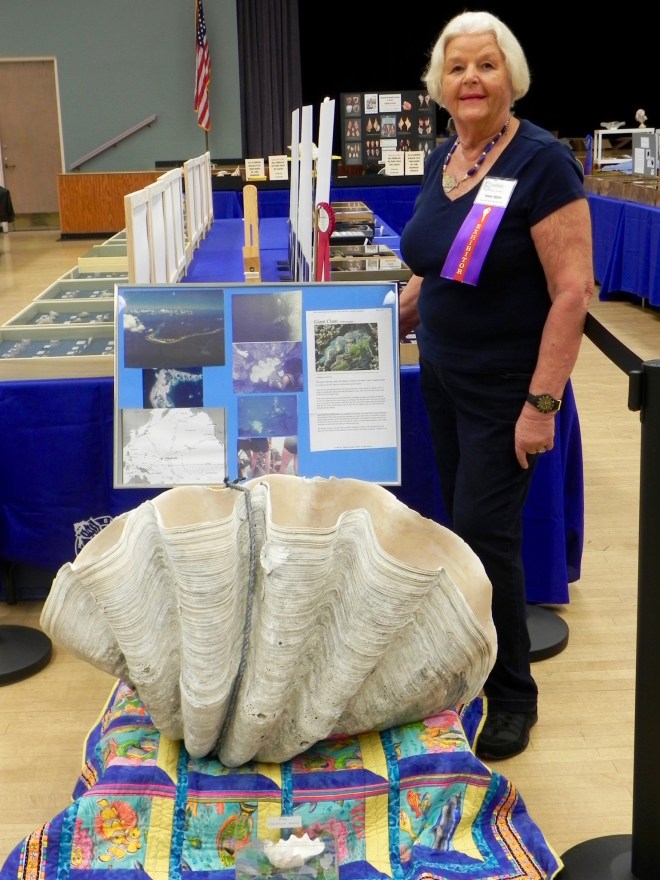
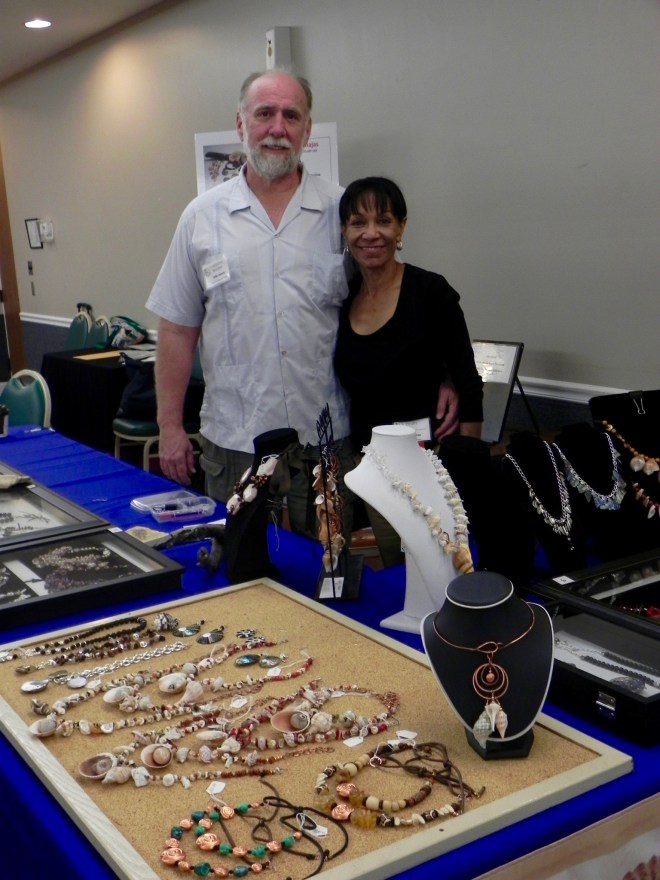
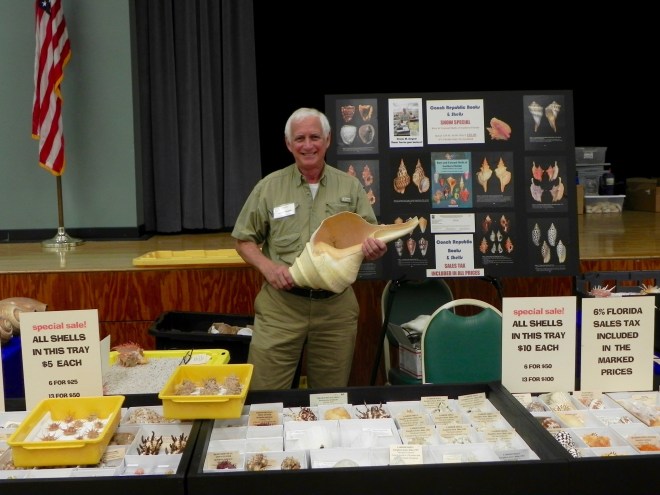
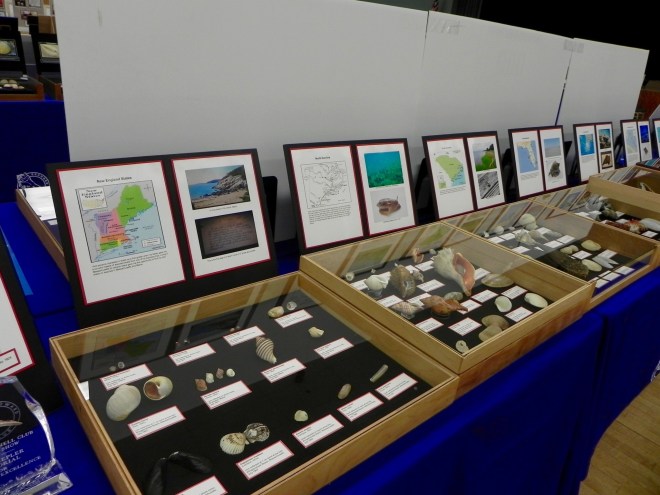
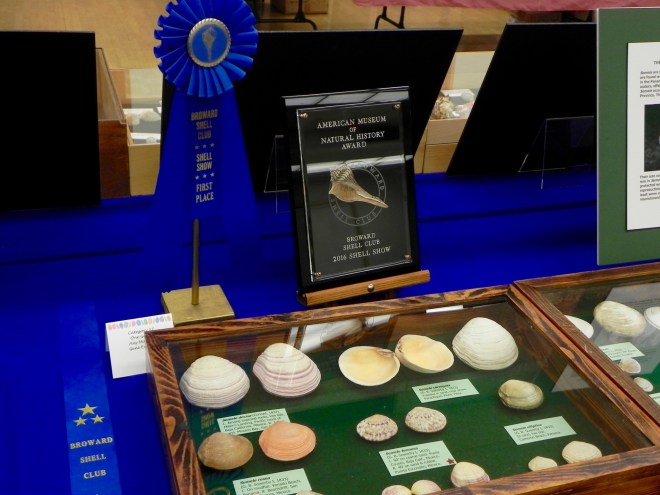
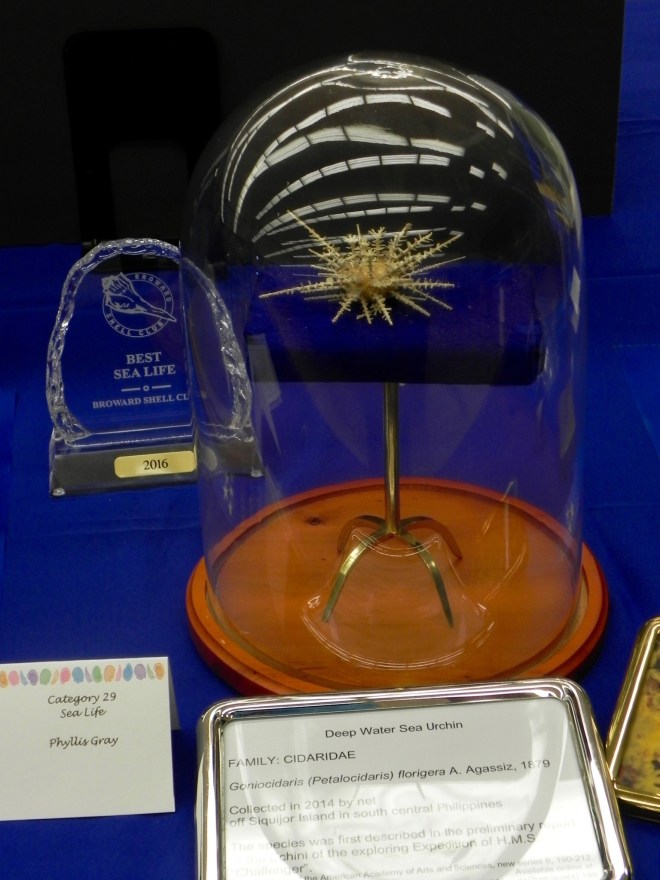
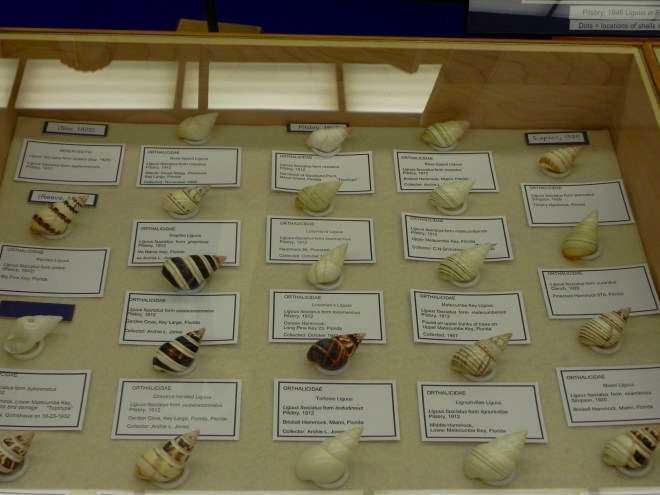
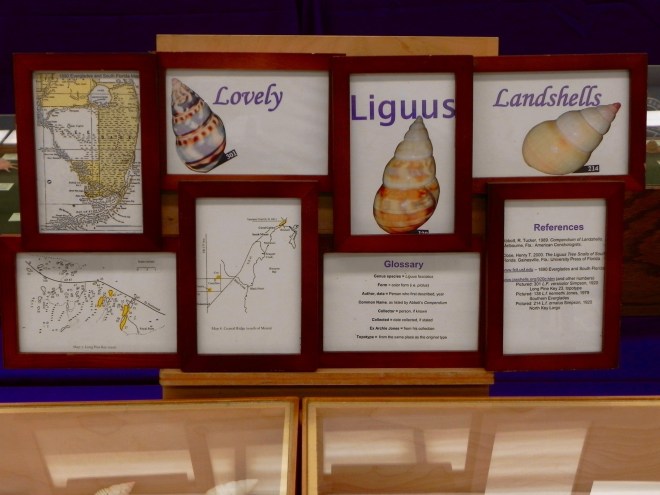
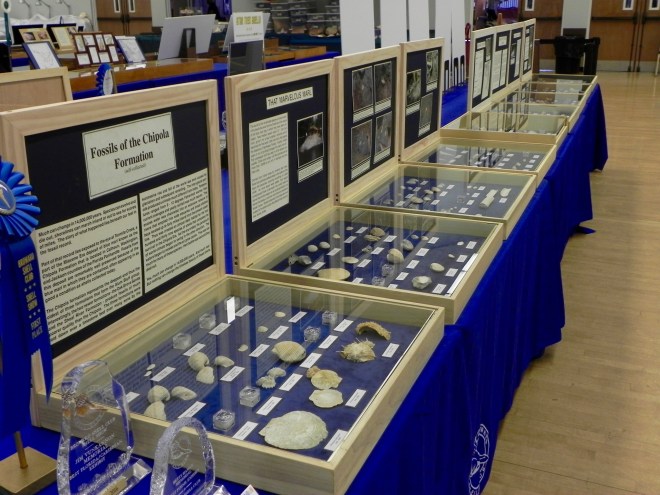
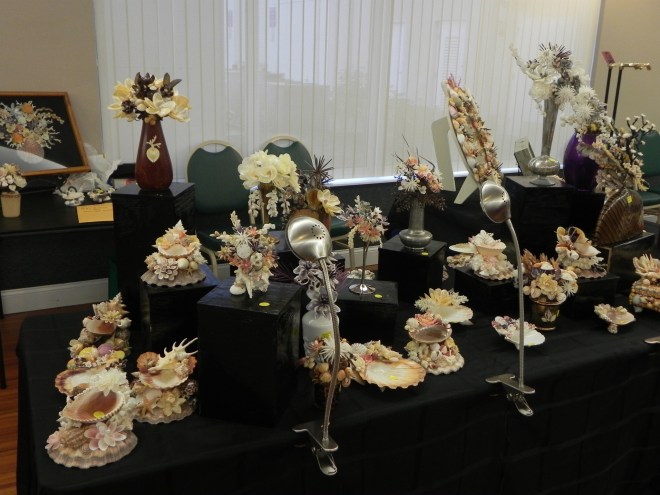
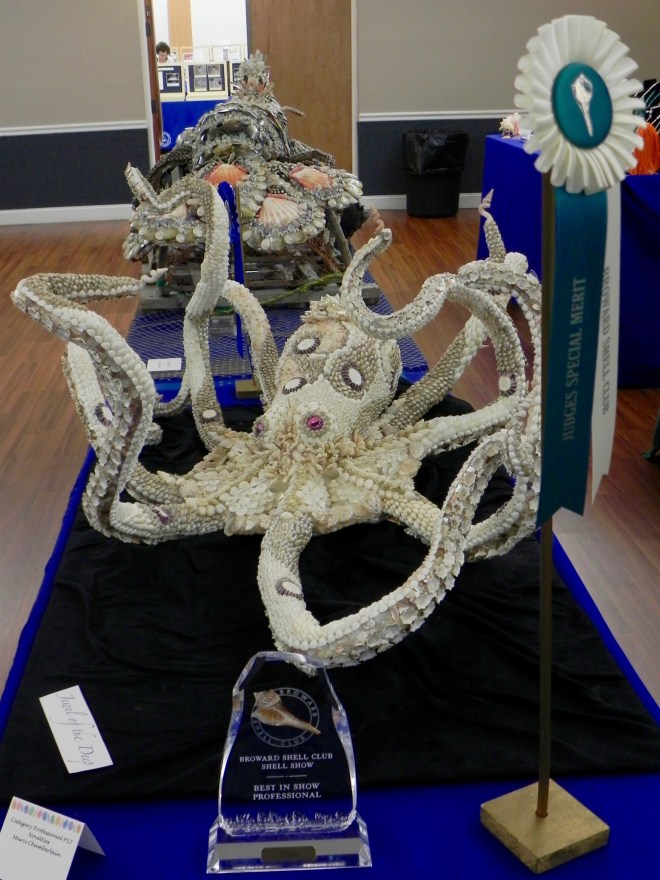
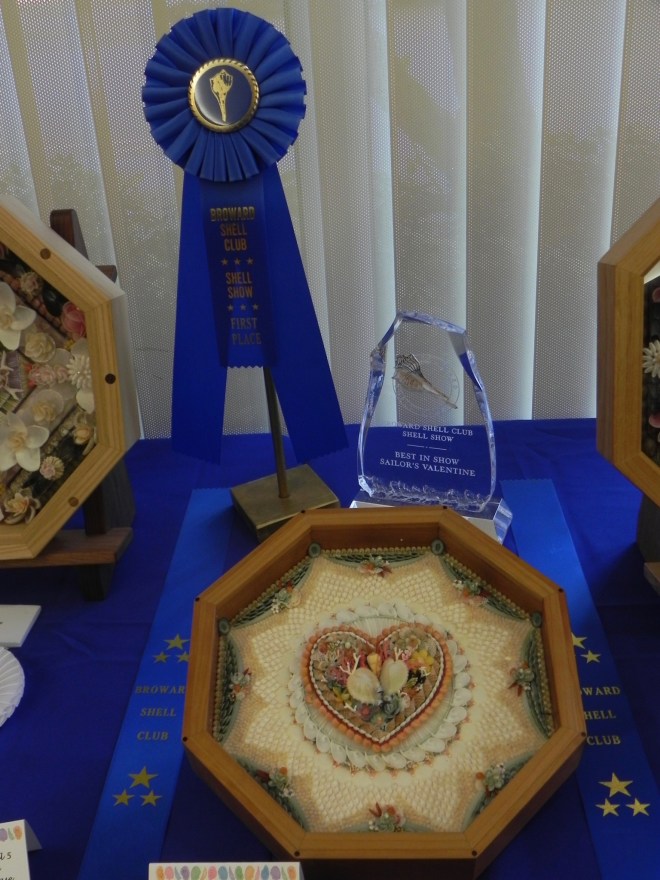
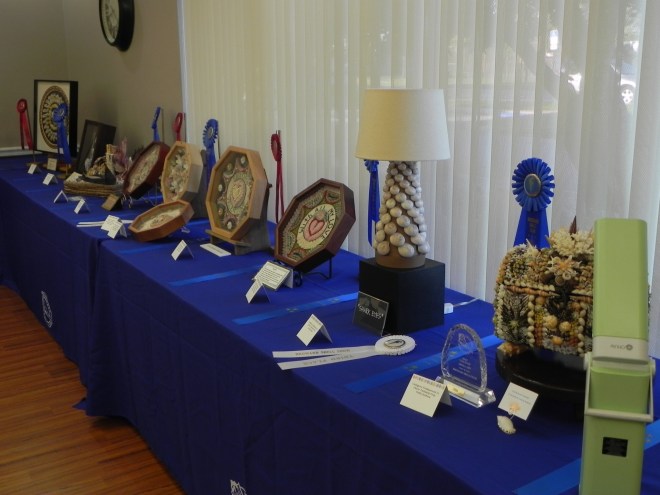
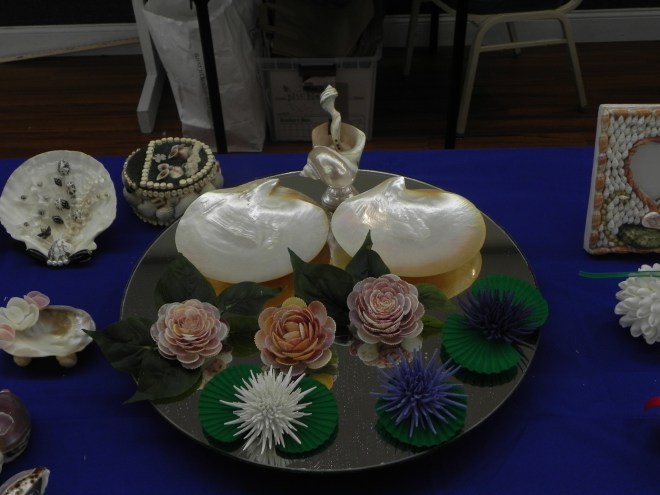
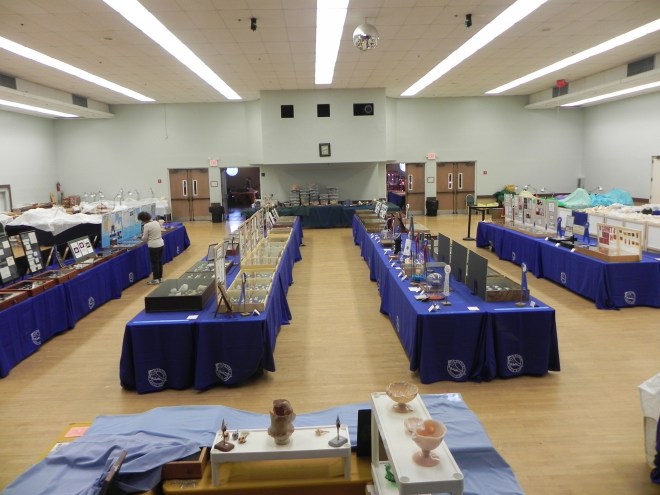
THANK YOU for participating in the 2016 Broward Shell Show!!!

It takes many dedicated people to make a successful shell show happen. The entire Broward Shell Club membership pitches in each year to prepare for and generously donate their time achieving this goal. We are grateful to each and every one of you for making this one of the best shows ever!! Also, thank you to our esteemed artistic judges Anne Joffe and Emily Savage, scientific judges Bill Lyons and Richard Goldberg. We thank all the exhibitors and vendors who participated without their support the shell show would not have been possible.

2016 Broward Shell Show Committee and Club Participants

Shell Show Chairperson – Alice Pace
Shell Show Production – Bob Pace
Publicity – Tracy Dale & Richard Kent
Ribbons and Trophies – Alice Pace
Shell ID Clinic – Carole Marshall, Kimi Kadota and Alice Lustig
Program/Program Ads – Rex Stilwell & Patti Jenkins
Breakfast/Lunch – Elaine Alvo, Linda Ebeling, Trisha Guarnieri,
Setup/Breakdown crew –Richard Sedlak, Bob Pace, Cindy Murfey, Mike Galka,Tom Laurin, Cindy Treece, Eric Petrusha, Doug ThompsonH

Judges Dinner and Centerpieces – Alice Pace and Patty Jenkins Treasurer – Tom Ball
Membership Application Forms – Marta Cruz
Judging Assistants – Carole Marshall and Bob Pace

Signage – Wayne Seme
Photographer – Bob Pace
Sales Table – Scientific – Linda Zylman, Cindy Murfey, and Rex Stilwell
Sales Table – Arts & Crafts – Linda Laurin, Carolyn Harvey, Steven Braska, Linda Ebeling, Andrea Diskin, Heather Strawbridge, Diana Esposito, Ann Kennedy, and Patti Jenkins.

Raffle/Membership Table – Sonny Ogden, Patty Springborn,

Also, thank you to all who brought delicious goodies to accompany our breakfasts and lunches on Saturday and Sunday.

Trophy sponsors: Mary Bukstel, John Chesler, Richard and Wanda Ott, Wayne Harland, Tom Ball, Carolyn VunKannon, Greg Curry Sr., Bob and Alice Pace, Linda Zylman Holzinger and David Holzinger, Juying and Bob Janowsky, Randy Allamand, Linda & Tom Laurin, Phyllis Diegel & Dick Duerr, Gene Everson, Sonny Ogden, Andrea Diskin, Heather Strawbridge, Kevan and Linda Sunderland, Linda Ebeling, Fran Koerner, Cindy Murfey.

Submitted By: Alice Pace
2016 Broward Shell Show Chairperson

For more club information contact:

Richard Sedlak (954) 296-5633 http://www.browardshellclub.org
DR. GARY SCHMELZ – JANUARY PROGRAM

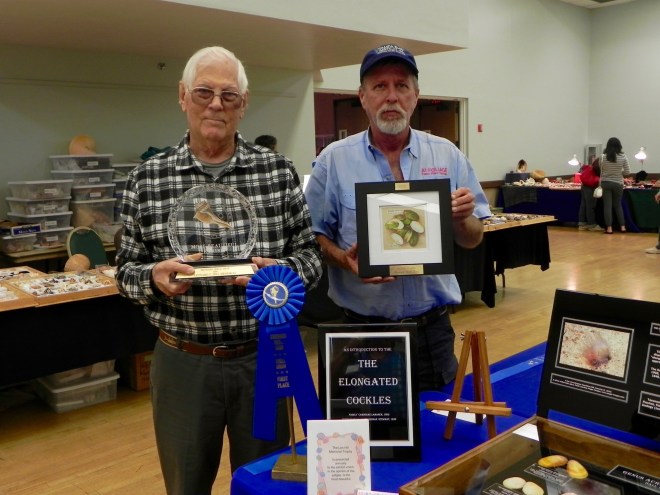
GarySchmelzphotoDr. Gary Schmelz will be the guest speaker at the January 2016 meeting, Professor Schmelz received his Ph.D. in biology from the University of Delaware. He is the former Director of the Big Cypress Nature Center and Director of Education for the Conservancy of Southwest Florida. While working at the Big Cypress Nature Center and Conservancy, he developed, among other things, environmental science classes for Collier County 3d , 4th, and 7th grade children, a national environmental education training program for teachers, established a wild animal rehabilitation center, and supervised the Conservancy’s sea turtle nesting program. For his accomplishments in the field of environmental education, he received the Elsie M. B. Naumburg Award as the leading environmental educator in the United States in 1985. In 2007 Dr. Schmelz received the Howard Converse Award for his outstanding contributions to Florida Paleontology.

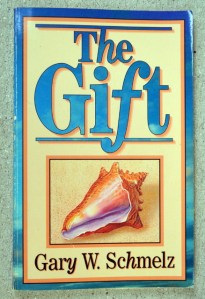
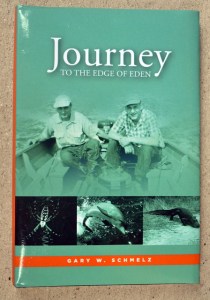
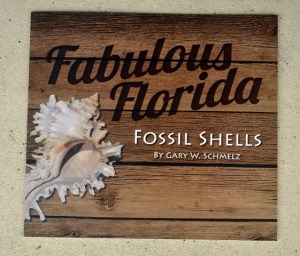
Dr. Schmelz has written dozens of natural history articles for Gulfshore Life Magazine. Currently, Dr. Schmelz is a Field Research Associate with the University of Florida where his main investigative interests are in the area of paleomalocology. To date, he has described 31 new species of fossil marine mollusks. His most recent scientific writings have appeared in The Nautilus. Other accomplishments include the publication of The Gift, a young adult novel, assistance with the establishment of the Marjory Stoneman Douglas Nature Center on Key Biscayne, the publication of a book on Native Wildflowers of Southwest Florida. More recently he has co-authored a booklet on Mollusca of the Florida Shoal River Formation, an acclaimed biography entitled Journey to the Edge of Eden. His most recent publication is a book on Fabulous Florida Fossil Shells

Dr. Schmelz is the past President of the Bailey-Matthews Shell Museum on Sanibel Island, Florida and was a former professor at Edison State College where he taught marine biology, oceanography, ecology, and biology.

PhotoGiftFl.BookCover2PhotoJourneyPhotofossilshells


SHELL OF THE MONTH – JANUARY 2016

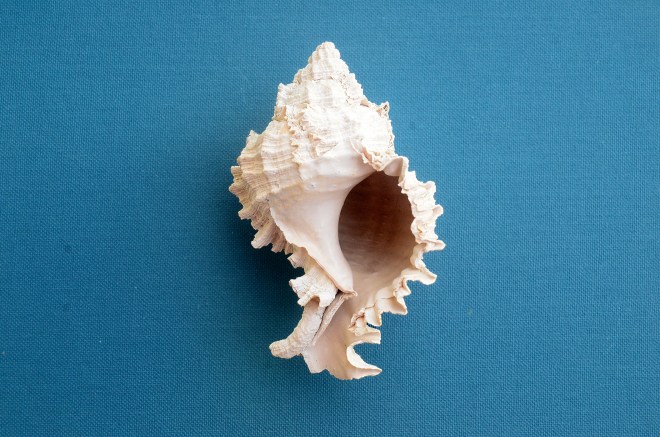
fossilSpecies: Phyllonotus globosus (Emmons, 1858)

Size: 82mm

Remarks: This is a GORGEOUS, rare specimen excavated in Sarasota, FL. It dates from the Pliocene and more specifically from the Piacenzian Age, around 3.6-2.588 million years ago. In the ancient sea that covered Florida, this species would have lived on open sand areas and among turtle grass. This is a beautifully preserved specimen, and a must have for the serious fossil collector. Incredibly, this species still lives on to this day and can now be found in Venezuela. I have to say though, this fossil is honestly much more ornate than the vast majority of live taken globosus specimens I have seen. Better spines, better detail…an all around amazing fossil!

(descriptive text that came with fossil – donated by Richard Kent)

SHELL OF THE MONTH – NOVEMBER 2015

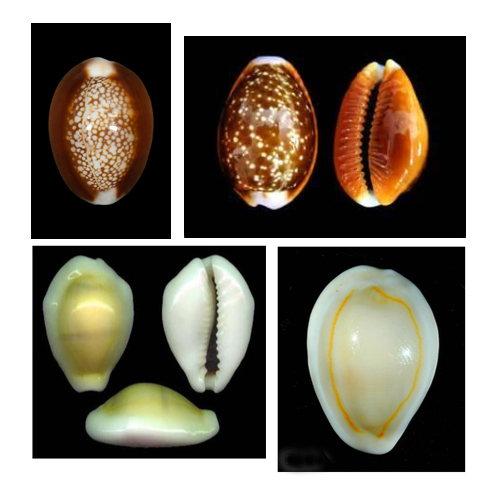
achatideaCypraea achatidea Sowerby, 1837 Trawled by fishing boats 50m, mud and sandy bottom, Dakar harbor, Senegal 2006
Cypraea achatidea Sowerby,1837 – the Agate Cowry – is a seldom seen attractive mid sized cowry.  It is usually trawled in moderately deep water. Its scarcity in collections is due to its range which goes from the western Mediterranean down along the cost of Africa.  Mediterranean specimens are almost impossible to attain. Most offered come from Senegal.
The shell is pyriform, light in weight with fine indistinct teeth on a whitish base.  The dorsum is banded in immature specimens but this gets covered over in adults and is hardly visible. The adult dorsum is cream, freckled and mottled with brown. The shell is quite consistent in color and size with the main variation being the degree and intensity of mottling. The size is typically around 35mm.
Scientists placed Cypraea achatidea in the genus Schilderia. It is the one and only species.  The African specimens are named Cypraea achatidea longingua Sch & Sch 1938 however many dealers prefer the name Cypraea achatidea inopinata Sch 1930.
This specimen is donated by Richard Kent and was acquired from an Italian dealer who specializes in cypraea.

SHELL OF THE MONTH – OCTOBER 2015

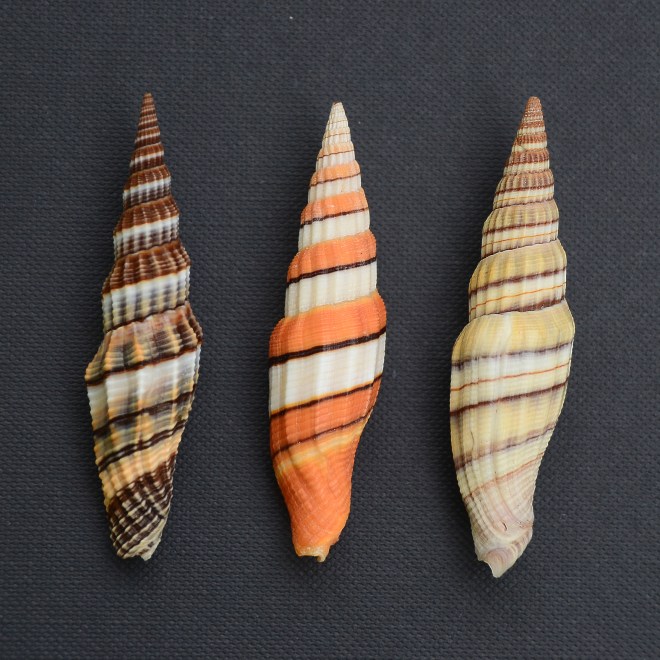
ReginaThe Queen Mitre  – Vexillum regina, Sowerby I, 1825 – 3 varieties

The Queen Mitre is cursed! This beautiful shell is elegantly shaped with a tall spire, sculptured with axial ribs and valleys, and circled with bands of multiple colors. Adult size ranges from 50 to 70mm. Unfortunately the Queen Mitre has a big problem. No one is quite sure what the proper name should be. It was always known as Vexillum regina, Sowerby I, 1825. Then the scientists decided that name was a nomen nudum and the proper name should be Vexillum citrinum, Gmelin 1791. Along came Cate in 1961 who christened the Phillipine shells, Vexillum filliaregina, the Colorful Queen.  Add to this confusion is Vexillium taeniatum, Lamark 1811 which may or may not be the same shell depending on who’s describing it. To make matters even worse, all Vexillum are no longer Mitres, the scientists moved the shells out of the Mitridae and into Costellaridae.

The shells in our raffle represent three of the variations on the market. Even novice collectors will have no problem distinguishing one from the other. Each variety is restricted in locale. Our identification is arbitrary. Even though Vexillum regina is again recognized as valid, there is no consensus as to which shell is which or whether they    share the same name or not.

Specimen #1. Vexillum citrinum, Gmelin 1791 is found only in Madagascar and rarely the African coast. Its colors are earth tones. It has the most sharply chiseled sculpture of the three. Extra large specimens are quite narrow.

Specimen #2. Vexillum filliaregina, Cate 1961 is the colorful orange, white and black variety found in the Philippines. It is quite variable in color but not shape.

SHELL OF THE MONTH – JULY 2015

cypraeaCypraea caputserpentis Linne, 1758 – Snake-Head Cowrie. This is one of the commonest yet most beautiful of the Cypraea. It also has the distinction of not varying in its pattern like many other Cowries.
Cypraea helvola Linne, 1758 – The Honey Cowrie. Another common Cowrie, but one that never fails to impress.
Cypraea moneta Linne, 1758 – The Money Cowrie. This is one of the most variable of the genus, even within one location. And, as its name implies, it has been used in many countries as a monetary unit
Cypraea annulus Linne, 1758 – The Gold- Ringer Cowrie. Although this Cypraea can vary in form the gold “ring” is a consistent feature.
Now, you may ask why we have so many Cowries this month….it’s simple. They are all self-collected and donated by our President, Sonny Ogden. In 1967 when she was stationed with her husband at the Navy Base on Kwajalein Island in the Pacific, she collected these from the lagoon in about 20 – 30 feet of water on a rubble bottom. So you see, these are “no ordinary Cowries”!

SHELL OF THE MONTH – JUNE 2015

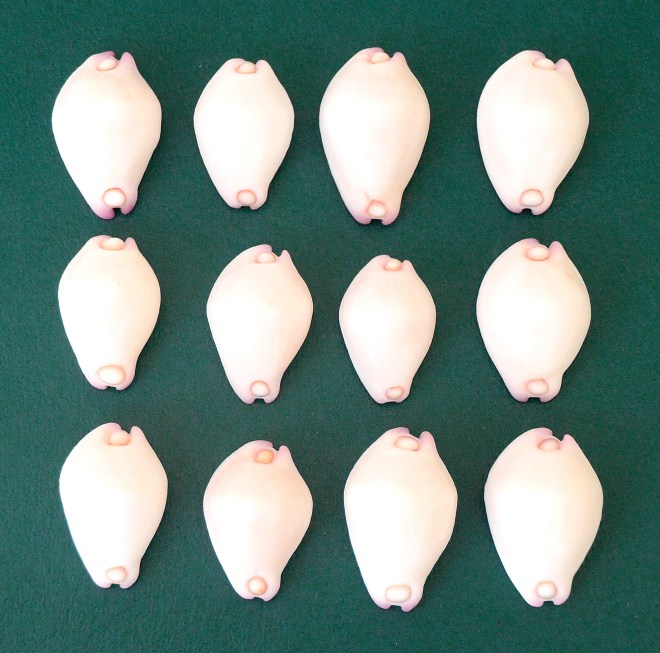
CalpurnusCalpurnus verrucosus (Linnaeus, 1758) 3-5m deep in soft corals and sponges Off Olango Island, Cebu, Philippines

For the June Shell of the Month we offer a set of 12 Calpurnus verrucosus (Linnaeus, 1758). All are high quality specimen shells which may either be used for comparison study or for shell craft.
Calpurnus verrucosus is a member of the family Ovulidae. It is a large family of diverse sizes and shapes. They have in common being white, pinkish or even approaching red, having a smooth often glossy surface, and a long narrow aperture. All members come from warm tropical waters, especially the Pacific. Calpurnus
verrucosus looks like an albino Cypraea with pink tips. In fact, its common name is little egg cowry or warty cowry. The warty is due to the umbilical button near each terminal. All Ovulidae are carnivorous and live on soft corals. In contrast to the solid color shells, the animal is often quite colorful. This one is white with orange leopard spots outlined in black.
The set was donated by Richard Kent. Our thanks also to Alice Lustig for her donation to the Raffle Table at the May meeting.