SHELL OF THE MONTH – AUGUST 2018

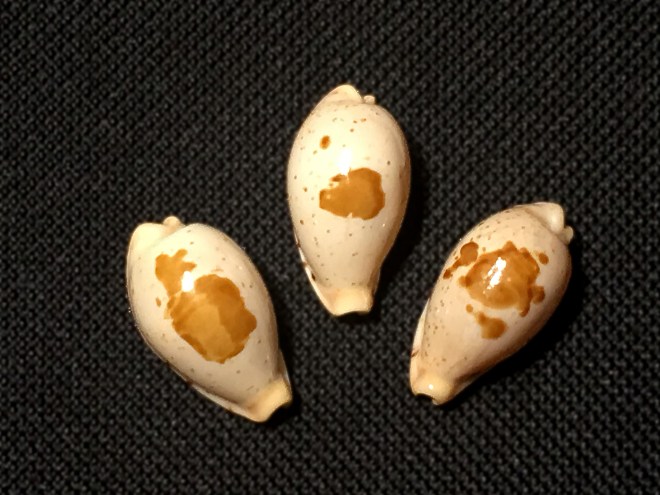
Cypraea saulae Gaskoin, 1843
under rock and coral by local divers at 10 meters
Balicasag Island, Bohol, Philippines

Miss Jane Saul was a famous British shell collector who was born in 1807 and lived to be 98 years old. In 1843 J. S. Gaskoin named this lovely little cowry after her. There does not appear to be a record of their relationship, if any.

Cypraea saulae is a collector favorite, scarce and not that easy to obtain. Most specimens come from the Philippines although the occasional few are found in Indonesia, New Guinea and off the north coast of Australia.

The shell is pyriform in shape, about an inch in size, cream in color on the dorsum with a white base. The dorsum has pale brown freckles and a blotch in the center of the dorsum. Often there are additional blotches that flank the main blotch. In rare instances there is no blotch at all. The margins are finely spotted. In some populations the intercises between the teeth are yellow, in others, white. Several varieties have been named but none are recognized today.

Cypaea saulae lives under coral slabs and rock, in shallow water and at depths up to 150 meters.

Three gem specimens are offered in this raffle to give collectors a sample of the never ending variety of patterns on this attractive little cowry. Donated by Richard Kent

August Program

Synopsis:

The relationship between corals and Symbiodinium dinoflagellates is sensitive to elevated sea-surface temperatures, which are projected to increase 2.6 to 4.8°C by 2100. One mechanism that may allow corals to persist through ocean warming is an association with thermally-tolerant symbionts. During early life stages, many coral larvae or juveniles will uptake multiple phylotypes of Symbiodinium through horizontal transmission. This diversity is maintained for months or years, but over time the juvenile coral will select a dominant Symbiodinium phylotype reflective of the local environment. It is unknown at what age or size selection occurs, and whether environmental factors drive this selection. To determine this, field and laboratory studies will be conducted using the massive starlet coral, Siderastrea siderea

Bio:

Sarah is a native Rhode Islander and earned her bachelor’s degree in Biology from Southern Connecticut State University in 2015. While studying temperate corals as an undergrad, she was also a collegiate athlete, playing DII softball for the Owls. In 2016, she moved to Florida to start her M.S. in Marine Biology at Nova Southeastern University. When not working under the guidance of Dr. Joana Figueiredo in the Marine Larval Ecology lab, Sarah can be found teaching in the Department of Biological Science or working at Gumbo Limbo Nature Center.

SHELL OF THE MONTH – JUNE 2018

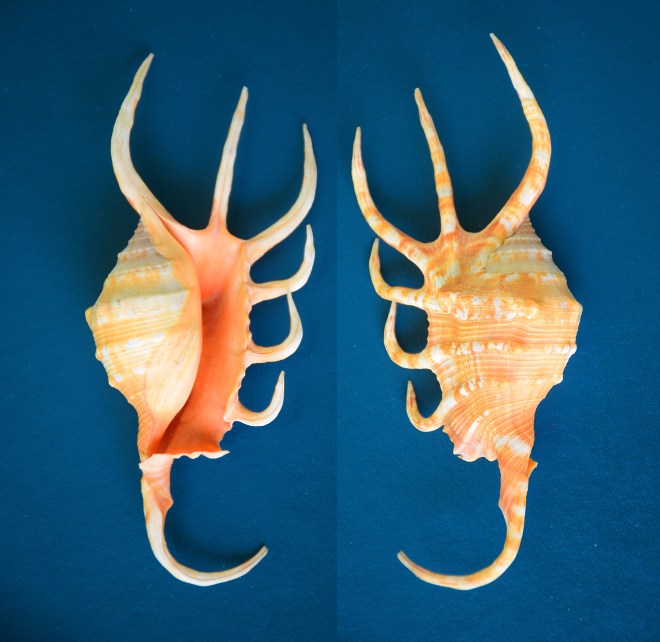
Lambis crocata (Link, 1807)
in sea grasses 15-20 meters
Kinbu Bay, Okinawa, Japan

The Spider Conchs are a small genus in the Strombidae family all of which inhabit the tropical seas of the Indo-Pacific region. The genus – Lambis – originally had the exotic name of Pterocera, so today Pterocera crocata Link, 1807 is now Lambis crocata Link, 1807.
An interesting feature of this genus is that the species have different numbers of fingers or arms or whatever one chooses to call the appendages that distinguish the spider conchs from the true conchs
Lambis crocata has the common name of Orange Spider Conch although the shell is rarely orange in color; the common color being tan or beige, but they do have an orange or peach colored aperture.
Lambis crocata has long, curved and delicate appendages making it one of the most attractive species of the genus. It is quite different from the large and heavy chunky, bland Lambis truncata Lightfoot, 1786 that has little interest to most collectors. There is a rare and expensive subspecies named Lambis crocata pilsbryi Abbott, 1961that has exceptionally long arms and is spectacular in appearance.
Most of the spider conchs are common, crocata being scarce, however the beautiful and prized Lambis violacea Swainson, 1821 is quite rare and very costly making it near impossible to collect the the complete genus.
Our specimen is very attractive, orangish is color with an intricate pattern on the dorsum and long graceful fingers. It is close to gem in quality, collected from a desirable location. Donated from the collection of Richard Kent.

2014 AUCTION LISTING

BROWARD SHELL CLUB AUCTION

Wednesday, March 12, 2014

At the Pompano Beach Emma Lou Olson Civic Center

 Auction Preview 6:15 p.m.  Bidding Begins 6:45 p.m.

NOTE:  Items marked with an asterisk (*) can be viewed on the club’s website

1.   3 Bahamian Tellins, Tellina listeri, Tellina magna and Tellina w/data

2.   5 Fossilized Brachiopods, no data

*3.   Chlamys sentoria nobilis w/data, bright orange, Japan

4.   Poirieria nuttingi w/data, Florida

5.   2 Conus regius w/data, Bahamas

6.   4 Janthina pallida w/data, Dania Beach, FL

7.   2 Drupa morum w/data, Huge!  One cleaned and one not! New Caledonia

8.   Conus virgo w/data, Philippines

9.   Siratus alabaster w/data, Taiwan

10. Conus vexillum w/data, Philippines

11. Conus magus w/data, NE Queensland, Australia

12. 2 Turbo intercostalis w/data, Hawaii

13. Turbo cornutus w/data Neat Specimen! Japan

14. 4 Turbo castanea w/data, all different forms and locales, FL, Bahamas & Venezuela

15. Chlamys sentoria nobilis w/data purple, Japan

16. 3 Caribachlamys sentis w/data, Bahamas

17. Aequipecten glyptus w/data, Gulf of Mexico

18. 3 Oliva reticularis w/data, 3 different locales, Bonaire, Bimini & Grand Bahama

19. 1 Chicoreus elliscrossi & 1 Chicoreus superbus, both w/data, Philippines

*20. Amaea magnifica w/ basic data 100mm Nice specimen!

21. Busycon perversum sinistrum 2/data, Florida, Our Club’s shell!

22. Cypraea talpa w/ great old data, Papua-New Guinea

23. Onustus caribaeus w/data Gulf of Mexico

24. Old Style Broward Shell Club T-Shirt, Vintage Collector’s Item!!  Size Medium

25. Old Style Broward Shell Club T-Shirt, Vintage Collector’s Item!!  Size Large

26.  Ladies Aqua & Pink Florida Shells T-shirt, Size Large

27. 1 issue of Acta Conchyliorum from March, 1992 on Cones

28. Books: Florida Marine Shells, by Vilas & Vilas, lovely old collector’s item, 1952

and Shell Collector’s Handbook by A.H. Verrill , 1950, loose binding

29. Book: Pacific Coast Nudibranchs by D.W. Behrens

30. 1 issue of Gulfshore Life, and A Preliminary list of South African Marine Shells

31. Stationery set w/ocean design

32. Books: Simon & Schuster’s Guide to Shells and Audubon Society Guide to North     

American Seashells

33. Books: Seashells by R.T. Abbott and Seashells of the World Golden Guide

34. Books: Field Guide to Shells, Atlantic & Gulf Coast by P.A. Morris and Seashells                                                                                            

by R.T. Abbott

35. Books: Shelling & Beachcombing in Southern & Caribbean Waters by Gary

Magnotte and Seashells of North America Golden Guide

36. Books: A Catalogue of Recent Mollusca by Walter F. Webb and A Field Guide to

the Shells by Percy Morris

37. An assortment of new plastic boxes and cases

38. Goody bags from Captiva C.O.A. 1997 and Suncoast C.O.A. 2009

39. Haliotis kamtschatkana w/data Washington state, USA.

40. 10 Chlamys rubidus w/full data from research project, San Juan Island, Washington

41. Antigona multicostata w/data Baja California, Mexico

42. 4 Chlamys hastata w/data Puget Sound, Washington

43. 3 Acmaea mitra and 4 Acmaea persona both w/data, Washington State, USA

44. 3 species of threatened fresh water mussels: Lampsilis cardium, Lampsilis radiata

siliquoidea & c.f. Elliptio complanata w/basic data, U.S. river systems

45. 2 Conus murabilis w/data India

46. 2 Conus tessulatus w/data India

47. Conus nielsenae reductaspiralis w/data Western Australia

48. Conus amadis castaneofasciatus w/data Thailand

49. Euspira lewisii w/data, Puget Sound, Washington

50. Conus janus w/data East Africa

51. Hemifusus tuba w/data Japan

52. Charonia variegata 4 specimen growth series, all w/data, Bahamas & Bonaire

53. Scaphella dohrni w/data, off Marco Island, Florida

54. 2 Scaphella junonia 1 baby and 1 adult, both w/data, Florida

55. 2 Canarium urceus incisus w/data, Phillipines

56. Strombus decoris decorus w/data, Thailand

57. Polystira tellea w/data, Key West, Florida

58. Polymita picta roseolimbata w/data, Cuba

59. 2 Conus purpurascens w/data, Costa Rica

60. 2 Architectonica nobilis w/basic data, Florida

61. Framed print of a Sand Dollar on Fabric

62. 3-Dimensional Framed Fabric Print of Scallop Shell

63. Framed Fabric Print of Nautilus shell

64. Signed & numbered print of Lighthouses of Georgia, N. Carolina and S. Carolina,

still in protective wrap w/ original price of $30.00

*65. Orange spondylus on Black Hammer Oyster, no data, oyster has chip on backside,

stunning decorator item

66. Bamboo Coral no data, opening bid $5.00

67. Lavender Stylaster Coral no data, opening bid $10.00

68. Brown Hydrocoral w/data, opening bid $5.00

69. Lavender Stylaster Coral no data, opening bid $10.00

70. 2 Murex pinnatus w/data, Taiwan

71. 6 Cypraea cinerea w/data, Florida

72. 3 Morum watanabei growth series w/data, Philippines opening bid $10.00

73.  Manupecten pesfelis w/data, Canary Islands

74. 2 Conus granarius w/data, Columbia

*75. Ficus gracilis w/data, Philippines, gorgeous!

76.  Syrinx aruanus no data

77.  Dolomena variabilis variabilis w/data Philippines

78. Voluta lapponica w/data, Sri Lanka

79. Conus mus w/data Bimini, Bahamas

80. 9 different specimen quality shells from Indonesia, donated by dealer Stephen MT,

unfortunately no I.D.’s or data

81. Cryptochiton stelleri w/data Washington, state, U.S.A.

*82. Cypraea teuleri w/data, ex: Don Bosch collection, Gulf of Oman

83. 3 Cypraea hungerfordi w/data, China

84. Cancellaria mercadoi w/data, Philippines

85. Ceratostoma foliatum w/data, Washington state, U.S.A.

86. Cypraea camelopardalis w/data, Red Sea

87. Haliotis kamtschatkana w/data, Washington state, U.S.A.

88. 2 Cancellaria cancellata w/data, Spain

89. 5 Diodora aspera w/data, Washingon state, U.S.A.

90.  Cypraea pulchella w/data, Burma, 37 mm.

91. 8 Tivela mactroides w/data, growth series, Brazil

92. Conus marmoreus w/data Philippines

93.  9 Nucella lamellosa w/data, varied colors, Washington state, U.S.A.

94. 3 Calliostoma annulatum w/data Washington state, U.S.A.

95. 2 Canarium mutabilis w/data Madagascar

96. Bag of fossilized shark’s teeth

97. Onustus caribaeus w/data,  Florida Keys

98. 3 Tellinella listeri w/data, Bahamas

99. Conus biliosus w/data, India

100. 3 Agaronia murrha, w/data, Costa Rica

101. Book: The Living Cowries by C.M. Burgess, beautifully inscribed to the South

Florida Shell Club in memory of Eunice G. Williams in 1970

102. Book: Living Shells by Charles Rawlings, brand new copy!

103. Book: Handbook for Shells Collectors by Walter F. Webb

104. Book: Shells and Shell Collecting by S. Peter Dance

105. Book: Australian Shells by Wilson & Gillet

106. Book: All Color Book of Seashells by J.M. Clayton

107. Book: The Living Cowries by C.M. Burgess

108. Book: Panamic Marine Shells by Maxwell Smith, 1944

109. Book: Marine Mollusca of the Eastern Coast of North America: Their Names &

Meanings by Henry Poirier

110. Book: An Illustrated Catalog of the Recent Species of the Rock Shells by Maxwell

Smith

111. Book: Florida Marine Shells by Vilas and Vilas

112. Book: East Coast Marine Shells by Maxwell Smith, 1945

113. Book: Sea Shells of the World with Values by Gordon Melvin

114. Book: Shells by Roderick Cameron

115. T-Shirt, size large from C.O.A., Jacksonville, FL, 1992

116. Astralium stellare w/data Australia

117. Callista maculata w/data, Panama City, Florida

118. Bolma girgylla w/basic data, Philippines

119. Brown Paper Nautilus, no data

120. 2 Murex beaui w/data, Cape San Blas

121. “Angaria Trio” Angaria delphinus melanacantha  Philippines,

Angaria nodosa Japan & Angaria aculeata Philippines, all w/basic data

122. Fusitriton oregonensis w/data San Juan Islands, Washington

123. Strombus iredalei w/data Western Australia

124. Phenacovolva pseudogracilis w/data, Japan

*125. Conus gloriamaris w/data, Philippines, 100mm,  Opening bid $20.00

126. Mitra cardinalis w/data Philippines

127. Aquipecten superbus w/data Philippines

128. Chicoreus cichoreum w/Spondylus attached, no data

129. Japelion pericochlion w/basic data, Japan

130. Lopha cristagalli cluster w/basic data, Indo-Pacific

131. Homolocantha tortua w/data, Ecuador

132. 2 Conus purperascens w/data Costa Rica

133. Conus leopardus w/data, a big boy fromVanuatu!

134. Chicoreus erythrostomus w/data Costa Rica

135.  Sand Dollar Necklace

136. 2 Doxander vittatus vittatus w/basic data, South China Sea

137. Fusinus dowianus w/data, Gulf of Mexico

138. 3 Tridacna squamosa, growth series w/data, Philippines

139. 2 Fenimorea halidorema w/data Bahamas

140. Euprotomus aratrum w/basic data, juvenile, South China Sea

141. Conus striatus w/data, Zanzibar, East Africa

*142. Murex tribulus w/basic data, Philippines

143. Phalium flammiferum w/data, Japan

144. Doxander campbelli w/data, Western Australia

145. File Shell Duo!  Ctenoides mitis w/data, Miami & Ctenoides scabra w/data, Miami

*146. Calliotectum smithi w/basic data, Philippines

147. Pleuroploca trapezium w/data, Philippines

148. Busycon coarctatum w/data Campeche, Mexico

149. Penion waitei w/data, Tasmania

150. 4 Cardita affinis w/data, Costa Rica

151. Conus mustelinus w/data, Singapore

152. Hexaplex chicoreum w/basic data, Philippines

153. Hexaplex radix w/data, Costa Rica

154. Hexaplex rosarium w/data Cape Verde Islands

155. 3 species of Florida Whelks!  Busycon perversum sinistrum, Busycon carica,

Busycon spratum pyruloides, all w/data, all from Florida

156. Cassis tuberosa w/data, Bimini, Bahamas

157. Strombus costatus 3 ways!  1 normal, 1 dwarf and 1 albino, all w/data, all from the

Bahamas

158. Vasum muricatum w/data, with coral encrusted spire, Florida Keys

159. Fasciolarium tulipa w/data, Goodland, Florida

160. 4 Mitra lens w/data, Costa Rica

161. 2 Strombus vittatus w/data, Australia

162. Canarium mutabilis w/data, Philippines

163. Strombus decorus decorus w/data, Thailand

164. Margostrombus marginatus robusta w/data, South China Sea

165. Conus miles w/data, Tanzania, Africa

166. Opeatostoma pseudodon w/data, Costa Rica

167.  3 Olivancillaria gibbosa w/data, Sri Lanka

168. Murexiella macgintyi w/data, Miami

169. 4 Cittarium pica w/data growth series, Bimini, Bahamas

170. Conus mustellinus w/data, Solomon Islands

171. 3 Caribochlamys sentis w/data. 2 orange and 1 purple, Miami

172. 3 Chicoreus florifer dilectus w/data, Marco Island, FL

173. Strombus campbelli w/data Australia

174. Dolomena variabilis variabilis w/data, Philippines

175. Amiantis callosa w/data California

176. Bursa bufo w/data, Philippines

177. Telescopium telescopium w/data, Philippines

178. Sanibel-Captiva Shell Club t-shirt, size large

179. 3 Cassis tuberosa w/data, growth series, Dania Beach, FL

180. 2 Species of Babylonia!  Babylonia japonicus and Babylonia borneensis, basic

data only, Taiwan

181. Carved Bonnet Shell

182. Melo amphora, w/basic data only, Indonesia

183. Homolocantha zamboi w/basic data

184. Really cool Sea Urchin!

185. Florida & Bahamian Cones…a comparison of seven different species!  All w/data

186. 9 Spathochlamys benedicti w/data Tampa, FL

187. An assortment of 9 lovely Indonesian shells donated by a dealer. Unfortunately no

data

188. Lyncina camelopardalis w/basic data, Red Sea

189. 2 Cantharus undosus w/basic data, Philippines

190. Sinovacula constricta w/basic data, Taiwan

191. Haustellum langleitae w/basic data, Sumatra

192. Conus villepinii fosteri w/data Tampa, FL

193. Pteropurpura bequaerti w/data Tampa, FL

194. Pleuroplaca trapezium w/data Philippines

195. Pleuroplaca granosa w/data, Costa Rica

196. Turbinella angulata w/data, Bahamas

197. Conus striatus w/data, Philippines

198. Chicoreus virgineus w/data Oman

199. “2 species of Vasum”:  Vasum muricatum w/data, Florida Keys, & Vasum

capitellum w/data, Bonaire, Netherlands Antilles

200. Lambis lambis w/data, Philippines

201. Spondylus americanus w/data, Ft. Lauderdale, FL

*202. Perotrochus teramachii w/data and operc!  East China Sea, NICE!

opening bid $20.00

*203. LARGE glazed stoneware planter in the shape of a snail, 27” across, designer

piece!  Retail price $280.00, bring muscles and room in your car if you want this!

opening bid $20.00

204. Set of 5 different shell design Christmas cards

*205. Shell Gift for your Child or Grandchild!  18 different shell related toys, stickers,

puzzles, books etc…all 1st quality, new in packages!  Comes complete with a

lovely shell design gift bag!  Retail value over $100.00, opening bid $20.00

*206. Beautiful glass urn filled with 1st quality polished shells.  Created & donated by

Sue Hobbs & Phil Dietz, retail value over $120.00, opening bid $20.00

*207. Upright Lucite case filled with 12 assorted Spondylus and Jewel Boxes,

opening bid $20.00

Many Thanks to our Generous Donors:

Nancy Galdo

Lauren Cope Estate

Bob and JuYing Janowsky

Randy Allamand

The Broward Shell Club

An anonymous friend of the Broward Shell Club

Bob & Alice Pace
Tom Ball

Sue Hobbs & Phil Dietz

Richard Kent

Don and Kitsmueller /“Keys Shells”

Caledonian Seashells

Nicholas Zantop

Phyllis Diegel

Stephen Tan / MT Shells

Vincente “Vic” B. Dungog

Al, Bev & Neil Deynzer / Showcase Shells

Randy Bridges

Kinsey Maxwell

Gene Everson

Linda Zylman Holzinger & David Holzinger
2014 SHELL SHOW RULES AND ENTRY FORMS

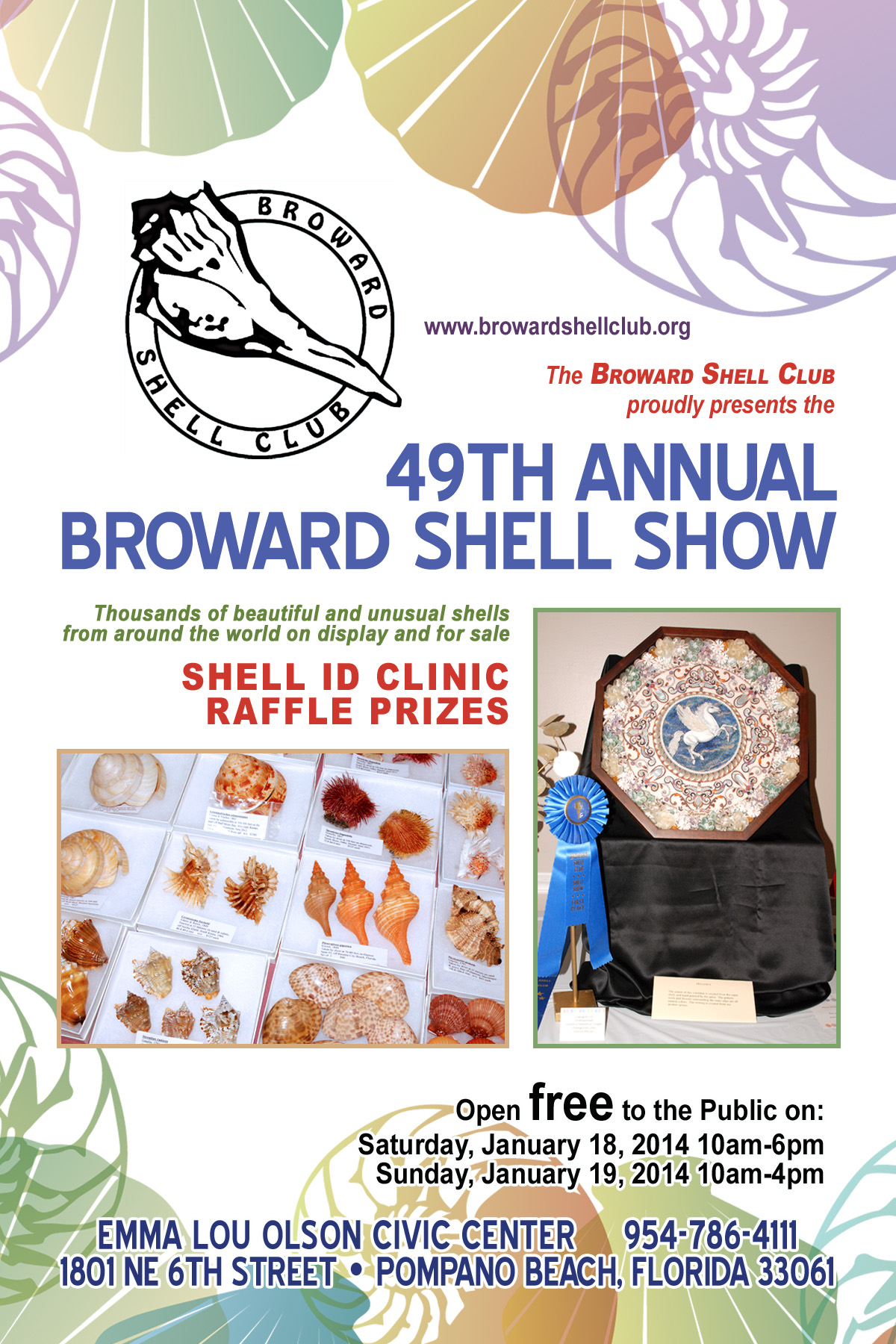
Greetings!  The Broward Shell Club cordially invites you to attend the 49th Annual Broward Shell Show on January 18-19, 2014 at the Emma Lou Olson Civic Center, 1801 NE 6th Street, Pompano Beach, Florida 33061, USA.  The 2014 Show is open to the Public and admission is FREE! Exhibitors may download the entry form and show rules, attached to the email, on our Facebook page,https://www.facebook.com/groups/BrowardShellClub, or on our website, http://browardshellclub.org.

Broward Shell Show Invitation, Rules and Show Information: Click on link to read:   2014 BSS RulesFINAL

Entry Forms: Scientific entry2014    Artistic entry2014    Best of the Best entry 2014

Entry forms must be received no later than Friday, January 3rd, 2014.

Each exhibitor shall submit an entry application to:

Alice Pace, 7405 SW 128 Court, Miami, FL 33183

Or Email your application attachment to: alicepace90@att.net

Major scientific awards presented include the Conchologists of America (COA), Dupont, American Museum of Natural History and Best of the Best. Special club trophies include Len Hill Memorial for Most Beautiful Exhibit, Jim VunKannon Memorial Florida/Caribbean, the Gerrit DeGraaff representing a large and exceptional specimen of a chosen species, Betty Hamann Memorial Fossil Trophy, Neil Hepler Memorial for Education Excellence, Shell of the Show (self-collected and any manner) plus Best Student and Best Beginner trophies, as well.

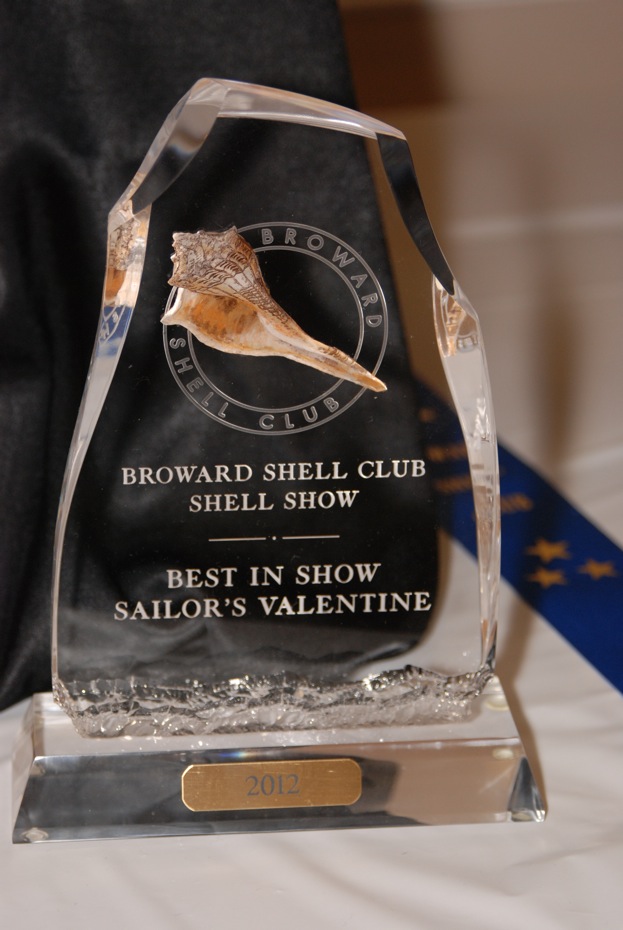
Club artistic awards include Best in Show trophies for Hobbyist, Professional and Sailor’s Valentine, the Fay Mucha Memorial for Best Collectibles, Best Table Top, and Best in Wall Hung Shell Craft. Also, Best Student and Best Beginning trophies.

Included with the rules is a great hotel package available for those who are visiting from out of town.  Also, included is the form to be complete if you would like to attend our Judge’s Dinner on the evening of Friday, January 17, 2014.  We hope you’ll join our friendly, fun-loving club for our exciting shell show weekend.  We’ll have a great time!!!

If you have any questions, please email Alice Pace at alicepace90@att.net or call 305-301-1296.

Very best regards,
Alice Pace
2014 Chairperson Broward Shell Show

DORRIE HIPSCHMAN APPOINTED NEW DIRECTOR OF BAILEY-MATHEWS SHELL MUSEUM

Screen shot 2013-07-08 at 12.06.25 AMSanibel, Fla. (Thursday, June 27, 2013) – The Board of Trustees of the Bailey-Matthews Shell Museum is proud to announce the hiring of Dorrie Hipschman as the Museum’s Executive Director. She brings a wealth of experience with more than 20 years leading non-profit organizations. Most recently, Hipschman was the Executive Director of the Cade Museum in Gainesville, Florida. Additionally, she has served as Executive Director at The Building for Kids in Appleton, Wisconsin, the Children’s Museum in Stockton, California, and the Flathead Convention and Visitors Association in Whitefish, Montana. She was also Development Director at the Plains Art Museum in Fargo, ND. Hipschman is a cum laude graduate of Georgetown University with a degree in American Studies and additional MBA courses at the University of Hawaii. The Museum will greatly benefit from Hipschman’s extensive skills in strategic planning, museum expansion, major gift fundraising and grant writing, and experience in managing staff and volunteers, according to Board President Clair Beckmann. Hipschman has received several museum awards including the American Library Services for Children Award, MetLife Promising Practices Award for children’s health programming and the Wisconsin Convention & Visitors Bureau Destination Builder Award. “Dorrie Hipschman is a lifelong enthusiast of both shells and the ocean environment that they represent. Having come from a large, scientifically-minded, sailing family, she has spent much of her life hunting for, cleaning and collecting seashells along the Atlantic coast, while scuba diving in Hawaii, on Sanibel Island and while snorkeling in Saipan.” Beckmann said. The Board also said Dr. José Leal will transition to become Curator and Director of Education. “From the unique perspective of a marine scientist, it will be great to have the opportunity to expand on and interpret new findings to our visitors and followers worldwide. With Dorrie taking on the Museum management, I will be able to devote my time, as Curator, to the very specialty that introduced me to museum activities in the first place—collection-based research and organization. My thanks to our supporters for their continued assistance and support of the Shell Museum and its efforts,” Leal said. Dorrie Hipschman (dorriehipschman@gmail.com or 352-682-292 Of the more than 17,500 museums in the U.S., The Bailey-Matthews Shell Museum is one of approximately 800 institutions accredited by the American Alliance of Museums. The Museum features more than 35 exhibits of shells and mollusks from around the world. Exhibits are devoted to shells in art and history, shell habitat, rare specimens, fossil shells, common Southwest Florida shells, and more. The learning lab features a hands-on play area for children, displays, games, and a tank with indigenous mollusks. Two half-hour videos, “Mollusks in Action” & “Tales and Trails,” are shown throughout the day, and a children’s video is shown continuously. The Museum Store offers a wide selection of shell books. The Museum is open 7 days a week, 10 a.m. – 5 p.m. LIBRARY NEWS

2013 SHELL SHOW INFORMATION

48th Annual BROWARD SHELL SHOW

January 19-20, 2013

Dr. Harry Lee and Valentino Leidi BSS 2010Hosted by the nonprofit Broward Shell Club, the Broward Shell Show offers an opportunity for shell-loving enthusiasts to enjoy an exciting weekend immersed in the wonderful world of shells.


Sonny:ClamThousands of beautiful and unusual shells from around the world will be on display and for sale. Weekend Attractions include: Competitive displays by dozens of collectors; Shell Artists showcasing their designs; International Shell Market featuring shells, shell craft, jewelry and educational shell books; a Shell ID Station where beginners or advanced shell collectors can bring their seashells for identification; Raffle items including a spectacular Sailor’s Valentine made by Brandy Llewelyn valued at $2,700, and Door Prizes.

This year, the Shell Show will add an exciting new feature. Five interesting, educational programs will be presented during the shell show. There will be a program on seashells and one program on shell craft each day. Additionally, for those of you who like to purchase on-line, there will be a program on buying shells on Ebay. Please visit our Facebook page  for additional information regarding the guest speakers,

Saturday, January 19:

12 pm – Shell Show Judge Dr. Harry Lee – Audubon’s Shells

2pm – Club member Tom Ball – Buying Shells on Ebay

4pm – Shell Show Judge Emily Savage – Basics of Arranging (Shell Craft)

Sunday, January 20:

12pm – Dr. Richard Kirk – Searching Around the World for the Most Beautiful Scallop

2pm – Jae Kellogg – The Art of Flower Making in Shell Craft

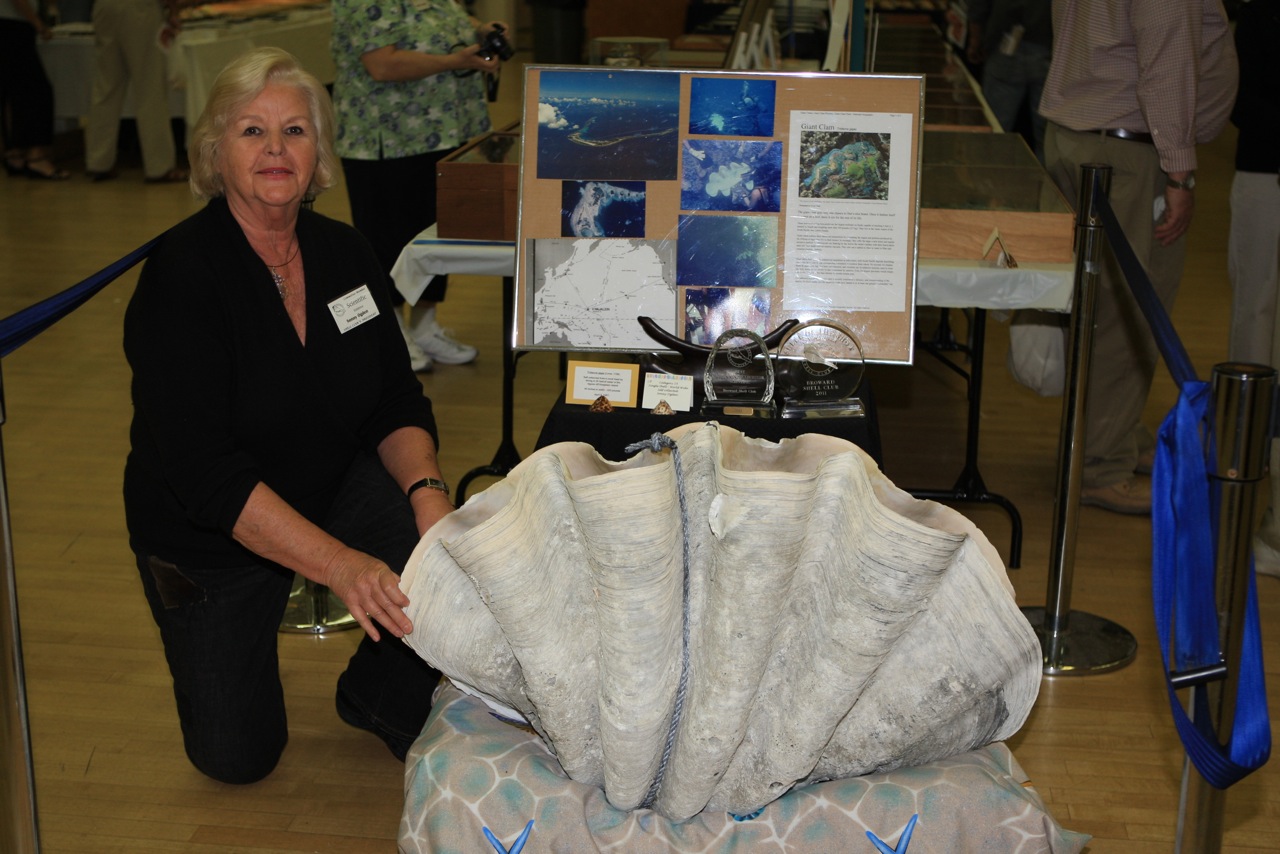
Take your picture with Sonny Ogden’s “Killer Clam”. We invite you to attend the 2013 South Florida shelling event of the year!

January 19-20, 2013

Emma Lou Olson Civic Center, 1801 NE 6 St, Pompano Beach, 33060. Hours: Saturday, 1/19/13 10am – 6pm, Sunday, 1/20/13 10am – 4pm Admission and parking are free.

For more information, call 305-467-4412 or writenancygaldo@gmail.com

www.browardshellclub.orgwww.facebook.com/groups/BrowardShellClub/

Best Sailor's ValentineScientific Shell Show Judge – Dr. Richard Kirk

Richard Y. Kirk graduated with a Ph.D. in Slavic Linguistics at the University of Pennsylvania and worked for the Department of Veteran Affairs until his retirement in 2007.

He has been active in both the Conchologists of America (COA) and the Academy of Natural Sciences / Philadelphia Shell Club, founding the annual Philadelphia Shell Show in 1983, as past club president, auctioneer, scientific judge and co-chairing the National COA Convention in Philadelphia.

Richard was named “Fellow” at the Academy of Natural Sciences at Drexel University, 2011 and is currently co-authoring a new encyclopedia of shells with Dr. Gary Rosenberg, Paul Callomon and Sue Hobbs.

Richard tells his rather humorous story. “When I was 4 years old, I did something “good” and mom decided to reward me, so she took me to the basement and brought out a round red can with an Indian on it (baking soda?), opened it and it was full of beautiful shells, she said from India, she allowed me to pick just one as my reward. It took me about an hour to choose on shell, and that night I went downstairs and took the whole can!  With shells it was love at first sight!  I still have that first shell, it was a busycon contrarium and those shells in the can as it turned out were not from India but from Florida.  I have been collecting ever since, and now have a massive worldwide marine collection that will some day go to the Academy of Natural Sciences, because it includes many species that the Academy does not yet have.  My shells are being photographed for the new encyclopedia of shells.”

Scientific Shell Show Judge – Dr. Harry Lee

Harry G. Lee was born and raised in Short Hills New Jersey, where he began the pursuit of conchology at age six. Settling in Jacksonville FL in 1974, he practiced Internal medicine until his retirement in 2006.

Harry received his education at Williams College (biology honors) and medical training at Cornell University, Emory University, the National Institutes of Health, and the University of California San Francisco. He is the author of Marine Shells of Northeast Florida (2009) and over a dozen scientific papers and serves as a Field Associate of the Florida Museum of Natural History and Vice President of The Conchologists of America. He is a Trustee of the Museum of Science and History (Jacksonville) and previously served in that capacity for the Paleontological Research Institution (Cornell University) and the Bailey-Matthews Shell Museum (Sanibel, FL). In addition, Harry is on the Editorial Board of The Nautilus and American Conchologist.

Harry maintains a general collection of shells but is particularly interested in American mollusks (land, freshwater, and marine) and the micromollusks of the western Atlantic. He has written over 100 popular articles related to malacology and shell collecting and judged about 65 shell shows.

Artistic Shell Show Judge – Sandy Moran

The very first Sailor’s Valentine Sandy Moran viewed changed her life and her interest grew as she learned more about the history of these objects that spoke so elegantly of a lonely sailor’s love. A person with a fine eye for artistic quality, and a love for all things connected with the sea, Sandy was inspired to realize her own vision of a unique Sailor’s Valentine. Her valentines include patterns and flowers of various unusual seashells. Many of the shells were discovered in old shell collections.

Having reached pre-eminence in her field, Sandy Moran has earned numerous first-place awards, beginning in the early nineties. Additionally, she was a featured artist on a PBS fundraiser show, featured in Martha Stewart magazine, Coastal Living magazine, La Vie Claire Magazine, Yankee Magazine, the Wall Street Journal, as well as in various Florida publications and national television.  Additionally, Sandy is Artistic Chairperson of the famed Sanibel Shell Show and a trustee of the Bailey-Mathews Shell Museum on Sanibel Island. Her work is displayed in galleries on Cape Cod, Nantucket and in Sanibel.

Artistic Shell Show Judge – Emily Savage

Emily Savage was born in Perth Amboy, N.J. and moved to Miami, Florida with her familyin 1944. She met her husband Herbert Savage in 1949 and they were married in Miami onOctober 21st, 1950. They have three children, Charlene Butler, Sharon Stewart and HerbertSavage, Jr. and six grandchildren.

Emily was active in PTA Organizations during the years her children were in school, becoming a Life Member. She was also active in the General Federation of Woman’s Clubs and served as the State Junior Director of Florida from 1962-64 when Florida was the Outstanding State in the Nation.  In 1963, she was chosen to represent Florida in the Mrs. America pageant.

She moved to Marco Island in 1978 with her family where her love of shells and her interest in them grew.  She joined the Marco Island Shell Club where she met several club members who were her mentors. She served as President and is an Honorary Member of the club.

She has won numerous ribbons in various Florida Shell Shows over the years, was awarded the Peggy Bennett Memorial Award for the Best Commercial Artistic Creation, and she has received the Best Commercial Artistic Creation Award three times at the Marco Island Shell Show.

Emily opened her shell shop, Shells by Emily, in 1985 and has been in the same location for the past 28 years. They carry a large inventory of local and imported shells, creating most of the items they sell using a various assortment of shapes and sizes of shells, providing a wide variety of shell creations including wedding favors, cake tops, bride bouquets, corsages, lamps, mirrors, containers, picture frames, and other specialty arrangements for any occasion. The friendships, camaraderie and creativity are the highlights of her day.

SHELL OF THE MONTH SEPTEMBER 2012

A conch is a conch believed the great naturalist Linnaeus, so in 1758 he classified our shell as Strombus Lambis. This didn’t sit well with his followers who observed a group of conchs with claw like extensions that they believed deserved their own genus.  Lamark in 1799 renamed our shell Pterocera Lambis – from the Greek, pteron, wing and keras, a horn. This is in my opinion a fantastic name. Unfortunately in 1798 Roding was also reclassifying the spider conchs and beat Lamark to the punch, hence ourshell is known today by the boring name Lambis lambis, Linnaeus 1758.
The distinctive feature of the spider conchs is that the mantle in the adult expands into a series of long finger-like processes each of which secretes a calcareous process or “claw” that give the shell its most distinctive appearance.
Lambis lambis is one of the few shells that exhibit sexual dimorphism. First, the females grow to almost twice the size of the males. Second, the claws point out in opposite directions, with the females longer and more finely developed. Third, they are different in color. The female tends to be a solid drab tan. The male mottled tan and cream while in some populations, as this one, a rich chocolate making it a most stunning shell.
It is interesting to note that the only other member in this small genus to exhibit sexual dimorphism is Lambis chiragra, Linnaeus 1758. The spider conchs, also known as scorpion shells, live in coral reef areas. They can be found in littoral and sublittoral zones, in tidal pools and low tide levels to a depth of around 25 meters. They are herbvivores.
Our specimen comes complete with the operculum, is from the Philippines and was donated from the collection of Richard Kent

HELEN STANLEY MEMORIAL DONATION

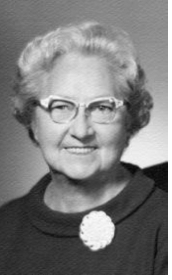
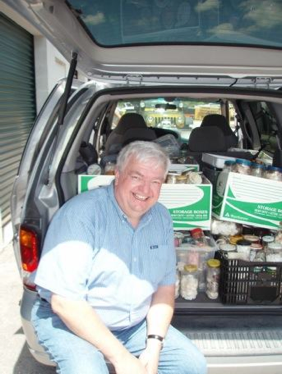
To honor his grandmother, Helen Stanley, Lorin Cope, of St. Louis, MO, has donated her huge collection of shell craft material to the Broward Shell Club. We are grateful to Mr. Cope for going well out of his way to drive an SUV, filled with plastic bins holding hundreds of jars of tiny shells, all the way from Ohio to Homestead for us. Additionally, he emptied out a Homestead storage room with countless more plastic bins of shells that were stored for over twenty years. Thank you, Lorin, for your generosity to our club and for honoring your grandmother by looking after her treasures!!!Mrs. Helen E. Stanley (1901-1992) Married to Lorin Stanley. Grew up in Ohio but started going to Florida in 1932 because her husband hated cold weather and they needed to make money during the depression. They were dairy farmers in Ohio and worked in the tomato, bean, and cucumber fields in South Florida each winter. They built their first Florida home in 1946. Helen started collecting, showing and “working” with shells in the 1960’s. A few of her shells were picked up along the beach, but many were purchased and shipped to her in Ohio as well as in Florida. She loved going to Marco Island, long before all the homes, hotels and condos were built, to pick up shells and visit the stores selling shells along the coast. A member of the Greater Miami Shell Club, Helen won Shell Show ribbons and awards during the 70s and 80s for her beautiful shell craft exhibits! One of her most prestigious awards is a wooden plaque from the Greater Miami Shell Club’s 23rd Shell Show in 1985 for Best Shell Art Exhibit.