Program for June Meeting

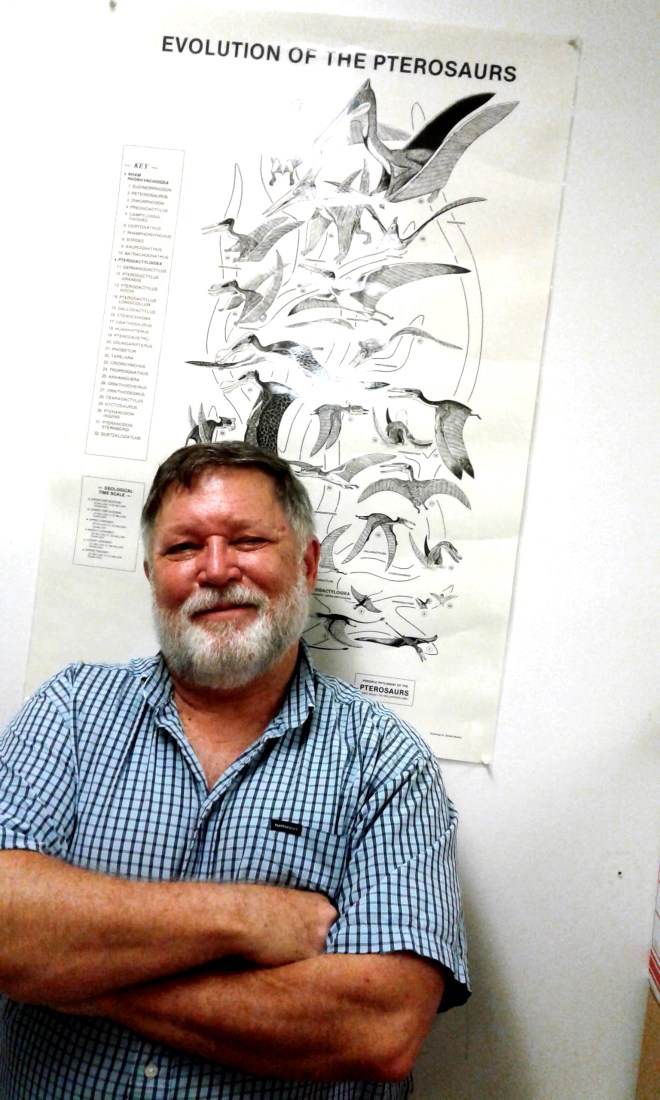
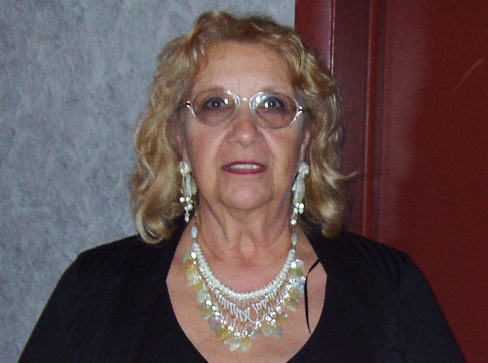
This month’s program will be Carole Marshall. The title of her program is “So You Think You Want to Write a Shell Book?” Carole has been writing a shell book on the “Seashells of Peanut Island and the Lake Worth Lagoon”, for about 12 years now and she still isn’t finished. This is a humorous tongue in cheek, informative program on the things she has learned along the way and why she still isn’t finished. There is also a lot of good information for anyone who is interested in learning about mollusks, web sites that are important for everyone to know and how technology has changed Malacology in the last 12 years. There will be a hand out on important web sites as well.

Carole has always been interested in Natural History, collecting fresh water snails along the Rock River in Wisconsin as a child, majoring in Science in High School and later learning about sea shells. Her mother started collecting shells on trips to Ft. Myers Beach in the 1960’s and Carole soon realized how many interesting stories came with the shells. At a small club she gave a talk on shells to the group during hobby night when a woman came and asked her if she would be interested in joining the Chicago Shell Club. (Her response was “They HAVE CLUBS for People who Collect Shells?) For several years Carole and her parents, John and Lorraine Landers made the trip to the city (Chicago) from the suburbs. Shortly after 1969, when her parents moved to Ft. Myers, Carole and family moved to the West Palm Beach area in 1970.
Although she swears it was extreme mental incapacity that made her do it, Carole has been President of 3 different Shell Clubs. She has written many small articles for the clubs, COA magazine and for Of Sea and Shore Magazine as well as having given talks at Jamborees, COA Conventions, at the American Malacological Society, Florida United Malacologists meetings and for many local groups and organizations. She loves to teach about shells and finds the stories about shell use from ancient times to their uses today, of endless fascination.
Carole also discovered that the stories she loves about shells, can also be found on coins and paper money and Carole has an extensive collection of paper money, coins from ancient to modern, other exonumia, poker chips, medals and trade tokens.
Hopefully you will come to the meeting, be amused, laugh a little and learn.
SHELL OF THE MONTH – MAY 2019

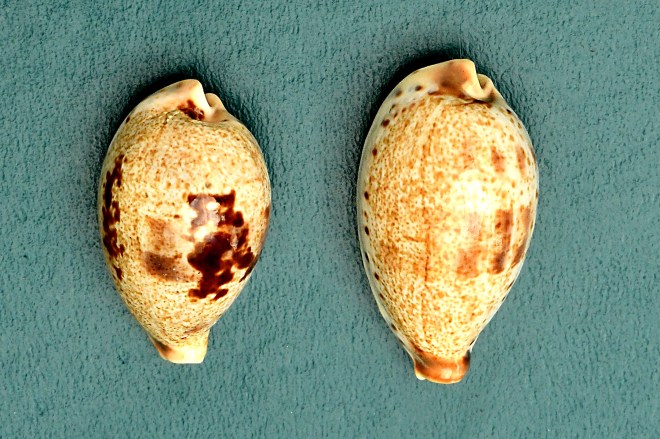
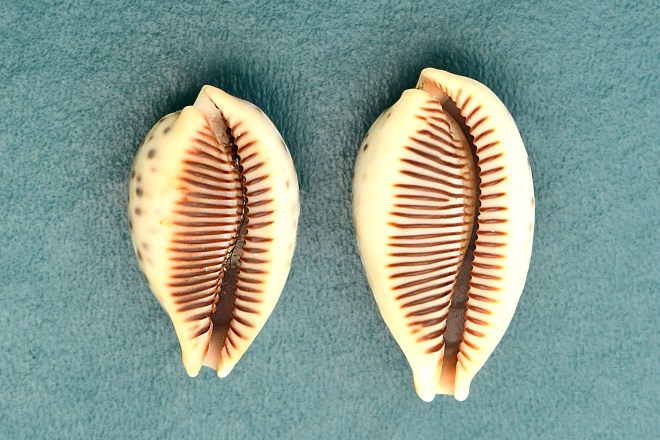
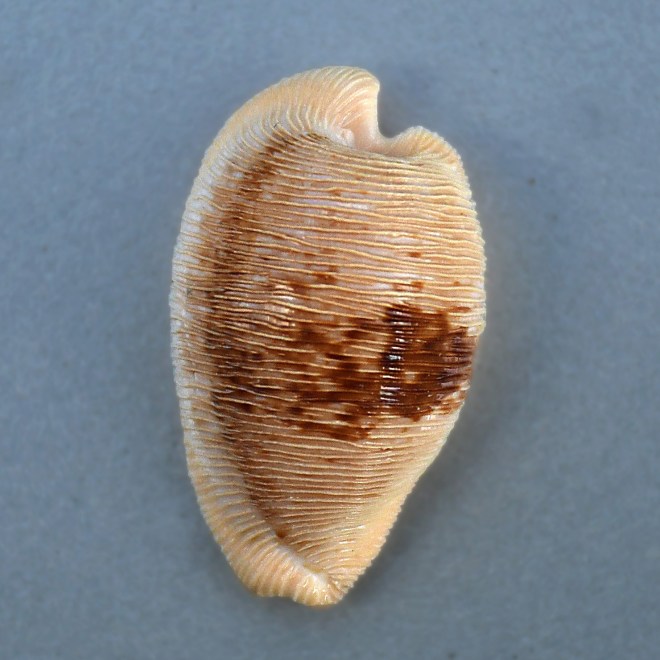
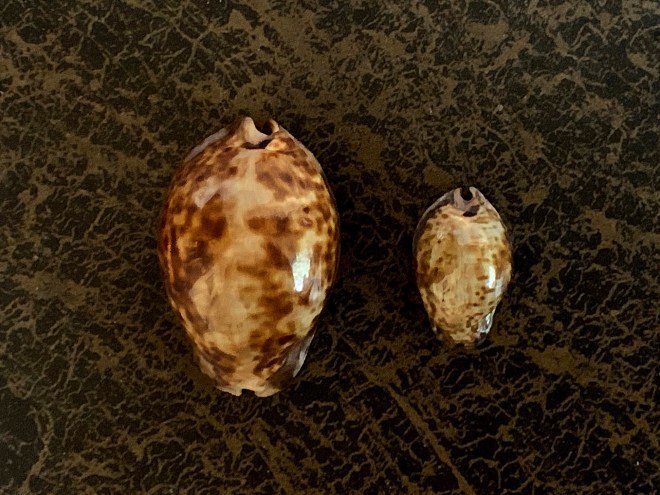
Trona stercoraria (Linnaeus, 1758) by diver at night, low tide in seaweed at 3 meters, M’bour, Senegal
Trona stercoraria (Linnaeus, 1758) dwarf. by diver on rocks at 10 meters, Gulf of Guinae, Limbe, Cameroon

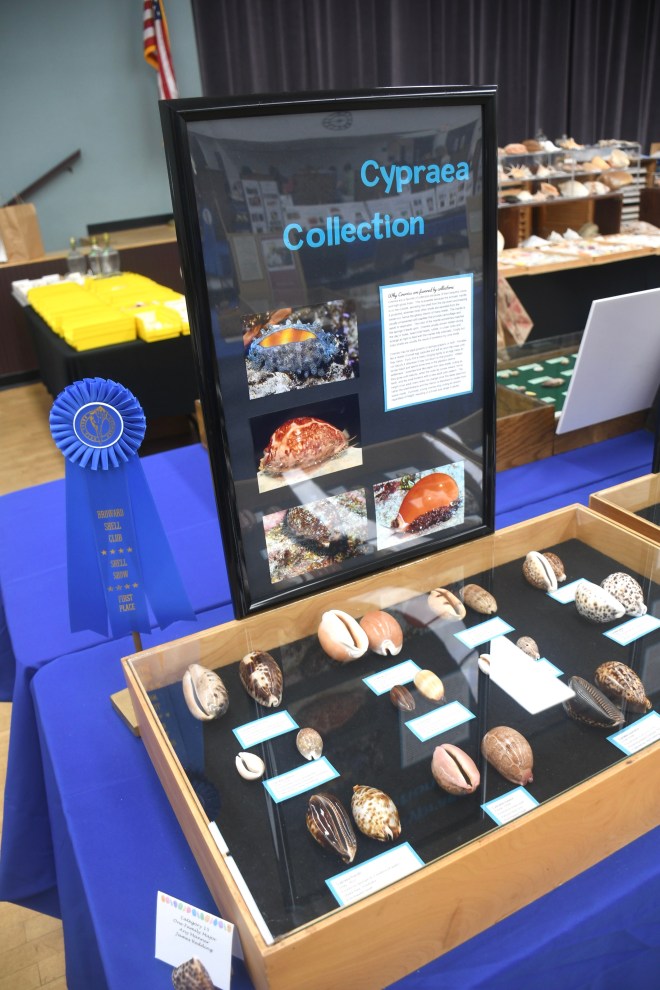
Trona stercoraria (Linnaeus, 1758) is a popular cowrie among collectors due to its extreme variability in size, shape, color and even pattern. Its common name the Rat Cowry or Droppings Cowry. Certain populations have overcastings that make for bizarre specimens which may look as if they were infected by disease (and possibly they are). These are common in some locations.
Even with all the variation stercoraria is easily recognized and can’t be confused with any other cypraea. Its coloration could be considered drab (mousy, hence the name Rat). It is certainly not flashy. Typical specimens have a mocha colored base with dark brown chiseled teeth. The dorsum is similar in color and covered with blurred brown blotches. Some specimens are light, others dark in color. Scarce specimens have a largely clear dorsum, others with an irregular pattern while the occasional one has the blotches fused to almost sold and even scarcer almost black. The margins are calloused and both extremities are rostrate. Sizes run from extreme dwarfs of 1″ to giants of about 3.75”. The majority fall between 2 and 2.5″. While typically rhomboid, sone specimens are oval.
There are populations with an extreme hump that were named Trona stercoraria rattus (Lamarck, 1810). Linnaeus call the dwarfs “minima”. Even with all the variation the vast majority have the patterns and shape of the two offered here.
Trona stercoraria is a West African cowry with a restricted range below the Bulge of Africa. Most specimens come from the Gulf of Guinea. It is fairly common in this area and lives in a variety of shallow water habitats.
The two shells were donated by Richard Kent and were obtained from European dealers. Average sized specimens retail for $20-25, dwarfs though much scarcer somewhat less. Large ones go for over $30. Giants and unusual specimens can be found on eBay from $60 to over $300. In fact there is one very dark 95mm specimen with blueish borders listed for sale at $520!

SHELL OF THE MONTH – APRIL 2019

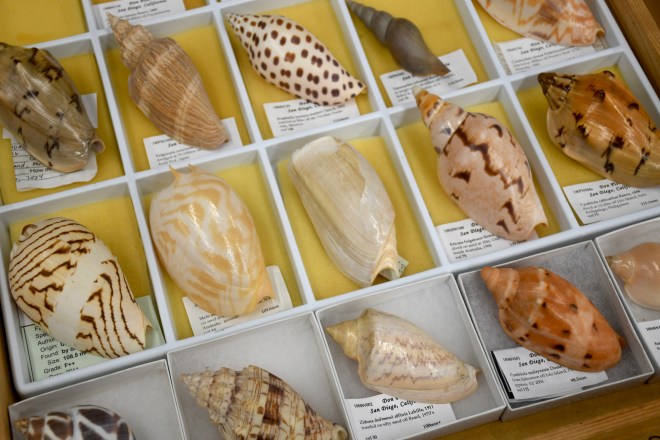
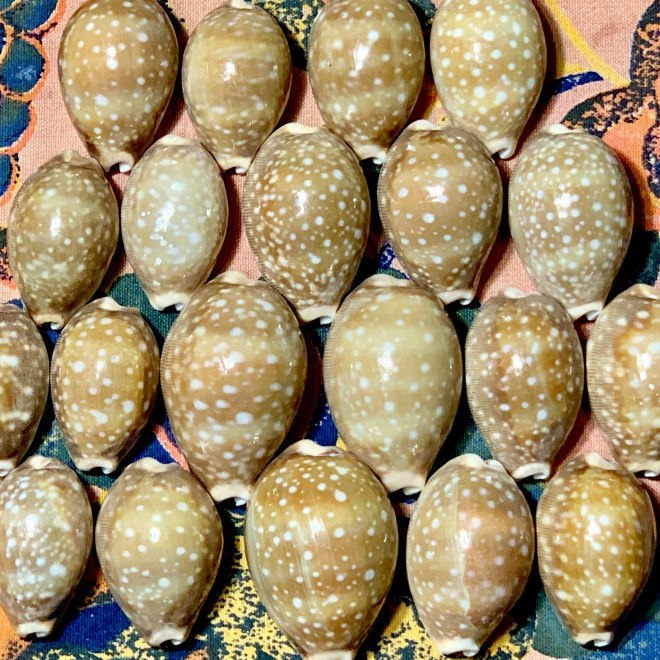
Our April Shell of the Month is for the shell crafters. It is a set of 20 Cypraea vitellus Linn, 1758 commonly know as the Calf Cowry. Cypraea vitellus is one of the most common medium sized cowries, It inhabits the reef in shallow water throughout the entire Indo-Pacific region. It’s a fawn colored shell  covered with white spots. The margins have closely spaced thin vertical whitish lines. T here is little variation in size and pattern. The shell is immediately recognizable. Juveniles are banded, the banding covered over as the shell matures.
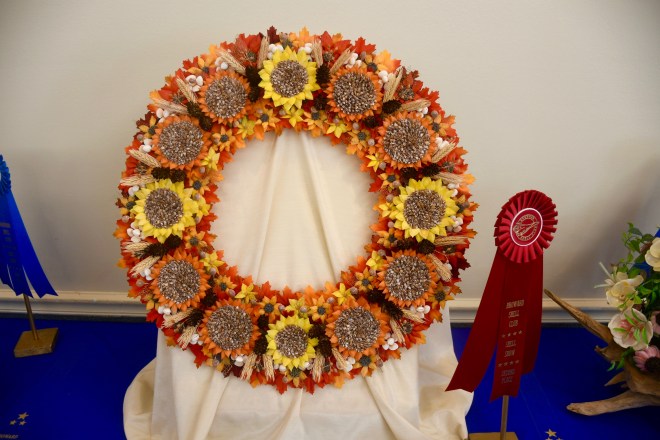
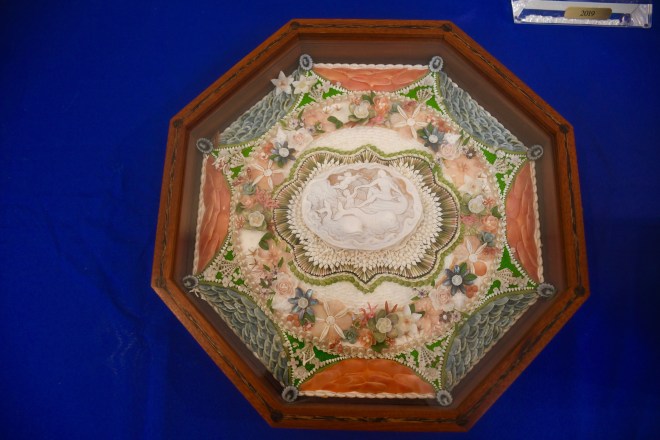
These shells were purchased in bulk and came with no collection date. I imagine these twenty will be turned into wonderful little critters or whatever the shell crafter may imagine.
Donated by Richard Kent. Next month we shall return to specimen shells.

SHELL OF THE MONTH – FEBRUARY 2019

Cypraea pulchella (Swainson, 18230, Mergui Archipelago, trawled 100 meeters by fishing boats, Andaman Sea, Myanmar
Cypraea pulchella (Swainson, 18230, trawled by commercial fishing boats @100-150Meters off Hainan Island, South China Sea, China

Not only is Cypraea pulchella (Swainson, 1823) one of the most sought after cowries, it is also one of the most distinctive. Its deep brown teeth that extend across the base make it impossible to confuse with any other. The common name for this elegantly pyriform shell is the Pretty Cowrie and pretty it is.
The dorsum is pale, faintly mottled with light brown and typically has a large dark chocolate colored blotch on both the right and left side of the dorum, but not always. Less attractive specimens have the blotch on only one side or the other. The most interesting specimens have multiple blotches or one huge one in the center and they bring the highest prices. The occasional specimen has no blotch at all! (specimen #2 in our raffle). Normal size is between 35-45mm. Shells retail in the $15-25 range and two to three times that for the exceptional spectacular specimen.
Originally the north-western Indian Ocean variety, Cypraea pericalles (Melvill & Standen, 1904) was a distinct specie, separate from the more common Pacific one, but recently Cypraea pericalles has been downgraded into a subspecies. When the names were first described there was a gap in the range, but this was due to the nonexistence of shelling in Burma and Thailand. Specimens that come from the Andaman Sea (this area) often appear to be an intermediate of the two, but are usually sold as pericalles. The difference is that the original pericalles has shorter teeth, is less callus, and is of smaller average size, with a less pronounced blotch. Possibly the two subspecies fully intergrade.
Cypraea pulchella favors deep water, is variable in size and pattern and is widespread though uncommon in distribution. Most specimens on the market come form the Philippines, South China and Thailand. There are two other distinct subspecies, one unique to the southern Philippines and the other quite rare from New Guinea. The true pericalles from the west coast of India is currently very difficult to obtain.
Today with revisions of nomenclature the proper name is Ficadusta pulchella (Swainson, 1823). For old time collectors these revisions in Cypraea are hard to accept.
Donated from the collection of Richard Kent.

February Program

Our Program for February is Dr. Thomas Annesley,

Thomas Annesley is “Active Professor Emeritus” at the University of Michigan and Deputy Editor of the journal Clinical Chemistry. He has always had an interest in oceanography and spent summers in California, where his uncle dropped Tom off at the coastal tidepools on his way to work and the picked Tom up on his way home.

Tom has been listed in Who’s Who in Medicine Academia, Who’s Who in Science and Engineering, and Who’s Who in America. He has published more than 200 articles and presented more than 175 invited lectures in 10 countries.

At the Bailey-Matthews National Shell Museum Tom does public lectures, beach walks and the live tank talks. He is also President of the Sanibel-Captiva Shell Club.

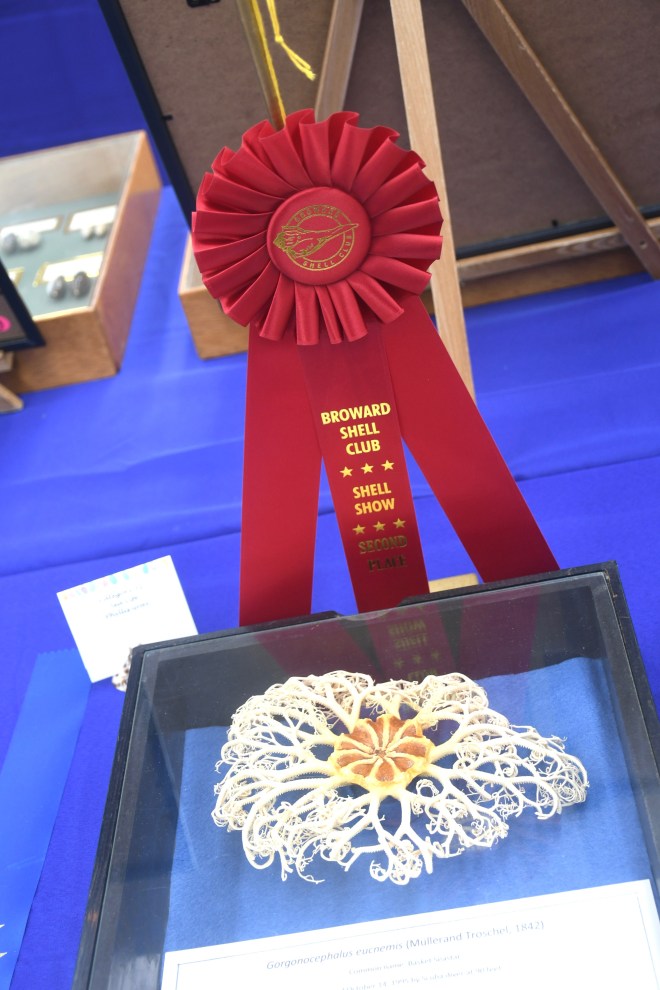
The title of his talk is “Cone Snails, Tennis Rackets, Pain Medications, and the Broward Shell Show”

Tom’s presentation will focus on scientific discoveries involving cone snails and their toxins. But as with many advances in science, there are elements of luck, happenstance, intrigue, mistakes, and creating lemonade out of lemons that contribute to the story. Dr. Annesley will show us how the supposedly unrelated topics of tennis, pain medications, and even the Broward Shell Show fit into the story of cone snails.

SHELL OF THE MONTH – NOVEMBER 2018

Cypraeaovula capensis capensis (Grey1828)
SCUBA at 10-12M on rock wall
Algoa Bay, Port Elizabeth, South Africa

The Atlantic and Indian Oceans meet the icy Antarctic waters below the coast of South Africa. In the sheltered bays a rich unique marine fauna has developed with an array of indigenous cyrpraea including a couple of oddballs that make shell collecting such a fascinating hobby.

Cypraea capensis is one such shell. It’s like no other. From a distance it looks likes a typical cowry, but on closer inspection one sees fins that originate in the aperture and completely cross over the base and dorsum encircling the shell and meeting the teeth on the opposite end. The shell is a pale uniform mushroom color with an irregular brown blotch and has a discernible mantle line. The dorsum is glossy. There is little variation in color and pattern from shell to shell. Even the blotch is fairly consistent.

Capsnsis lives on rocks in both moderate and deep water with deep water specimens bringing vastly higher prices. There are a few named varieties.

Before the popularity of SCUBA, virtually all specimens were dead collected on the beach. As the diving season is rather short, few capensis come to the market each year, making it a difficult shell to obtain.

Our specimen is of good size, 30mm and should be considered gem. Similar shells bring about $40 on the market. It was originally purchased in a small dealer’s lot from a South African diver/collector and is from the collection of Richard Kent. This is an intriguing shell to look at; one can spend much time studying its appearance.

October Program

Our program for October will be Dr. Ed Petuch. Ed recently retired from teaching Geology at Florida Atlantic University. Ed has written over 22 books mainly on the mollusks of Florida and the Caribbean. He is an expert on both Recent and Fossil Shells and named over 1200 mollusks both recent and fossil

Long known by many of the members of the Broward Shell Club, since he was a graduate student at the University of Miami, last year Ed donated many books from his library to the club. Ed has had a close relationship to many of our club members, naming many species of shells for both Alice and Bob Pace, Kevan and Linda Sunderland, Lynda Zylman and myself including others.
He is an expert on both Recent and Fossil shells. He has named over 1200 species of mollusks.

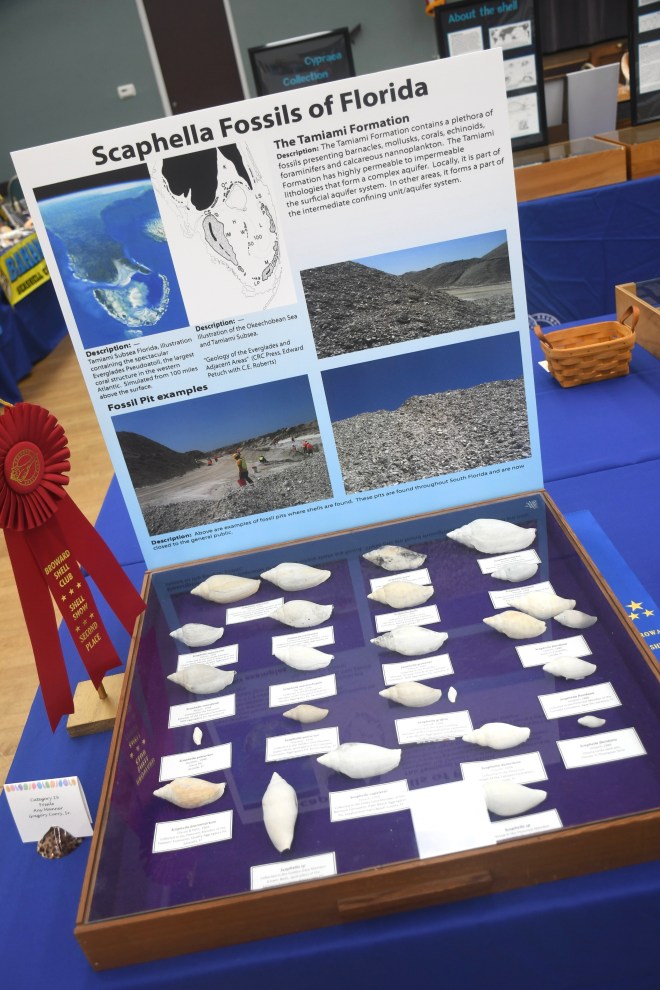
Ed is one of the most vibrant speakers you will ever hear and I know this program will be amazing. He will be presenting “Jewels of the Everglades: The Fossil Cowries of Southern Florida”—-

“The cowrie shells of Pliocene and Pleistocene Florida represent the single largest evolutionary explosion of cypraeids found anywhere on Earth. To date, 105 species of fossil cowries have been found in our local quarries and shell pits, including some of the rarest and most beautiful fossils known from anywhere in the world. Because of the special geology of the Everglades area, our fossil cowries are also the best-preserved in the world, often having the original shine and color pattern. With the exception of two species that are known from the fossil beds of the Carolinas, all the other cowries are found only in southern Florida, making these shells the most desirable fossils in our local area. Specimens of several of the largest and most beautiful species will be on display after the talk.”

Ed’s program will be based on his newly published book:
Jewels of the Everglades: The Fossil Cowries of Southern Florida, by Edward J. Petuch, David P. Berschauer and Robert F. Myers. This is available exclusively through the San Diego Shell Club for $95.00 plus shipping and handling ($5.00 in the USA). The Cypraeidae of Plio-Pleistocene southern Florida produced the single largest radiation of cowrie shells, known from one locality, ever found anywhere on Earth. With the exception of two widespread early Pliocene species, all the rest of the fossil cowries found in southern Florida were completely restricted to that region. Even within this relatively small area, many species and species groups of cowries had very limited geographical ranges, often being restricted to select reef tracts or estuarine environments and having ranges of only a few hundred square miles. This book contains over 350 images of over 100 species of fossil cowries from over four million years (covering the Pliocene to the Holocene) beautifully illustrated on 104 color plates, together with maps and in situ pictures of these unique fossil jewels. Hurry and get your copy while supplies last.

There is still time to order it and have Ed sign it at the club meeting. Here is the address and website or go to San Diego shell club and find the section labeled store.
this is a DO NOT MISS program, so see you Oct. 10.

P.S. If you can bring a refreshment to share that will be appreciated. We will probably have a large crowd this month.

SHELL OF THE MONTH – OCTOBER 2018

Swiftopecten swiftii (Bernardi, 1858)
trawled at 60m fishing fleet
Sapporo, Japan

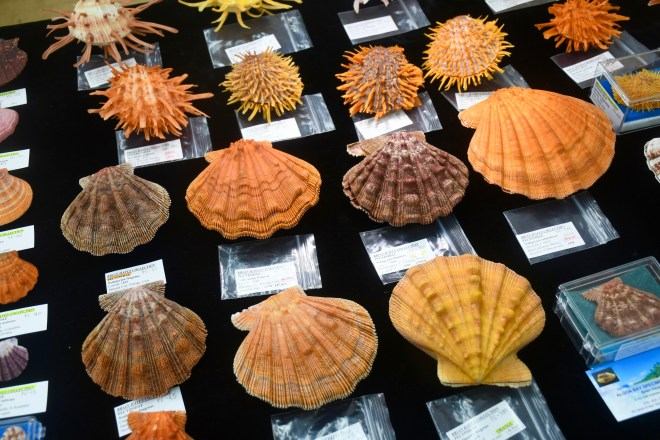
Pectens, scallops as they are commonly known, are the most collected bivalve. Pectinidae is an extremely large family that are worldwide in distribution and are found in tropical, temperate and even arctic seas.

They are most interesting to observe when alive as they jet propel themselves across the ocean floor. They make a very popular meal and are a standard item at seafood restaurants.

There are about 500 different recent species. They all have two valves with an almost round outline, with radiating ribs and two ears on each side of the shell. Pectens are fascinating to collect because of the wide variety of colors and patterns found in many species.

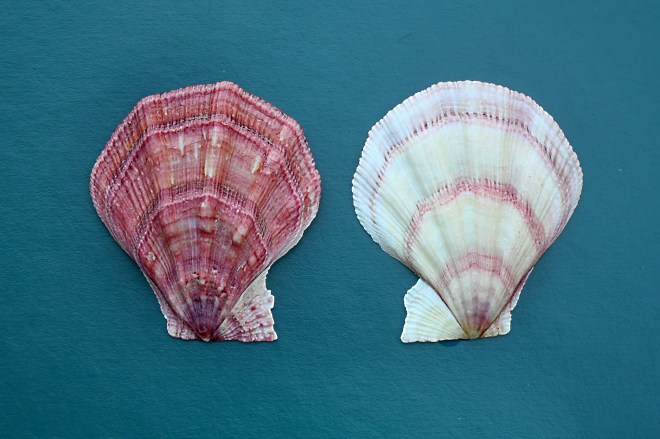
Swiftopecten swiftii (Bernardi, 1858) is a large solid shell growing up to 4” in size. They are easy to distinguish from all other pecten due to their elongated triangular shape and unique sculpture. (Most all pecten are roundish). They grow in spurts as can be clearly seen in the photo. At the conclusion of each growth cycle the shell forms knobs, as does Florida’s Nodipecten nodosus (Linnaeus, 1758).

This specimen is the typical purplish color. Rare specimens are yellow, pink, albino and even maroon! One side is always colored and the other whitish. A color set is extremely difficult and expensive to obtain. Seeing one is quite impressive!

Swiftopecten swiftii (Bernardi, 1858) has a limited range from the north of Japan to the Russian mainland. This Japanese specimen is donated from the collection of Richard Kent. For those who collect scallop shells, swifti is a must.

September Program

Biography:

My name is Michelot Michel, a South Florida native, and first-generation Haitian-American. I grew up in Miami as an only child. Without any siblings to amuse me, I developed a curious mind for the world around me. As I grew older, this curiosity transformed into an immense appreciation for science and discovery. I later attended high school at Maritime and Science Technology (MAST) Academy because of its strong marine science and college preparatory program. My time at MAST allowed me to explore my love for science while developing a desire for community service. This led me to pursue a career in medicine as it effortlessly combined my passion for science, discovery, and service. Four years later, I graduated with my Bachelor’s Degree in Biological Sciences with Honors, having completed several research projects that encompassed biomedical sciences and marine conservation. After graduating from college, I joined the EM Papper Clinical Immunology Lab at the Miami VA Medical Center as a Clinical Research Assistant. My work currently focuses on elucidating molecular markers and therapeutic targets for immune-related disorders such as Chronic Fatigue Syndrome and Gulf War Illness. The latter of which is focused directly on the US military veteran population who served in the Gulf War. As of late, I am in the process of applying to medical school, where I hope to continue my pursuit of a medical career filled with service and the advancement of knowledge.

Synopsis of Research:

The Environmental Epigenetics lab at Florida International University is a research group devoted to understanding the epigenetic mechanisms in marine organisms in response to changing environmental conditions. Epigenetics is defined as the study of heritable phenotype changes that do not involve changes in the DNA sequence. Some notable epigenetic mechanisms include histone modifications, DNA methylation, and RNA silencing. This particular study aimed to characterize the seasonal patterns in DNA methylation in the gill tissue of the flat tree oyster (Isognomon alatus) and its response to temperature, pH and salinity variations in Miami’s Northern Biscayne Bay. The results of this work will help pave the way for expanding environmental epigenetic analyses and their application to the management and conservation of diverse ecologically and commercially relevant marine species.