October Program

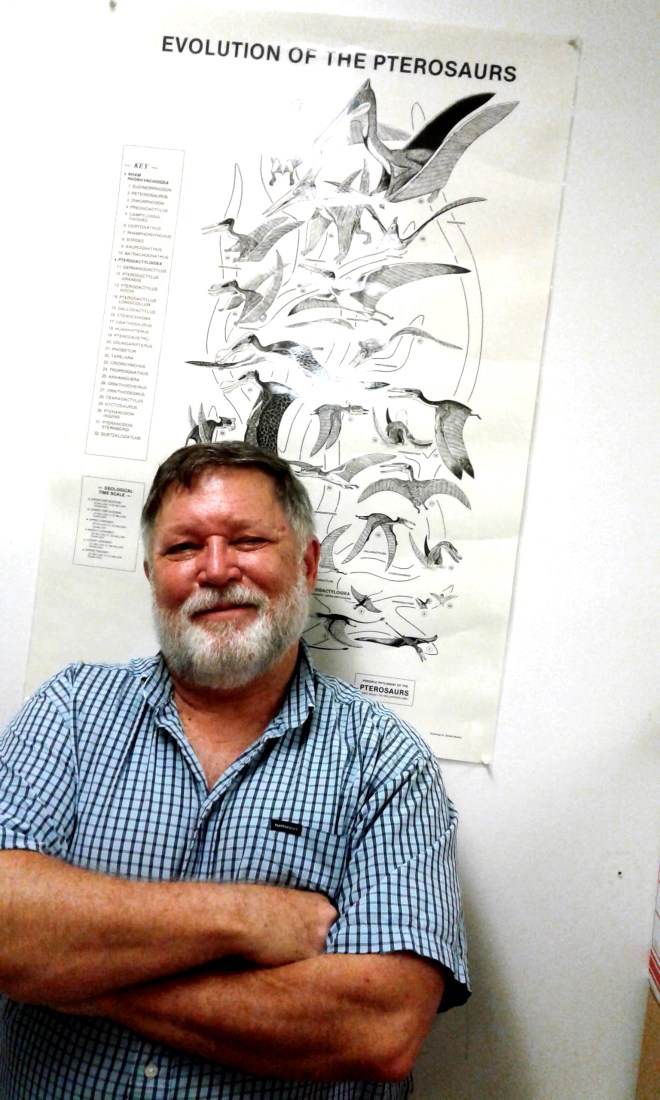
Our program for October will be Dr. Ed Petuch. Ed recently retired from teaching Geology at Florida Atlantic University. Ed has written over 22 books mainly on the mollusks of Florida and the Caribbean. He is an expert on both Recent and Fossil Shells and named over 1200 mollusks both recent and fossil

Long known by many of the members of the Broward Shell Club, since he was a graduate student at the University of Miami, last year Ed donated many books from his library to the club. Ed has had a close relationship to many of our club members, naming many species of shells for both Alice and Bob Pace, Kevan and Linda Sunderland, Lynda Zylman and myself including others.
He is an expert on both Recent and Fossil shells. He has named over 1200 species of mollusks.

Ed is one of the most vibrant speakers you will ever hear and I know this program will be amazing. He will be presenting “Jewels of the Everglades: The Fossil Cowries of Southern Florida”—-

“The cowrie shells of Pliocene and Pleistocene Florida represent the single largest evolutionary explosion of cypraeids found anywhere on Earth. To date, 105 species of fossil cowries have been found in our local quarries and shell pits, including some of the rarest and most beautiful fossils known from anywhere in the world. Because of the special geology of the Everglades area, our fossil cowries are also the best-preserved in the world, often having the original shine and color pattern. With the exception of two species that are known from the fossil beds of the Carolinas, all the other cowries are found only in southern Florida, making these shells the most desirable fossils in our local area. Specimens of several of the largest and most beautiful species will be on display after the talk.”

Ed’s program will be based on his newly published book:
Jewels of the Everglades: The Fossil Cowries of Southern Florida, by Edward J. Petuch, David P. Berschauer and Robert F. Myers. This is available exclusively through the San Diego Shell Club for $95.00 plus shipping and handling ($5.00 in the USA). The Cypraeidae of Plio-Pleistocene southern Florida produced the single largest radiation of cowrie shells, known from one locality, ever found anywhere on Earth. With the exception of two widespread early Pliocene species, all the rest of the fossil cowries found in southern Florida were completely restricted to that region. Even within this relatively small area, many species and species groups of cowries had very limited geographical ranges, often being restricted to select reef tracts or estuarine environments and having ranges of only a few hundred square miles. This book contains over 350 images of over 100 species of fossil cowries from over four million years (covering the Pliocene to the Holocene) beautifully illustrated on 104 color plates, together with maps and in situ pictures of these unique fossil jewels. Hurry and get your copy while supplies last.

There is still time to order it and have Ed sign it at the club meeting. Here is the address and website or go to San Diego shell club and find the section labeled store.
this is a DO NOT MISS program, so see you Oct. 10.

P.S. If you can bring a refreshment to share that will be appreciated. We will probably have a large crowd this month.
SHELL OF THE MONTH – OCTOBER 2018

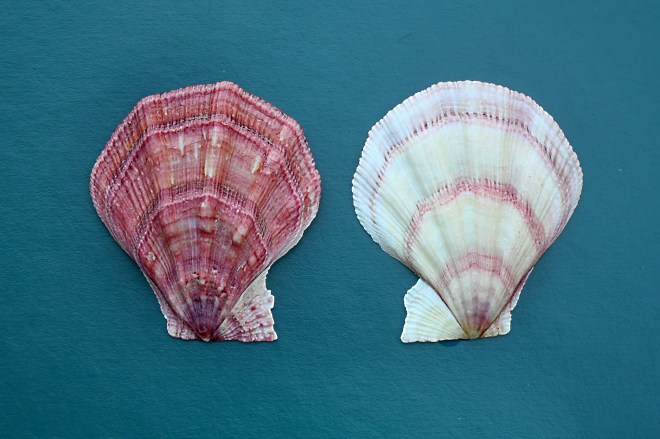
Swiftopecten swiftii (Bernardi, 1858)
trawled at 60m fishing fleet
Sapporo, Japan

Pectens, scallops as they are commonly known, are the most collected bivalve. Pectinidae is an extremely large family that are worldwide in distribution and are found in tropical, temperate and even arctic seas.

They are most interesting to observe when alive as they jet propel themselves across the ocean floor. They make a very popular meal and are a standard item at seafood restaurants.

There are about 500 different recent species. They all have two valves with an almost round outline, with radiating ribs and two ears on each side of the shell. Pectens are fascinating to collect because of the wide variety of colors and patterns found in many species.

Swiftopecten swiftii (Bernardi, 1858) is a large solid shell growing up to 4” in size. They are easy to distinguish from all other pecten due to their elongated triangular shape and unique sculpture. (Most all pecten are roundish). They grow in spurts as can be clearly seen in the photo. At the conclusion of each growth cycle the shell forms knobs, as does Florida’s Nodipecten nodosus (Linnaeus, 1758).

This specimen is the typical purplish color. Rare specimens are yellow, pink, albino and even maroon! One side is always colored and the other whitish. A color set is extremely difficult and expensive to obtain. Seeing one is quite impressive!

Swiftopecten swiftii (Bernardi, 1858) has a limited range from the north of Japan to the Russian mainland. This Japanese specimen is donated from the collection of Richard Kent. For those who collect scallop shells, swifti is a must.

September Program

Biography:

My name is Michelot Michel, a South Florida native, and first-generation Haitian-American. I grew up in Miami as an only child. Without any siblings to amuse me, I developed a curious mind for the world around me. As I grew older, this curiosity transformed into an immense appreciation for science and discovery. I later attended high school at Maritime and Science Technology (MAST) Academy because of its strong marine science and college preparatory program. My time at MAST allowed me to explore my love for science while developing a desire for community service. This led me to pursue a career in medicine as it effortlessly combined my passion for science, discovery, and service. Four years later, I graduated with my Bachelor’s Degree in Biological Sciences with Honors, having completed several research projects that encompassed biomedical sciences and marine conservation. After graduating from college, I joined the EM Papper Clinical Immunology Lab at the Miami VA Medical Center as a Clinical Research Assistant. My work currently focuses on elucidating molecular markers and therapeutic targets for immune-related disorders such as Chronic Fatigue Syndrome and Gulf War Illness. The latter of which is focused directly on the US military veteran population who served in the Gulf War. As of late, I am in the process of applying to medical school, where I hope to continue my pursuit of a medical career filled with service and the advancement of knowledge.

Synopsis of Research:

The Environmental Epigenetics lab at Florida International University is a research group devoted to understanding the epigenetic mechanisms in marine organisms in response to changing environmental conditions. Epigenetics is defined as the study of heritable phenotype changes that do not involve changes in the DNA sequence. Some notable epigenetic mechanisms include histone modifications, DNA methylation, and RNA silencing. This particular study aimed to characterize the seasonal patterns in DNA methylation in the gill tissue of the flat tree oyster (Isognomon alatus) and its response to temperature, pH and salinity variations in Miami’s Northern Biscayne Bay. The results of this work will help pave the way for expanding environmental epigenetic analyses and their application to the management and conservation of diverse ecologically and commercially relevant marine species.


SHELL OF THE MONTH – AUGUST 2018

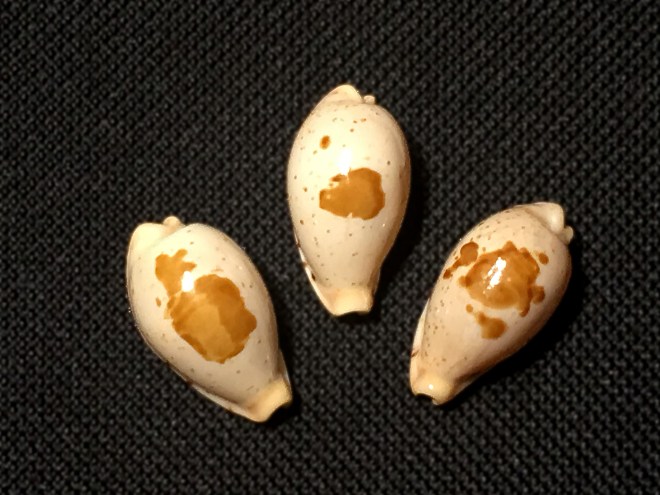
Cypraea saulae Gaskoin, 1843
under rock and coral by local divers at 10 meters
Balicasag Island, Bohol, Philippines

Miss Jane Saul was a famous British shell collector who was born in 1807 and lived to be 98 years old. In 1843 J. S. Gaskoin named this lovely little cowry after her. There does not appear to be a record of their relationship, if any.

Cypraea saulae is a collector favorite, scarce and not that easy to obtain. Most specimens come from the Philippines although the occasional few are found in Indonesia, New Guinea and off the north coast of Australia.

The shell is pyriform in shape, about an inch in size, cream in color on the dorsum with a white base. The dorsum has pale brown freckles and a blotch in the center of the dorsum. Often there are additional blotches that flank the main blotch. In rare instances there is no blotch at all. The margins are finely spotted. In some populations the intercises between the teeth are yellow, in others, white. Several varieties have been named but none are recognized today.

Cypaea saulae lives under coral slabs and rock, in shallow water and at depths up to 150 meters.

Three gem specimens are offered in this raffle to give collectors a sample of the never ending variety of patterns on this attractive little cowry. Donated by Richard Kent

August Program

Synopsis:

The relationship between corals and Symbiodinium dinoflagellates is sensitive to elevated sea-surface temperatures, which are projected to increase 2.6 to 4.8°C by 2100. One mechanism that may allow corals to persist through ocean warming is an association with thermally-tolerant symbionts. During early life stages, many coral larvae or juveniles will uptake multiple phylotypes of Symbiodinium through horizontal transmission. This diversity is maintained for months or years, but over time the juvenile coral will select a dominant Symbiodinium phylotype reflective of the local environment. It is unknown at what age or size selection occurs, and whether environmental factors drive this selection. To determine this, field and laboratory studies will be conducted using the massive starlet coral, Siderastrea siderea

Bio:

Sarah is a native Rhode Islander and earned her bachelor’s degree in Biology from Southern Connecticut State University in 2015. While studying temperate corals as an undergrad, she was also a collegiate athlete, playing DII softball for the Owls. In 2016, she moved to Florida to start her M.S. in Marine Biology at Nova Southeastern University. When not working under the guidance of Dr. Joana Figueiredo in the Marine Larval Ecology lab, Sarah can be found teaching in the Department of Biological Science or working at Gumbo Limbo Nature Center.

SHELL OF THE MONTH – JUNE 2018

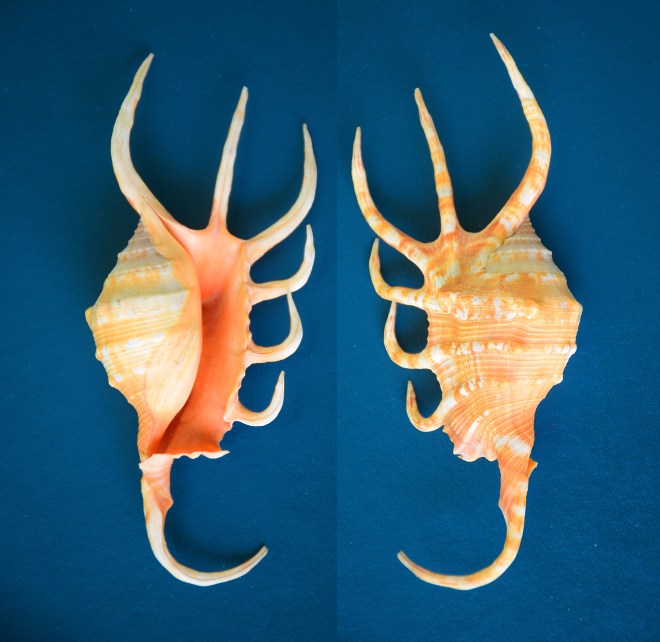
Lambis crocata (Link, 1807)
in sea grasses 15-20 meters
Kinbu Bay, Okinawa, Japan

The Spider Conchs are a small genus in the Strombidae family all of which inhabit the tropical seas of the Indo-Pacific region. The genus – Lambis – originally had the exotic name of Pterocera, so today Pterocera crocata Link, 1807 is now Lambis crocata Link, 1807.
An interesting feature of this genus is that the species have different numbers of fingers or arms or whatever one chooses to call the appendages that distinguish the spider conchs from the true conchs
Lambis crocata has the common name of Orange Spider Conch although the shell is rarely orange in color; the common color being tan or beige, but they do have an orange or peach colored aperture.
Lambis crocata has long, curved and delicate appendages making it one of the most attractive species of the genus. It is quite different from the large and heavy chunky, bland Lambis truncata Lightfoot, 1786 that has little interest to most collectors. There is a rare and expensive subspecies named Lambis crocata pilsbryi Abbott, 1961that has exceptionally long arms and is spectacular in appearance.
Most of the spider conchs are common, crocata being scarce, however the beautiful and prized Lambis violacea Swainson, 1821 is quite rare and very costly making it near impossible to collect the the complete genus.
Our specimen is very attractive, orangish is color with an intricate pattern on the dorsum and long graceful fingers. It is close to gem in quality, collected from a desirable location. Donated from the collection of Richard Kent.

SHELL OF THE MONTH – MAY 2018


It’s a wonder of nature how a simple snail can create such a masterpiece of a house for itself. The spirals of the Sundial shells, family Architechonicidae, are always perfect. Architechonicidae is a small family with members in topical seas around the world. There are only three, possibly four species that attain a size of over 2 inches, however there are numerous species that are quite small and rarely collected.
The Sundials are all very similar in appearance. It is not easy to tell them apart. Architectonica perspectiva (Linnaeus, 1758) is the most common Indo-Pacific Sundial. Adult specimens are normally about an inch and a half. Smaller ones were often collected and sold in bulk for the craft market, but nowadays these are not so easy to come by. We have two specimens, the smaller is typical and the two and a quarter inch one a prize catch from Thailand.
Architectonica maxima (Philippi, 1849) is the largest of the Sundials growing to a maximum of three inches. Occasionally one that big is collected in Viet-Nam. This specimen is about as big as one is likely to encounter.
The most obvious differences in the two specie is, one: A solid line in perspectiva that encircles the shell as opposed to to the mottled line in maxima, though as the shell grows in size the line will break up and, two: The more intense colors of perspectiva. There are other differences such as the spacing of groves, nodulues, and color pattern. Examine closely with a magnifying glass and one will see they are quite different.
In the Caribbean we have the Common Sundial, Architectonica nobilis (Roding, 1789,) which is anything but common recently. It also will grow to over two inches. Additionaly as in the Pacific there are numerous small species.
Donated from the collection of Richard Kent

Architectonica perspectiva (Linnaeus, 1758)
by diver on sandy bottom 15-20m depth
off Phuket Island, Andamen Sea, Thailand

Architectonica perspectiva (Linnaeus, 1758)
netted by fishermen, 10m,
grass and sandy bottom
Manila Bay, Phillipines

Architectonica maxima (Philippi, 1849)
netted by local fishermen
Nago Bay, Okinawa, Japan

SHELL OF THE MONTH – NOVEMBER 2017

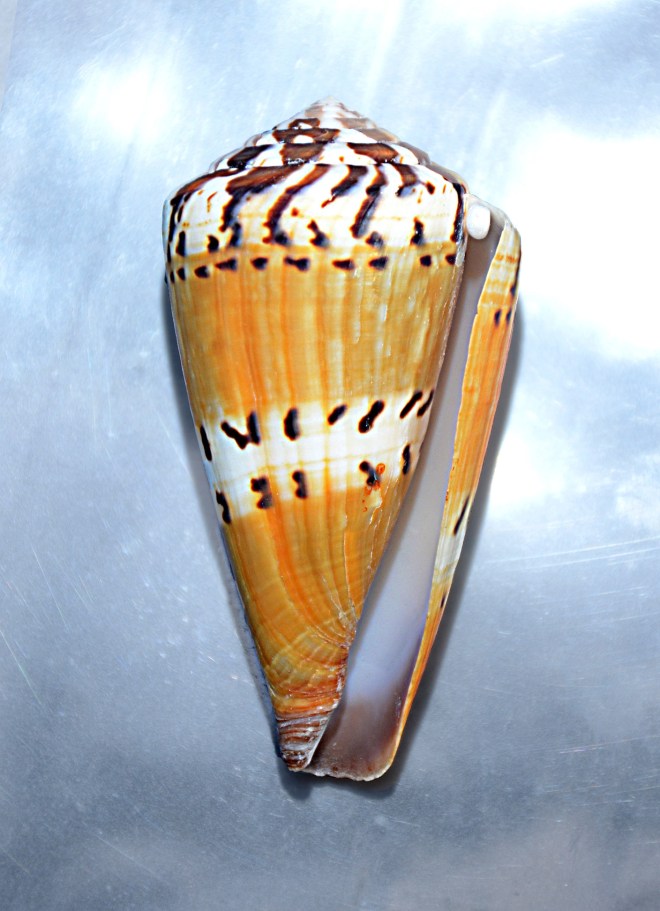
Conus (Rhizoconus) mustelinus Hwass in Bruguière, 1792
by native diver in sand patch among coral reef at 5-7m
Off Samar Island, Phillipines

Its attractive coloration and classic cone shape make Conus mustelinus a favorite among collectors. One would think because of its mustard color it would be called the mustard cone, but no, its popular name is ermine cone or weasel cone. We’ll never know what Hwass had in mind when he gave the shell its Latin name!
Conus mustelinus is widespread across the the Western Pacific Ocean. It is easy to collect as it favors shallow water and dwells exposed in the sand at the base of corals.
The shell is solid in color and comes in various shades of mustard with occasional populations greenish or maize. There is a narrow white band about midbody and occasionally a second closer to the shoulder. There are black dots on the edge of the bands and black chevrons on a white crown. The pattern is fairly constant from one to the next, but there is enough variation to make it fun to collect a series Young specimens have a nice gloss, mature ones do not.
This specimen is large in size at approximately 83mm in length. The lip is natural. The shell exhibits the minor scars that one would expect in a fully grown specimen, however the condition is as good as they come. Donated from the collection of Richard Kent.

SHELL OF THE MONTH – OCTOBER 2017

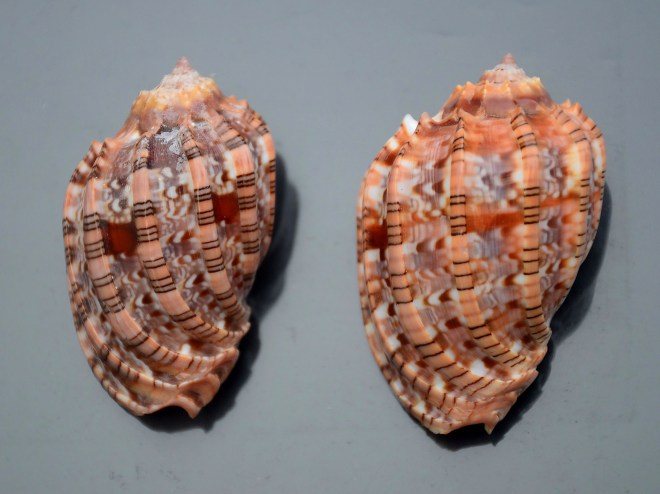
Harpa harpa (Linnaeus, 1758) in sand at 10m by local fishermen, Pag Asa Island, Palawan, Philippines (left) inside reef at 10-15m by local divers, Bohol, Philippines (right)

Many collectors consider the harps to be the most beautiful of all shells. With their stately shape, complex sculpturing, intricate patters, coordinated color scheme and mid size, they live up to the claim.
The Harps are a small family that inhabit tropical waters, with the majority found in Philippine and Pacific waters. Harpa harpa, Linnaeus 1758, commonly called the Noble Harp is the namesake species and our shell of the month. We have two specimens, similar in size and although at first glance they appear nearly identical a close inspection will reveal many differences. Harpa harpa has about a dozen ribs with spines on the posterior end. Between the spines are fine groves with rows of chevron patterns. Distinguishing marks from the other harps are the groups of 2 or 3 fine black lines hat cross the ribs and the three brown blotches on the base.
Harps are carniverous and feed on small crabs and shrimp. They burrow in the sand and live in moderate depths.
These specimens, are both in gem condition with mature lips. They are from the collection of Richard Kent.

SHELL OF THE MONTH – AUGUST 2017

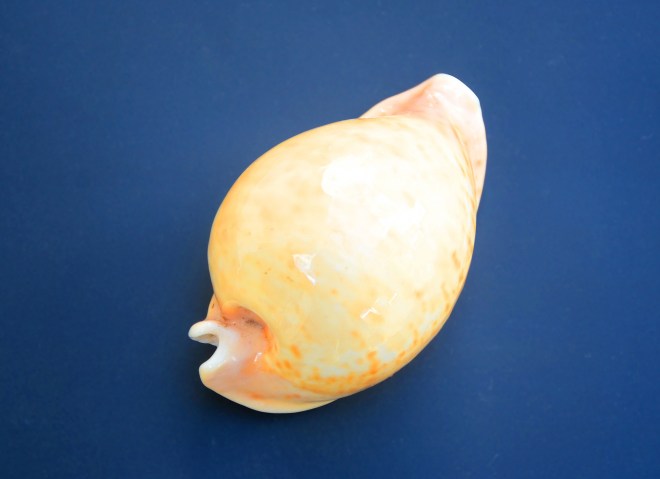
Umbilia armeniaca Verco, 1912
Trawled 150m
Great Australian BightSouth Australia, 2015

Once a prized extreme rarity, Umbilia armeniaca Verco, 1912, became available on the market due to very deep water trawling off the South Coast of Australia starting about five years ago. Although no longer rare specimens bring a hefty price.

The genus Umbilia is a small one with only three specie. All are deepwater and from Southetn Austalia. They are Umbilia armeniaca Verco, 1912; Umbilia capricornica Lorenz, 1989 and Umbilia hesitata Iredale, 1916.

Umbilia do not look like other Cypraea, with thier huge globose hump, extreme rostration, and curved aperture. Although it’s called the Tangerine Cowry, many populations are cream and beige. Most have a large variable botch of color that surrounds the hump, some do not. Specimens range for about 80-110mm in size with the majority falling on the smaller end of the range. This specimen is typical in size and does have stress (growth) lines.

Beige colored specimens of  Armeniaca may look very similar Hesitata, but are distinguished by the surface texture.  Armenia ae smooth and glossy whereas mature specimens of Hesitata ar porous and waxy.

This specimen is donated by Richard Kent, acquired from Australian dealer Doug Thorn.