New Posts

SHELL CRAFT MEETING UPDATE

Hi to all,
Wow! We sure had a great turnout and good meeting last night. Thank you, Marta for teaching us how to make a bale and spirals on our shells using wire. I’m thinking it might take some practice before ours will look as good as yours. LOL!

Below are two links to articles featuring our own award winning shell artist, Shanti Moore.
Check them out. This was Shanti’s first year entering artistic exhibits and she ended up winning several awards and first place ribbons at our shell show and Sanibel’s Shell Show. Congratulations Shanti. There are nice pictures of a few exhibits at the Sanibel Shell Show on both sites.

If you haven’t been to the iloveshelling.com web site yet, you are going to be very happy to discover such a wonderful site about shelling. Scroll down to the left for links to a variety of shelly subjects.

http://www.news-press.com/story/entertainment/2015/03/04/sanibel-festival-arrives-thursday-saturday/24380253/

http://www.iloveshelling.com/blog/category/sanibel-shell-fair-and-show/78th-sanibel-shell-festival-2015/

At the April Arts and Crafts meeting the group Patti Jenkins is going to show us how to make small flower arrangements in snails. So, for those who know how to make flowers, can get a head start and can make and stem some small flowers to bring with you to the next meeting. I’ll send some pictures of sample arrangements so you can see how they look.

Take care,
Linda Laurin

SHELL OF THE MONTH – APRIL 2015

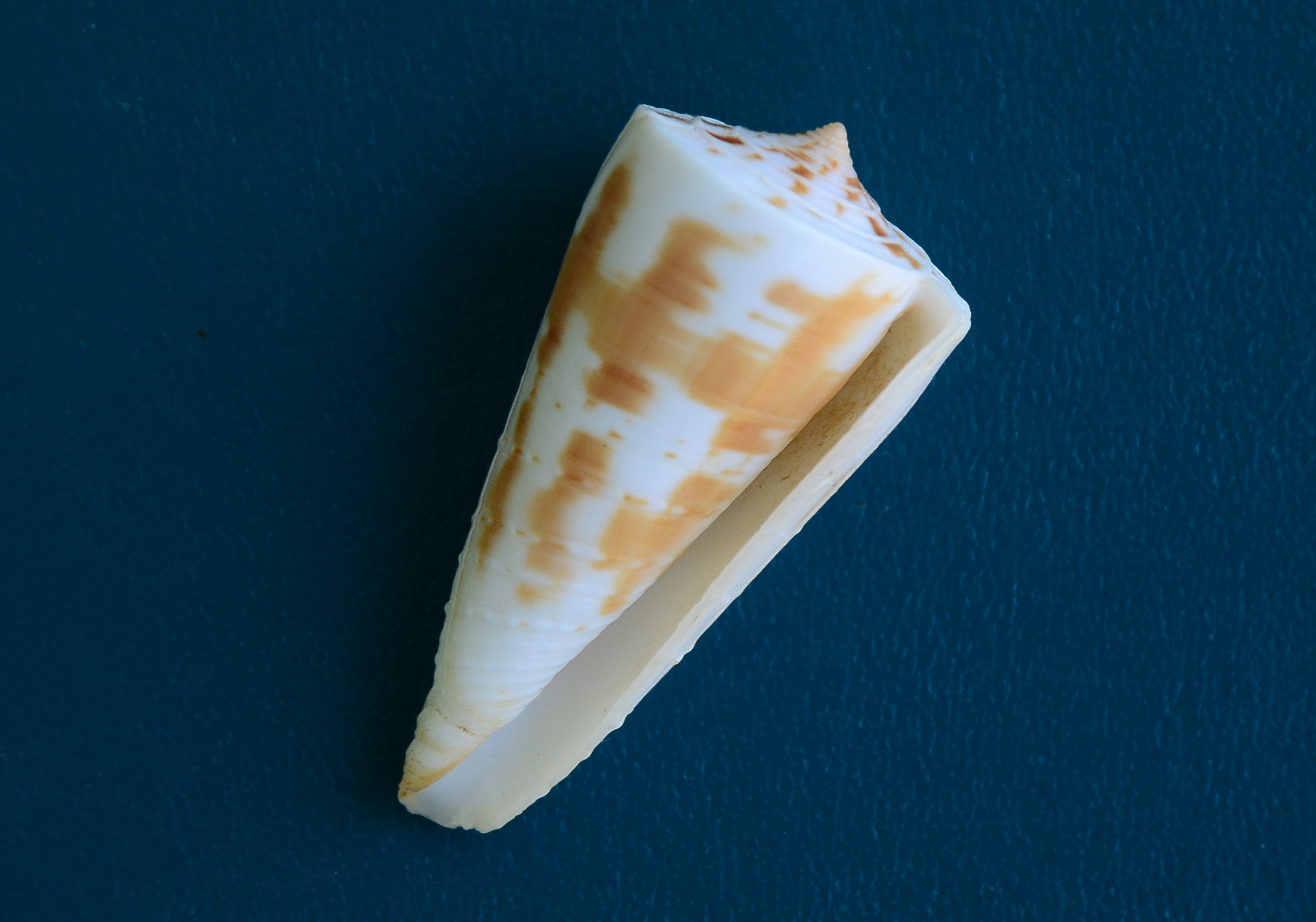
DSC_9646Conus tribblei Walls, 1977
10m deep in coral reef sand pocket
Off Olango Island, Cebu, Philippines
Collected in 2009

Our Shell of the Month, Conus tribblei Walls, 1977 is in memory of Leonard Nimoy – Spock – of the TV series Star Trek. The shell was named by Walls after his pet cat who was in turn named after the “The Trouble with Tribbles” which aired in 1967 and is considered one of the all time best episodes of Star Trek.

Conus tribllei is not a rare shell so it is surprising that it was not named until 1977. One guess is that it was confused with Conus bayani Jousseaume, 1872, Conus recluzianus Bernardi, 1853 and several other similar cones and slipped the attention of the scientists. 

The shell is obconical and elongate, rather elegant is shape. It is white with a pattern of brownish blotches arranged in irregular axial groups. There are typically spiral rows of granules on the bottom third or sometimes more with a the remainder of the shell being smooth. The surface is waxy and glossy.

It is reported that specimens grow to 70mm to 100mm and larger but they don’t seem to grow that large anymore. The only specimen listed on eBay at this moment is a meager 47mm. Specimens of Conus tribblei are difficult to acquire. The few specimens that reach the market come from the Philippines or Taiwan. Our specimen is a choice one, about as near to gem in grade as a cone can be and has a natural lip. Donated by Richard Kent.

SHELL OF THE MONTH – FEBRUARY 2014

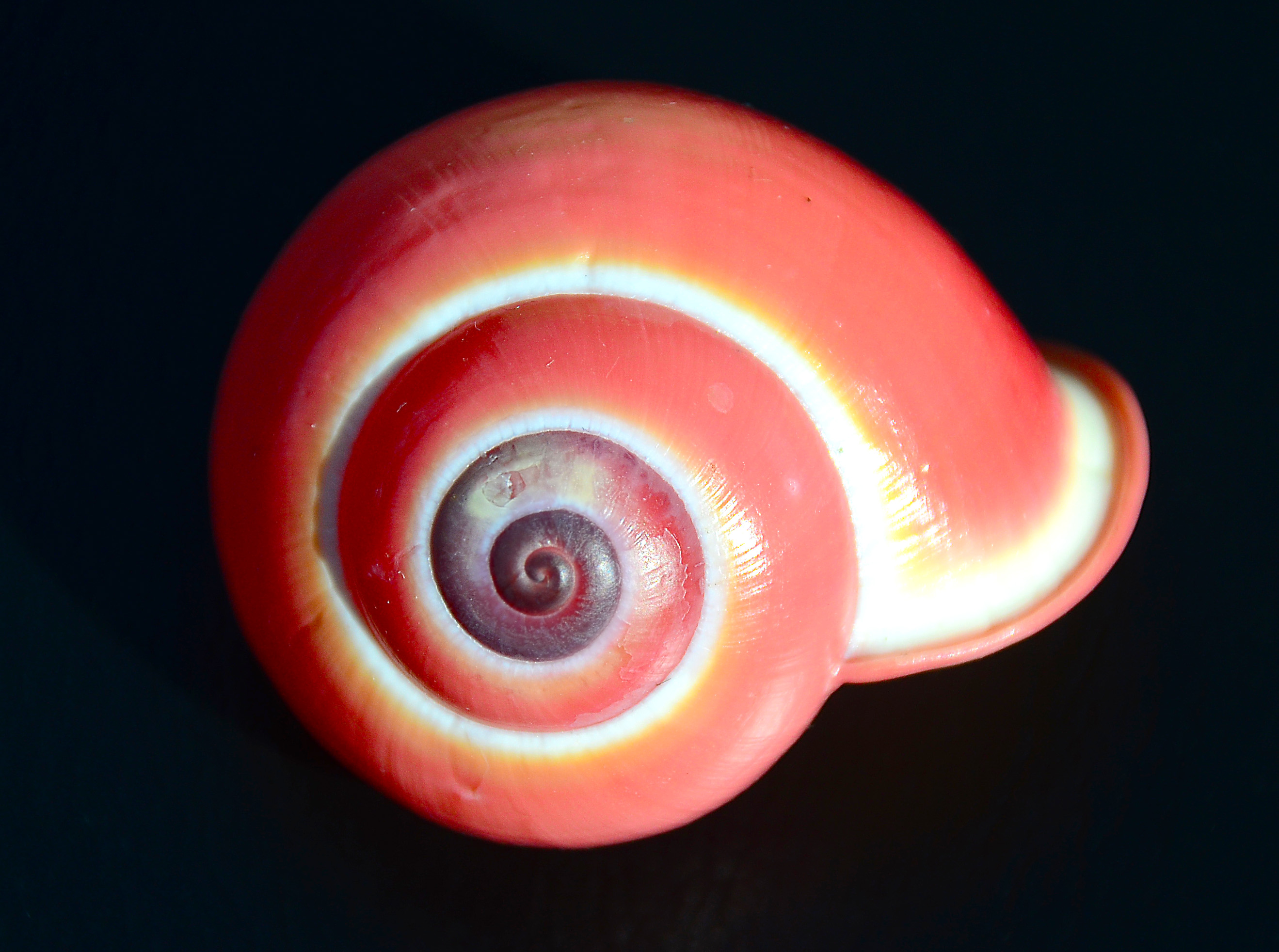
festiva
Calocochlia festiva Donovan 1825
Mountains, Cagayon Province,
Northern Luzon Island, Philippines  44mm 1 3/4”

Calocochlia is a genus of large air-breathing land snails, pulmonate gastropod mollusks in the family Bradybaenidae. Tthere are over fifty species of Calocochlia, the vast majority of which the collector will never encounter. A few are particularly large and colorful, notably Calocochlia festiva Donovan 1825, which comes in two color varieties, rose or yellow. C. festiva has only been recorded from Cayagan Province, northern Luzon Island, Philippines and no other information seems to be published. This months specimen is donated by Richard Kent and was purchased from Richard Goldman at the 2015 Broward Shell Club Shell Show.

SANIBEL SHOW FIELD TRIP

March 7th will be the date for our annual trip over to see the Sanibel Shell Show. This show is highly recommended as its forte is incredible shell craft, the likes of which you will be hard-pressed to find anywhere else……but there are incredible scientific exhibits as well.

We will gather at 8:30 AM next to the AMC Theater sign in the Coral Ridge Mall parking lot, located at the corner of Oakland Park Blvd. and US 1 / Federal Highway. The club will be renting a van…..and if we have enough interest we will do two vans. We will then head over to the Sanibel show, have lunch afterwards (more than likely at the Island Cow) then take in some of the shell shops. If there is time we will stop for some shelling, although it is usually not so great that time of year. We will return about 9:30 PM. The cost will be $35 per person and is payable at the time you sign up, or within 7 days. A sign-up sheet will be available at the February meeting. PLEASE NOTE: There will be no refunds if you have to cancel, so please make sure that you do plan to go when you sign up.

Richard Sedlak 954-296-5633 / sedlaki1@comcast.net

2015 BSC SHELL SHOW AWARDS

2015 BSC SHELL SHOW AWARDS – SCIENTIFIC DIVISION

AMERICAN MUSEUM OF NATURAL HISTORY AWARD – Gene Everson – Turrid Appreciation – Category: One Family Minor Any Manner

CONCHOLOGISTS OF AMERICA AWARD – Robert & Alice Pace – Uncommon to Rare Florida/Caribbean Gastropods – Category: Florida/Caribbean Any Manner

THE DuPONT AWARD – Martin Tremor, Jr. & Conrad Forler – Meet Mr. & Mrs. Cockle & Family – Category: One Family Minor Any Manner

“BEST OF THE BEST” – Gene Everson – Limpet Like Mollusks – Category: Best of the Best

LEN HILL MEMORIAL – Martin Tremor, Jr. & Conrad Forler – Meet Mr. & Mrs. Cockle & Family – Category: One Family Minor Any Manner

SHELL OF SHOW – Self-Collected – Jim Cordy – Morum oniscus (Sinistral) – Category: Single Shell Self Collected Florida/Caribbean

SHELL OF SHOW – Any Manner – Robert Pace – Poirieria atlantis – Category: Florida/Caribbean Any Manner (Single shell part of an exhibit)

JIM VUNKANNON MEMORIAL FLORIDA/CARIBBEAN TROPHY – Robert & Alice Pace – Uncommon to Rare Florida/Caribbean Gastropods – Category: Florida/Caribbean Any Manner

GERRIT deGRAFF MEMORIAL – Pat & Bob Linn – Cassis tuberosa – Category: One Family Minor Any Manner (Single shell part of an exhibit)

NEIL HELPER MEMORIAL TROPHY FOR EDUCATIONAL EXCELLENCE – Pat & Bob Linn – The Helmets and Bonnets of the World – Category: One Family Minor Any Manner

BETTY HAMANN FOSSIL TROPHY – Not Awarded

BEST STUDENT EXHIBIT SCIENTIFIC– Marissa Linn – Cassus (Cassis) madagascariensis forma spinella -Category: Student 7-12 Grade Any Manner

BEST SEA LIFE– Phyllis Gray – Cup Glass Sponge – Category: Sea Life

Best Beginning Scientific – James Redding – Category: Beginning Exhibitor Any Manner

EXHIBITOR’S CHOICE AWARD – Pat & Bob Linn – The Helmets and Bonnets of the World – Category: One Family Minor Any Manner

SCIENTIFIC RIBBON WINNERS

STUDENT – Grades 7-12 – Any Manner – BLUE – Marissa Linn – Cassus (Cassis) madagascariensis forma spinella

Beginning Exhibitor Any Manner – BLUE -James Redding – Cones from the Indo Pacific

World Wide Self Collected – BLUE – Jim Cordy – Guaymas San Carlos déjà vu

Florida/Caribbean Any Manner – BLUE – Robert & Alice Pace – Uncommon to Rare Florida/Caribbean Gastropods

One Family Major Any Manner-Red -Kenneth Brown – Sampling of Family Cypraeidae

One Family Minor Any Manner – BLUE – Gene Everson – Turrid Appreciation

One Family Minor Any Manner – RED – Pat & Bob Linn – The Helmets and Bonnets of the World

ONE FAMILY MINOR ANY MANNER – BLUE – Martin Tremor, Jr. & Conrad Forler – Meet Mr. & Mrs.. Cockle & Family

ONE GENUS ANY MANNER – BLUE – Greg Curry, Sr. – Genus Provocator

ONE SPECIES ANY MANNER – BLUE – Gene Everson – Conus Cardinalis

SINGLE SHELL WORLDWIDE SELF-COLLECTED – BLUE – Gene Everson – Maxwellia angermayerae

SINGLE SHELL WORLDWIDE SELF-COLLECTED – RED – Linda Zylman – Conus lucidus

SINGLE SHELL WORLDWIDE ANY MANNER – RED- Jim Cordy – Morum oniscus (Sinistral)

SINGLE SHELL WORLDWIDE ANY MANNER – BLUE – Gregory Curry, Sr. – Amoria chaneyi

SINGLE SHELL FL/CARIB. SELF COLLECTED – BLUE – Gene Everson – Bartschia (Agassitula) peartae

SINGLE SHELL FL/CARIB. ANY MANNER – BLUE – Thomas Grace – Calliostoma aurora; RED – Greg Curry, Sr. – Lyria Beauii; WHITE – Pat Linn – Atlantic Deer Cowrie

SEA LIFE – BLUE – Phyllis Gray – Cup Glass Sponge

SEA LIFE – RED – Bev Dolezal – Hurricane Havoc Morum oniscus (Sinistral)

EDUCATIONAL –BLUE – Valentino Leidi – The Sea Salt

LAND/FRESH WATER SHELLS ANY MANNER – BLUE – Robert Pace – “Shells/Snails Along the Loop Road….”


Judge’s Scientific Special Merit Ribbons

Kenneth Brown – One Family Major Any Manner – Sampling of Family Cypraeidae

Gene Everson – One Species Any Manner – Conus Cardinalis


2015 BSC SHELL SHOW AWARDS – ARTISTIC DIVISION Sovereign of the Sea Professional Special


BEST STUDENT EXHIBITOR TROPHY – ARTISTIC – Payton Medeiros – Sailor’s Valentine


BEST IN SHOW TROPHY HOBBYIST – Trisha Brown – Hobbyist Single Octagonal Case Sailor’s Valentine


BEST IN SHOW TROPHY PROFESSIONAL – Marci ChamberlainSovereign of the Sea Professional Special


BEST IN SHOW TROPHY SAILOR’S VALENTINE – Trisha Brown – Hobbyist Single Octagonal Case Sailor’s Valentine


BEST TABLETOP SHELL CRAFT – Pattie Jenkins – Shell Box – Professional Décor Tabletop Only


BEST WALL HUNG SHELL CRAFT – Shanti Moore – Field of Flowers – Beginning Exhibitor


FAY MUCHA MEMORIAL BEST COLLECTIBLES – Linda Zylman – Culion Island Shell Dolls -Collectibles


EXHIBITOR’S CHOICE AWARD – Marci Chamberlain – Sovereign of the Sea Professional Special


ARTISTIC HOBBYIST RIBBON WINNERS


BEGINNING EXHIBIOR – BLUE – Shanti Moore – Field Of Flowers; RED – Shanti Moore – Jessica’s Surprise; WHITE – Linda Ebeling – Seasons of Shells

STUDENT GRADE K-6 – BLUE – Payton Medeiros – Summertime Sailor’s Valentine; RED – Claire Flynn – Christmas Ornament; RED – Grace Flynn – Christmas Ornament

STUDENT GRADE 7-12 – BLUE – Marissa Linn – Shelly Season’s Greeting

SAILOR’S VALENTINE – Single Octagonal – BLUE – Trisha Brown

DÉCOR TABLETOP ONLY – WHITE – Barbara Good – Table Décor

Novelties – BLUE – Robert Pace – Chow Time

Holiday Theme – RED – Carolyn Harvey-Aigner – Christmas Ornaments

SPECIAL – BLUE – Pat Linn – The Sea Wrack Wreath; RED – Tom Laurin – The Louvre of Shells


COLLECTIBLES – BLUE – Linda Zylman – Culion Shell Dolls; RED- Bev Dolezal – African Mask/with Cowries; WHITE – Sonny Ogden – Handicrafts Micronesia


ARTISTIC PROFESSIONAL RIBBON WINNERS


FLOWER ARRANGEMENT GREATER THAN 6”– BLUE – Pat Jenkins – All Natural Flowers; BLUE – Jae Kellogg – Sea Life, Salt Life…..My Life

MIRROR – BLUE – Jae Kellogg – Flat Scallop Beauties

DÉCOR WALL HUNG ONLY WREATH – Jae Kellogg – Look to the Sun

DÉCOR TABLETOP ONLY – RED – Patti Jenkins – Case for Your Collection; RED – Heather Strawbridge – Vintage Beach Bucket Lamp

PHOTOGRAPHY – BLUE – Violet Mas – Colorful Gems of Land & Sea; RED – Bev Dolezal – Hurricane Havoc

SHELL JEWELRY SINGLE PIECE – RED – Mario Piras & Sue Burns Piras – Jewelry 1 Piece

SHELL JEWELRY COLLECTION – RED – Mario Piras & Sue Burns Piras – Jewelry of the Sea Handcrafted

HOLIDAY THEMES – BLUE – Jae Kellogg – Happy Holiday

SPECIAL – BLUE – Marcia Chamberlain – Sovereign of the Sea; BLUE – Jae Kellogg – Beach Wedding Bells; RED – Mario Piras & Sue Burns Piras – World Wide Sea Glass Self Collected


Judge’s Special Merit Ribbons (2) Hobbyist – Linda Ebeling – Seasons of Shells PROFESSIONAL – Marci Chamberlain – Sovereign of the Sea


SHELL OF THE MONTH – JANUARY 2015

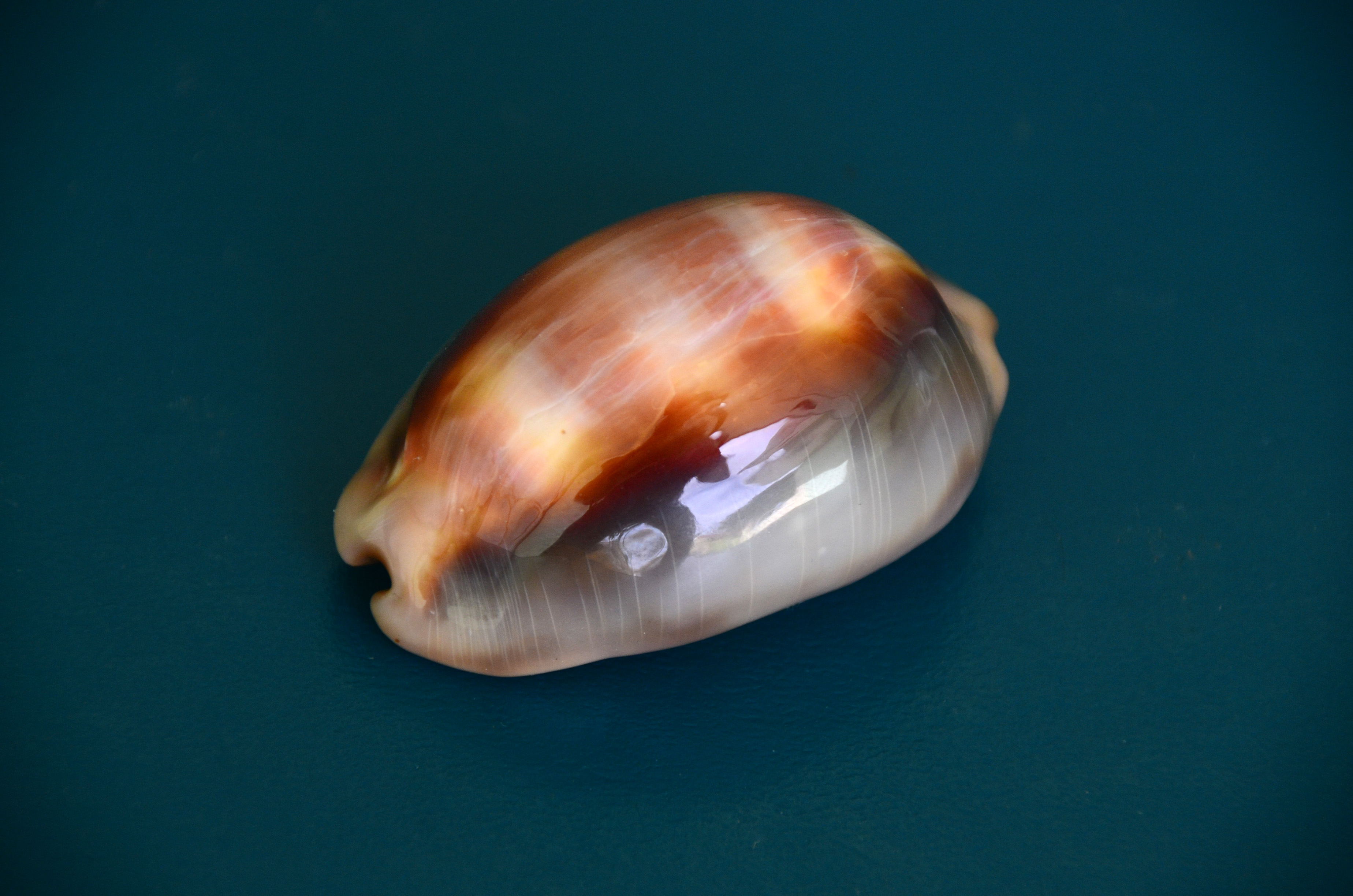
beckiiCypraea (Erosaria) beckii Gaskoin 1836, living inside base of black corals at 50-60m, off Masbate Island, Central Philippines, January 2014.

Cypraea beckii is a beautiful minute cowry growing only to 10-14mm in size. It is moderately rare and lives in deep water at the base of black coral. Until recently it was very difficult to obtain, alive or dead, however modern collection methods have made specimens more readily available. Although its range is widespread across the Pacific, virtually all specimens come from the Philippines.
Cyrpaea beckii is fawn in color with a whitish base, its dorsum spotted randomly with white dots, about one third which are ocellated in black. The extremities are rostrate and the teeth are stained deep brown.
Cyprare Beckii is named after Dr. H Beck, a Danish naturalist, 1799-1863.
The winner of the shell of the month raffle will receive not one but two specimens, both of gem quality, with retail value of $15-$20 each. Please note that due to the small size, this is a representative photo and not of the specimens in the raffle. Donated from the collection of Richard Kent.


SHELL OF THE MONTH – NOVEMBER 2014

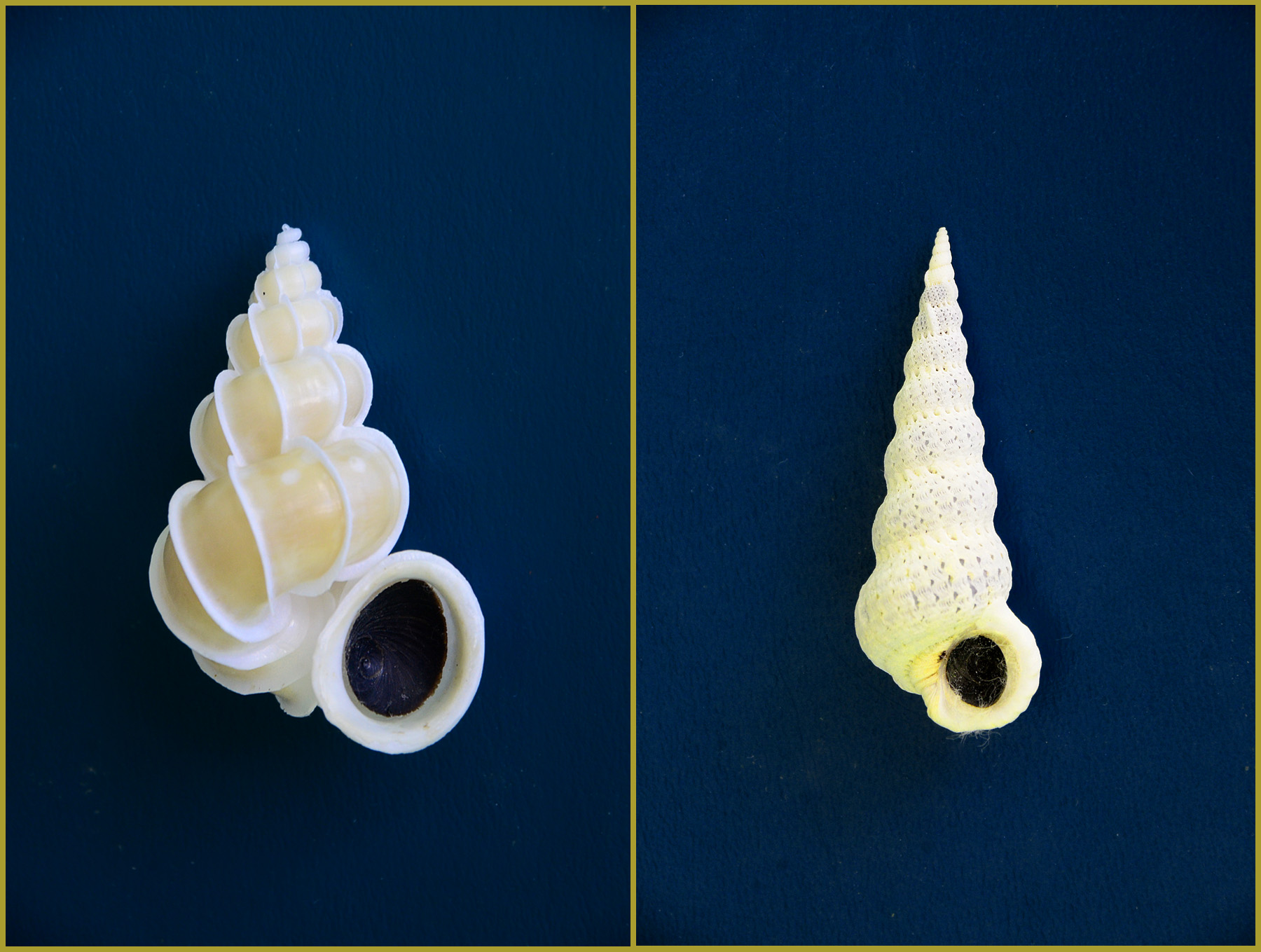
EpitoniumEpitonium scalarae Linnaeus, 1758
Live collected by local fishermen
tangle net 70-100m
Manila Bay, Philippines
January 2014

Epitonium varicosa Lamarck, 1822
Live collected by local fishermen
on reef at 15m
of Masbate Island, Central Philippines
January 2014
For November we have a very special pair of shells, two cousins –  one is very famous and the other quite obscure and seldom seen.  Epitonium scalare, Linne 1758 is the Precious Wentletrap,  a shell of incredible beauty that hundreds of years ago was so precious it graced the cabinets of emperors and queens. It’s extreme rarity led the Chinese to make fabulous fakes from rice paste. The name Wentletrap comes from a Dutch word meaning spiral staircase and it is indeed an accurate description. Epitonium scalare’s whorls do not touch each other while its extended ribs form the the staircase. It has a porcelain surface.

Epitonium varicosa Lamarck, 1822 was a rare shell until modern collecting methods made it more available, however we’re guessing even advanced collectors have never seen a specimen!  It has an amazing surface pattern and texture that photographs do not do justice to.
Wentletraps are predatory foragers and primarily feed on anemones. Most members of the family are quite small. Both specimens are from the Philippines and are of gem quality, live collected with the operculums preserved. Both are 55mm in length and about as large as any freshly collected shells that are likely to found on the market today.
Donated by Richard Kent

The following is reprinted from University of Chicago and is attributed to Penelope. It is fascinating reading.

The first published figure of Epitonium scalare (Precious Wentletrap) appeared in Rumphius’ D’Amboinsche Rariteitkamer (“Ambonese Curiosity Cabinet”) and was added posthumously by the editor, “perhaps because his Honor did not encounter them, or perhaps because they do not occur in those regions.” He comments that 500 guilders had been refused for a specimen, three of which were then known to exist. One was owned by Cosimo de Medici (to whom Rumphius had been obliged to sell his collection some twenty years earlier) and another by Johan de la Faille, a wealthy burgher from Delft and its chief magistrate. There also was a shell said to be somewhere in England. Half a century later, Linnaeus still considered the Precious Wentletrap to be rare (Systema Naturae, 10th ed. p.713, where it is called Turbinis scalaris). Even by the nineteenth century, when the shell had become more common, it still was celebrated for its beauty. One can understand why. The elegant whorls of the wentletrap do not touch as they coil from spire to aperture but are held in place by a flaring set of ribs (costae). These ribs, which are the margins of its former aperture, mark the growth of the shell and enclose it much like the treads of a spiral staircase. It is from this appearance that its popular and scientific names derive: wentletrap from the Middle Dutch wendeltrappe for a winding or spiral staircase, and scalare from the Latin scalae for a ladder or flight of stairs.

Lamarck had called the shell Scalaria pretiosa (from the Latin pretiosus, precious or valuable) because of the high price it fetched, as indeed it did. About 1750, the Emperor Francis I, husband of Maria Theresa, had paid 4000 guilders for a specimen. Three years later, four shells sold in England for more than £75. When the collection of the French ambassador to The Hague was auctioned in 1757, an E. scalare sold for 1611 livres (for comparison, Diderot was paid 3500 livres to edit his Encyclopédie that year). Ten years later, a two-inch specimen sold for 900 livres. The Queen of Sweden, the patron of Linnaeus (who utilized her collection in describing many of the shells in his Systema), owned a wentletrap, as did Catherine the Great (who later purchased Diderot’s library and employed him to care for it) and the Duchess of Portland. Prior to about 1800, the Dutch controlled access to the shell’s habitat. Eventually, specimens began to be imported from China, including cleverly fashioned fakes made of rice paste. Ironically, these fragile counterfeits, of which only a very few are thought to survive, are more rare than the beautiful porcelain-like shells they imitated.

Wentletraps feed primarily on sea anemones, from which they draw nourishment through their proboscis. It has been suggested that the purple dye which is released when the mollusk dies is used as an anesthetizing agent in feeding. But this assumption does not seem to be warranted.

2015 SHELL SHOW ENTRY FORMS

Greetings! The Broward Shell Club cordially invites you to attend the 50th GOLDEN ANNIVERSARY BROWARD SHELL SHOW on January 17-18, 2015 at the Emma Lou Olson Civic Center,1801 NE 6th Street, Pompano Beach, Florida 33061, USA. The 2015 Show is open to the Public and admission is FREE! Exhibitors may download the entry form and show rules, attached in this email, on our Facebook page, http://www.facebook.com/groups/BrowardShellClub/, or on our website, browardshellclub.org.

Here are your forms (four attached to this email):
Broward Shell Show Invitation, Rules and Show Information

Entry forms must be received no later than Friday, January 2th, 2015.

Each exhibitor shall submit an entry application to:

Alice Pace, 7405 SW 128 Court, Miami, Florida 33183

Or Email your application attachment to: alicepace90@att.net

Major scientific awards presented include the Conchologists of America (COA), DuPont, American Museum of Natural History and Best of the Best. Special club trophies include Len Hill Memorial for Most Beautiful Exhibit, Jim VunKannon Memorial Florida/Caribbean, the Gerrit DeGraaff representing a large and exceptional specimen of a chosen species, Betty Hamann Memorial Fossil Trophy, Neil Hepler Memorial for Education Excellence, Shell of the Show (self-collected and any manner) plus Best Student and Best Beginner trophies, as well.

Club artistic awards include Best In Show trophies for Hobbyist, Professional and Sailor’s Valentine and the Fay Mucha Memorial for Best Collectibles. Two new trophies will be presented next year, Best in Tabletop Shell Craft and Best in Wall Hung Shell Craft plus Best Student and Best Beginner trophies, as well.

There is a great hotel package available for those who are visiting from out of town. We hope you’ll join our friendly, fun-loving club for our exciting shell show weekend. We’ll have a great time!!!

If you have any questions, please email Alice Pace at alicepace90@att.net or call 305-301-1296.

Very best regards,

Alice Pace,

2015 Shell Show Chairperson
305-301-1296

2015 BSS RulesFINAL  CLICK ON BLUE TEXT TO DOWNLOAD RULES AND REGULATIONS

Scientific entry2015

Best of the Best entry 2015

Artistic entry2015

Please Participate in 50th Anniversary Shell Show Program

IT IS OUR PLEASURE TO ANNOUNCE THAT THE BROWARD SHELL CLUB WILL BE CELEBRATING OUR 50TH ANNIVERSARY OF THE BROWARD SHELL SHOW JANUARY 17 & 18, 2015 AT THE EMMA LOU OLSON CIVIC CENTER IN POMPANO BEACH.

THE BROWARD SHELL CLUB HAS BEEN A PART OF THE SHELL COLLECTING COMMUNITY SINCE 1962.   WE ARE GRATEFUL FOR OUR MEMBERS, DEALERS, SPONSORS AND EXHIBITORS WHO HAVE ALWAYS SUPPORTED OUR CLUB.

IN ORDER TO PUBLISH A FANTASTIC BROCHURE FOR THIS EVENT WITH FULL COLOR COVERS, WE ARE ASKING YOU TO CONSIDER PARTICIPATING WITH US BY ENTERING YOUR CONGRATULATIONS FOR THE BROCHURE.

FOR A $20 DONATION, WE WILL PUBLISH YOUR MESSAGE TO THE PUBLIC AND CLUB MEMBERS ON A 1/3 PAGE SPACE. A HALF PAGE MESSAGE IS $30 AND A FULL PAGE IS JUST $60.

BE A PART OF OUR CELEBRATION AND BE SURE TO MARK YOUR CALENDARS WITH THIS IMPORTANT DATE.

FOR INFORMATION, PLEASE SEE THE ATTACHED APPLICATION.

SINCERELY,

PATTI JENKINS

(954)785-5605

Jenkins9777@bellsouth.net

click on the link below to download the submission form.

APPLICATION

SHELL OF THE MONTH – OCTOBER 2014

ventriculusLyncina ventriculus Lamarck, 1810
On coral reef at night, 15-20 meters
Rasa Island, Palawan, Philippines, 2012

Lyncina ventriculus Lamarck, 1810, is a very heavy massive shell, easily identified by its four dorsal bands that are almost obscured be a thick callous that reaches to the top of the shell. Although Lyncina ventriculus is placed in a large group of cowries, it stands alone with no close relative. When the scientists subdivided Lyncina, they isolated Lyncina ventriculus by itself. Lyncina schilderorum and Lyncina carneola are similar but quite different.
Although not rare, Lyncina ventriculus is difficult to obtain. Whereas most cypraea are collected by the dozens, ventriculus seems to be found one at a time. It’s distribution supposedly ranges from the Philippines thru Polynesia, however only occasional specimens from Tahiti and the Visayas in the Philippines reach the market. Polynesian specimens are much smaller in size than their Philippine relatives.
Our specimen is a giant, almost 60mm in length. It has glossed over growth stress lines on the dorsum which is typical for ventriculus; true gems are a rarity. Otherwise it is a beautiful specimen. Ventriculus fades rapidly after collection. Fresh specimens are vibrant with the upper reaches of the callus black but this rapidly fades to grey. Even storage in darkness will not prevent the fading.
Donated by Richard Kent