The new date for the January meeting will now be Wednesday, January 17, 2024
Category: Meetings
OCTOBER MEETING
Our program speaker for October is Anton E. Oleinik a professor in the Department of Geosciences Florida Atlantic University Boca Raton. His research centers on critical intervals in the Cenozoic history, such as the Eocene-Oligocene transition from the Greenhouse to the Icehouse world, Middle Miocene Climatic Optimum, and the first opening of the Bering Strait. These changes produced a series of profound changes in the high-latitude biota, including pulses of diversification and extinction
His current research is primarily focused on the biodiversity, paleogeography, and isotopic record of paleoclimates in the poorly studied areas of the northern Pacific
(Alaska and Kamchatka). He teaches: Sedimentation and Stratigraphy, Coastal and Marine Science, Environmental Issues in Earth and Atmospheric Sciences, Global Environmental Change, and runs a Geology Field Camp.
Dr. Oleinik is no stranger to the Broward Shell Club, having given us several programs in the past. I know you will enjoy this Pompano based program.
Carole
His program is
Hidden treasures of Pompano Beach’s shallow waters: a glimpse at the enigmatic world of Broward County marine mollusks
Brief synopsis:
Mollusk diversity patterns is shallow-water habitats off Broward County, were assessed by 49 SCUBA-based roving surveys along contrasting bottom-types at depths ranging between 2.5 and 8 m and within 600 m of the coastal zone. Surveys were conducted between 2011 and 2019. Bottom types vary from quartz and skeletal sand to rubble consisting of late Holocene (1800 – 3200 ybp) coral fragments, and Pleistocene bedrock, forming hard bottom flats, ledges, and drop-offs with significant vertical relief. Most of these bottom types are located within the nearshore ridge complex (NRC). Roving surveys yielded 119 species of marine gastropods belonging to 42 families. Differences in mollusk community structure between bottom types and survey season, based on the presence/absence data were analyzed using non-parametric (nMDS) ordination techniques. The analysis suggests minor but noticeable differences in species composition between bottom types, with no significant differences in mollusk occurrences detected between observation seasons.
Live Meetings return on July 14
Great news! The Pompano Beach Civic Center is now opem and we are ante to hold live meetings again. The first one will ne on Wednesday, July 14. We will announce the Program and Shell pf the Month shortly
As a reminder the 2021 dues are past due. Please return any Library Books that you have in your possession
June Meeting
Good morning all. Due to an unexpected cancellation of this month’s speaker, and the lateness of the cancellation, I was not able to find a speaker for this month. I have put together a short program titled “Oh, It’s only sand”, mainly for the new shell pile attendees. I have a lot of microscopic shells from the sand from the apertures of the shells found at Phipp’s Park. I will not take too long, maybe twenty to twenty five minutes, and there will be plenty of time to do a show and tell. Sorry for doing too many programs, but hopefully we will have real meetings again. If we have a real meeting in June, I will have a good program for that.
Here is a blurb,This month’s program will be presented by Carole Marshall. The title is “Oh, It’s only sand”. This program will explore the sand that came out of the recent dredge piles at Phipp’s Park. The micro shells found in that sand and how you can look for some of these tiny treasures. Most of us, consider the sand a nuisance, but there are a myriad of tiny treasures if we only look.
In addition, feel free to show some of your treasures, as we will have a show and tell. Your chance to tell something of a special shell or even a thrift store find. The meeting is open to everyone, so feel free to join our ZOOM meeting.
Zoom Meeting: https://us02web.zoom.us/j/832893 40441?pwd=Y05VNXNESEZVQ3o5 S2NEZk8xaGdBQT09 Meeting ID: 832 8934 0441 Passcode: 429109 One tap mobile +19292056099,,83289340441#,,,,*429109# US (New York) +13017158592,,83289340441#,,,,*429109# US (Washington DC) Dial by your location +1 929 205 6099 US (New York) +1 301 715 8592 US (Washington DC) Find your local number: https://us02web.zoom.us/u/kdb1KYuKAa
May 2021 Meeting
Good morning all. Due to an unexpected cancellation of this month’s speaker, and the lateness of the cancellation, I was not able to find a speaker for this month. I have put together a short program titled “Oh, It’s only sand”, mainly for the new shell pile attendees. I have a lot of microscopic shells from the sand from the apertures of the shells found at Phipp’s Park. I will not take too long, maybe twenty to twenty five minutes, and there will be plenty of time to do a show and tell. Sorry for doing too many programs, but hopefully we will have real meetings again. If we have a real meeting in June, I will have a good program for that.
Here is a blurb,This month’s program will be presented by Carole Marshall. The title is “Oh, It’s only sand”. This program will explore the sand that came out of the recent dredge piles at Phipp’s Park. The micro shells found in that sand and how you can look for some of these tiny treasures. Most of us, consider the sand a nuisance, but there are a myriad of tiny treasures if we only look.
In addition, feel free to show some of your treasures, as we will have a show and tell. Your chance to tell something of a special shell or even a thrift store find. The meeting is open to everyone, so feel free to join our ZOOM meeting.
Zoom Meeting: https://us02web.zoom.us/j/832893 40441?pwd=Y05VNXNESEZVQ3o5 S2NEZk8xaGdBQT09 Meeting ID: 832 8934 0441 Passcode: 429109 One tap mobile +19292056099,,83289340441#,,,,*429109# US (New York) +13017158592,,83289340441#,,,,*429109# US (Washington DC) Dial by your location +1 929 205 6099 US (New York) +1 301 715 8592 US (Washington DC) Find your local number: https://us02web.zoom.us/u/kdb1KYuKAa
April Meeting
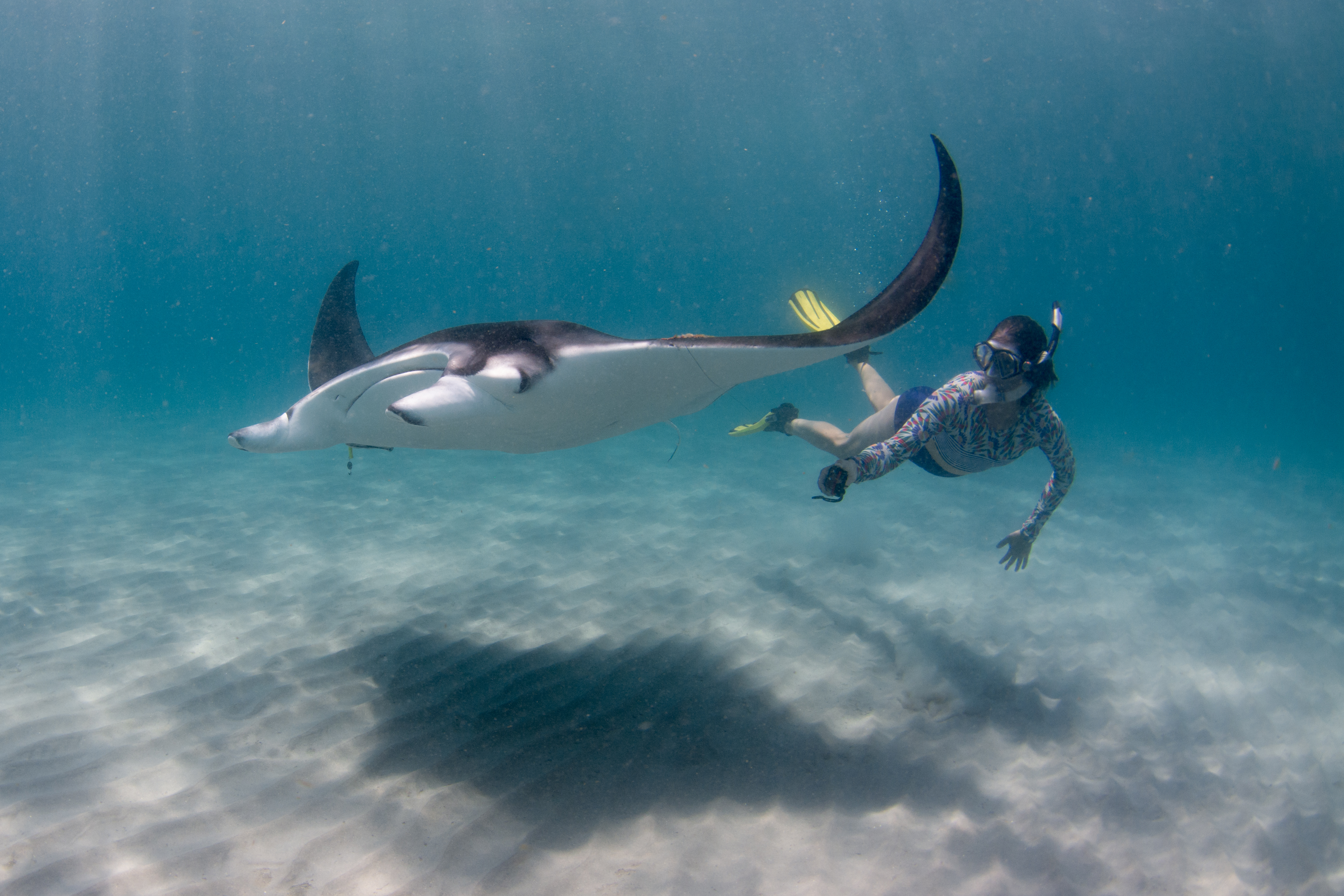
Our speaker will be Jessica Pate who has an undergraduate degree from UNC-Chapel Hill and a graduate degree from Florida Atlantic University. She has studied sea turtles in Florida, Central America, and West Africa. She has also taught marine biology on traditionally rigged schooners and has crossed the Atlantic Ocean by sail. In 2016, Jessica started the Florida Manta Project to study the biology and ecology of manta rays in South Florida and has discovered a potential rare nursery habitat.
Jessica will be talking about manta ray biology and global manta ray conservation, as well what discoveries that she has made about Florida’s manta rays. You will also find out how to become a citizen scientist and contribute to important manta ray research!
Zoom Meeting on Wednesday, January 13.
The Speaker will be Robert Myers. Here is the program:
Into the Heart of Diversiy, Ambon to West Papua A bit over a year ago we went on our last major dive trip, to Ambon and across the Banda Sea to West Papua. To you molluscophiles, Ambon is where all species bearing the name “amboinensis” come from, the Maluku Island where those named “molluccensis” come from, the Banda Islands where those named “bandanensis” come from. To naturalists, these are the islands just to the east of Wallace’s LIne, where the flora and fauna transitions from Asian to Australian lineages. While this was not a shelling trip (collecting is forbidden in preserves) and we saw few mollusks other than those without shells, it was a wonderful glimpse of the environment they inhabit. Our first 5 nights were at Spice Island Divers in Ambon, on the shore of a bay that slopes steeply down to 1,000 m. The shallows offer a variety of coastal coral community and soft sediment muck dive sites. The steep slopes are subject to seasonal upwelling and have a number of somewhat deeper-dwelling species that encroach into safe diving depths. The rest of the trip was on the Damai Dua, a luxurious fanisi-style live-aboard. Our 12-day excursion began with daily stops through a chain of isolated coral pinnacles and active volcanos including the historic island and city of Banda Niera. From there we travelled to the eastern end of Ceram, the largest of the Maluku Islands, then on to Misool, the largest of the Raja Ampat Islands. These isands sit on the West Papuan shelf and are home to the world’s most diverse coral reefs. Of special interest to us are species of carpet and epaulet (“walking”) sharks, found only on the Papuan-Australian continetal shelf. We finished the trip with a dive on a pinncale reef in the Fam Island group, a site we first dived 15 years earlier, during our first digital photo trip.
ZOOM meeting, Wednesday, Oct. 14th.
Wednesday October 14, 2020 7 P.M.
Broward Shell Club ZOOM meeting. Carole Marshall will be giving a program, Cephalopods on Coins, Paper Money and Exonumia. I will have live footage of Octopuses in motion. Great video by Brenda Hill, who has graciously loaned her video to me. Many stories of why these cephalopods came to be on coins and exonumia, including the Forest Octopus of the Cascades and the Kraken of the Game of Thrones. Learn about the Octopus who predicted soccer games and some million year old ammonites. Tune in on Wednesday at 7 P.M. Zoom Meeting: https://us02web.zoom.us/j/828192 85812?pwd=Y1A3bVVoallOQzU4N UwxaUpnNFNldz09 Meeting ID: 828 1928 5812 Passcode: 844342 Mobile Phone call (if you need to connect by phone only): +13017158592,,82819285812#,,,,,,0#,,844342# US (Germantown) +13126266799,,82819285812#,,,,,,0#,,844342# US (Chicago) Dial by your location: +1 301 715 8592 US (Germantown) +1 312 626 6799 US (Chicago) +1 929 205 6099 US (New York)
ZOOM Programs for September
ZOOM Programs for September
September has always been an iffy month for a Shell Club meeting. Usually it is hurricanes, this year it is COVID. I try to schedule our ever popular show and tell for September and we will try to do that in our ZOOM meeting for this September. So dust off an old shelling story or two and prepare to share it with the group.
IF, for some reason, we do not have enough show and tell stories, I have prepared a short program on Coins and Cephalopods. Most of you know I collect shells on coins, paper money and exonumia. Since 1999, they have become very important to me. I have money with mollusk motifs from about 145 different countries. For this program, I will only focus on the money with an Octopus, Squid, Nautilus or Cuttlefish.
I hope you get to tune in and we get to see your smiling faces again. Perhaps we can have another real meeting soon.
Carole Marshall
February Meeting
Title: Ecological interactions between marine macrophytes and small invertebrate epifauna in tropical shallow coastal systems
Synopsis: Marine macrophytes form biogenic habitats that maintain the biodiversity of marine coastal systems, especially for small invertebrate epifauna that maintain essential ecosystem functions. These macrophyte-invertebrate interactions are prevalent in shallow coastal systems, including subtidal seagrass beds and intertidal sandy beaches. These shallow coastal systems are also challenged with periodic influxes of pelagic Sargassum, a region-wide issue affecting much of the Caribbean, including South Florida, since 2011. Though these Sargassum influxes occur periodically, we know very little about how these influxes affect the local macrophyte and invertebrate epifaunal communities. This upcoming meeting will provide an update on research related to macrophyte-invertebrate interactions in shallow coastal systems. Current findings of ongoing research and further opportunities of investigation, particularly with effects of Sargassum influxes, will be discussed.
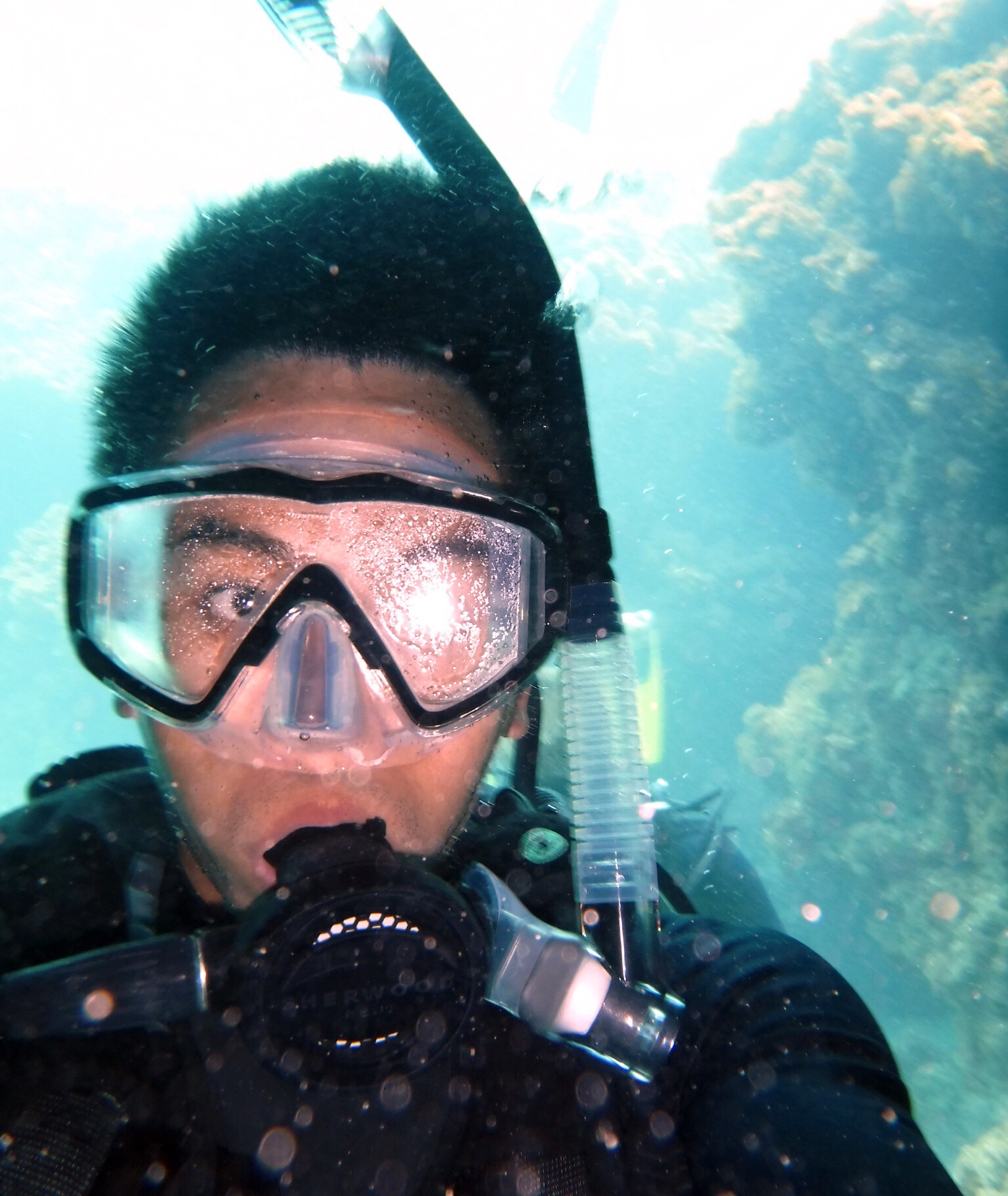
Biography: Lowell Andrew Iporac is a Ph.D Candidate at Florida International University’s (FIU) Biology Doctoral Program. Lowell obtained his B.A. in Biology from California State University, San Bernardino, where he completed four different undergraduate projects. Among those four research projects, it was an internship at Shannon Point Marine Center that sparked his interest in marine biology. Upon moving to FIU, he joined the Marine Macroalgae Research Lab (MMRL) with Dr. Ligia Collado-Vides in 2016. When not doing his research, Lowell likes snorkeling, diving, hiking, and playing with his Nintendo Switch.
 Broward Shell Club
You must be logged in to post a comment.