SHELL OF THE MONTH – MAY 2013

Cypraea Boivinii Kiener 1843

Cypraea (Erosaria) boivinii (Kiener, 1843) Beautiful hand selected set of 6 from the Philippines. Bottom right is the typical most common color form. Specimens with full length colored mantle lines are very scarce. The French naturalist Amedée Boivin, 1797- 1881, who collected Conidae and published at least one paper on Conus in 1864, is honored in the gastropod names Erosaria boivinii (Kiener, 1843), Anachis boivini (Kiener, 1841) and Conus boivini L. C. Kiener, 1845. A few other molluscs are also named after this person. (Andrew Vik, Tampa, Florida, kindly provided this information). Our thanks to Linda Ebeling and Richard Kent (as always) for their donations to the Raffle Table at the April meeting. Richard also supplied this month’s feature shell….as always, and they are always superb shells.


SHELL OF THE MONTH – APRIL 2013

DSC_3987

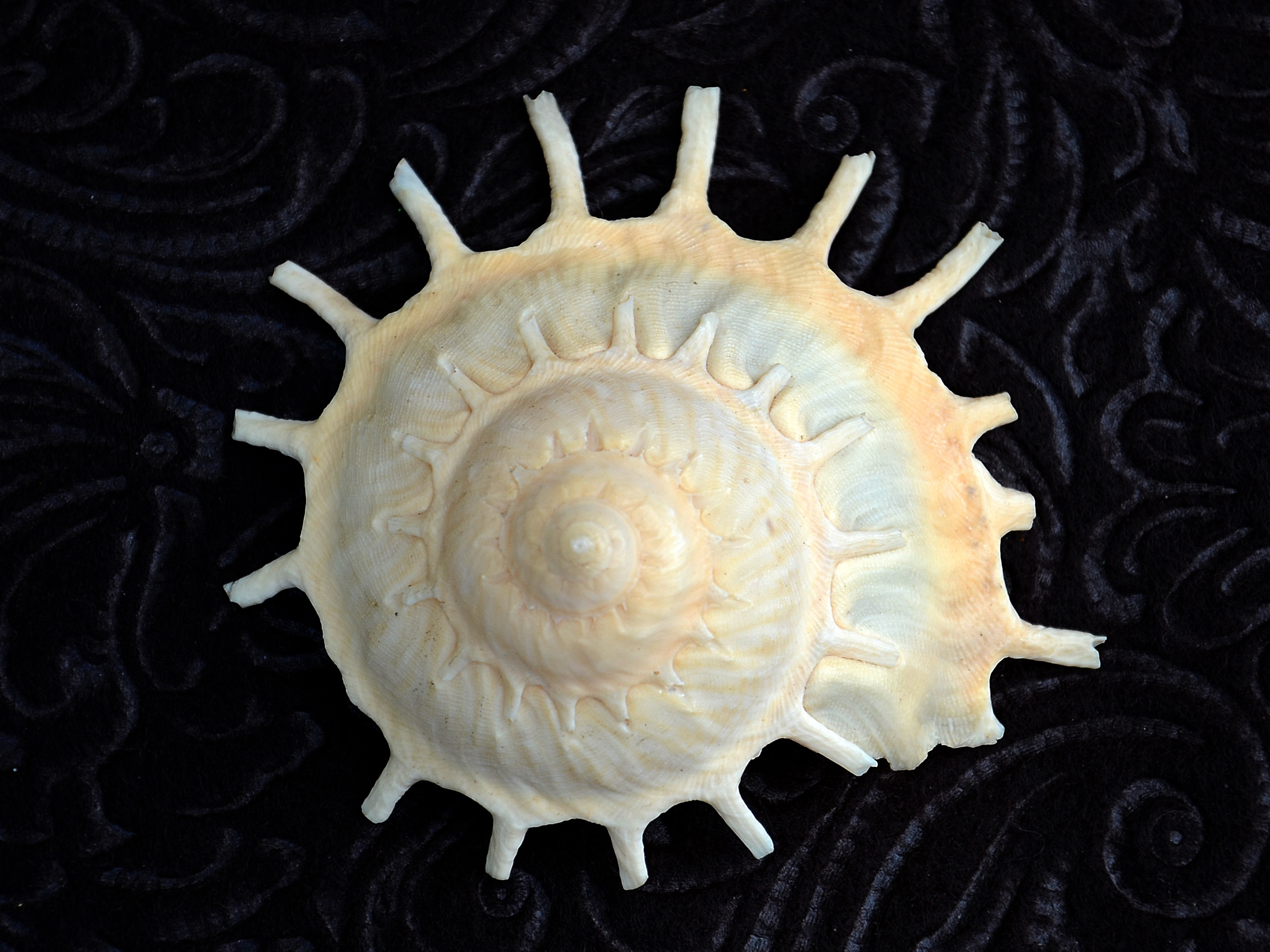
Stellaria solaris Linne, 1764 Netted in sand and mud bottom off Phu Quoc, Vietnam Size: about 3 1/2″ including spines. (90mm)


Although they are a member of the carrier shells, Stellaria solaris does not collect and attach to its shell. Commercial trawling has made thiese shells more available however perfect specimens are near impossible to obtain. According to author and Viet Nam shell expert Nguyen Thach most all specimens are damaged in collecting. Too bad. Stellaria solaris is usually collected from offshore waters  in either South-East Asia or the Philippines.


Our thanks to Linda Ebeling and Richard Kent for their generous donations to the Raffle Table at the February meeting. All items are always welcome!


SHELL OF THE MONTH – FEBRUARY 2013


Oliva irisans Lamarck, 1811

  Olives are one of the most fascinating families of shells to collect. Although any olive is immediately recognizable, these glossy shells come in an infinite variety of color patterns, shape and size. Here in Florida, olives are one of the easier shells for the beginner to collect as they often live in shallow water, burrowed in the sand. They are scavengers and predators. They are communal and will share a meal with others. Empty shells are common in beach drift.


   Olives present challenges. Scientists disagree on the nomenclature and the name that appears in the dealers list and shell books is often different than the currently accepted scientific name. These five specimens can often be found identified as Oliva lignaria Marrat, 1868. Recently it was decided that lignaria is a synonym for a different shell named Oliva ornata Marrat 1867. Oliva ornata may not even be a species, itself a variety of Oliva irisans Lamarck 1811 which is now the currently accepted name. Hold on, these may also be identified instead as Oliva concinna, Marrat, 1870. No concinna is a form based on structure of irisans –  Oliva irisans forma concinna Marrat 1870. Very confusing! To become an expert on olive identification one must learn all about filament channels, columellar callosity, and fasciole. It gets technical! The color varieties too all have been named, such as Oliva irisans forma oldi Zeigler 1969 which is the heavily mottled shell.


   These shells were donated from the collection of Richard Kent. They came from Australia, Indonesia and the Philippines. It took much time and searching to assemble a couple of color sets. Interestingly, the common plain pattern shells are now hard to obtain as only the scarcer color patterns are collected by divers as these bring the highest prices. ps: still searching for the very rare albino variation.

DSC_9908

THE 2013 R.T. ABBOTT VISITING CURATORSHIP

The Bailey-Matthews Shell Museum is pleased to invite applications for the 2013 R. T. Abbott Visiting Curatorship. The Curatorship, established originally in accordance with the wishes of the late Dr. R. Tucker Abbott, Founding Director of the Shell Museum, is awarded annually to enable malacologists to visit the museum for a period of one week. Abbott Fellows are expected, by performing collection-based research, to assist with the curation of portions of the Museum’s collection and to provide one talk for the general public. The Museum collection consists of marine, freshwater, and terrestrial specimens. A large percentage of our holdings have been catalogued through a computerized database management system; part of the catalogue is already available for searches online at: http://www.shellmuseum.org/collection.cfm. The R. T. Abbott Visiting Curatorship is accompanied by a stipend of $1,500. Interested malacologists are invited to send a copy of their curriculum vitae, a letter detailing their areas of taxonomic expertise and research objectives, and to provide a tentative subject Dr. José H. Leal, Director The Bailey-Matthews Shell P.O. Box 1580 Sanibel, FL 33957 jleal@shellmuseum.org for their materials talk. Send to:

Dr. José H. Leal, Director, The Bailey-Matthews Shell Museum, P.O. Box 1580 Sanibel, FL 33957

Applications for the 2013 Visiting Curatorship should be sent electronically to the above e-mail address no later than May 31, 2013, or postmarked by that date if sent by regular mail. The award will be announced by late June 2013. Questions about the Visiting Curatorship should be sent to the e-mail address above, or by phone at: (239) 395-2233; Fax (239) 395-6706

The Bailey-Matthews Shell Museum, the Nautilus Editor, 3075 Sanibel-Captiva Road, Sanibel, FL 33957 USA

OFFICERS FOR 2013-2014

At the April meeting the Nominating Committee presented their slate of officers for the upcoming fiscal year.The slate presented was unanimously elected and is as such:

President – Linda Sunderland

Vice President – Sonny Ogden

Treasurer – Tom Ball Corres

Secretary – Carolyn Harvey

Recording Secretary – Linda Laurin

CORAL COVE PARK FIELD TRIP

A number of our new members are very much interested in doing some good-old- fashioned shelling and we have just the
place for it. Coral Cove Park is just to the south of Blowing Rocks Preserve where we have had trips before but is MUCH easier to get to. Plus there are picnic tables, rest room facilities and such which are lacking at Blowing Rocks. I am planning the date of Sunday, May 19th for this trip. Plan on bringing your own picnic lunch and plenty of water and sunscreen. There is good snorkeling but NO LIVE SHELL COLLECTING – dead shells only. Drive time from Pompano is about 1hour, 20 minutes. We will meet at 9:30 but if you get there early or late, no problem….go ahead and hit the beach. Coming from the south using I-95: go north on I-95, take Jupiter exit 87A (Indiantown Road), continue east on Indiantown Road to US 1. Turn north (left) on US 1 to Jupiter inlet. Immediately after crossing the bridge turn right on S. Beach Road (CR707). Drive 2 miles and look for sign on right. Richard Sedlak 954-296- 5633 / sedlaki1@comcast.net. There will be a sign-up sheet at the May meeting ENTRANCE: 1600 Beach Road, Tequesta, Florida 33469 HOURS: Sunrise – Sunset ACREAGE: 14.64 acres AMENITIES  beach frontage, guarded (600 feet) o play structure (ages 5-12 years) saltwater fishing and surfing not permitted in guarded swimming areas • fishing (saltwater) • intracoastal waterway frontage (600 feet) • parking • picnic areas with grills • restroom facilities • showers, outdoor

WORLDS MOST BEAUTIFUL SCALLOP

DSCN0598At the Broward Shell Show this year, banquet and program attendees had the opportunity to select the world’s most beautiful scallop species.  They were shown 150 of the world’s largest and most beautiful species from which to choose.  And choose they did, and here are the results!

Participants (over 50 altogether) cast votes for 32 species from among the 150+ species shown.  Tenth place was a three way tie between mirifica/thaanumi, farreri, and antillarum.  Ninth place was the wonderous and rare cranmerorum from Somalia.  Eighth place was the beautiful delicate  dianae from Okinawa.  Seventh place went to the brightly colored langfordi, a Hawaiian endemic.  Sixth place was Florida native pellucens, long known as imbricata, and this may still prove to be its correct name.  Fifth place went to the elegant swifti of northern Japan and Siberia.  Fourth place winner was magnifica, the giant red scallop endemic to the Galapagos Islands.  Third place winner was the uniquely refined and brightly colored speciosus of Japan.

Second place winner was glaber, the Mediterranean scallop which displays endless hues of color and endless patterns.  It received only one less vote than the winner.

What, might you ask, could top the beauty and variation found in glaber?  Well, among Florida collectors there has always been a favorite scallop, and this vote showed that Floridians fervently believe that this scallop is also the most beautiful scallop in the world.  This scallop has it all!  Great size, great colors, and great variation in its patterns.  That scallop is, of course, fragosus, the Florida lion’s paw, and it truly is a marvel of nature!

2013 BSC SHELL SHOW AWARDS

OLYMPUS DIGITAL CAMERA2013 BSC SHELL SHOW AWARDS – SCIENTIFIC DIVISION

AMERICAN MUSEUM OF NATURAL HISTORY AWARDRobert L. Pace and Alice L. Pace – Uncommon to Rare Florida/Caribbean Gastropods (Category: FL/Carib. any manner)

CONCHOLOGISTS OF AMERICA AWARD Gene Everson – GLYCYMERIDIDAE – (Category: Super 10)

THE DuPONT AWARD – Sheila Nugent – Native Americans, the First Collectors (Category: Educational)

“BEST OF THE BEST” – Robert L. Pace and Alice L. Pace – The World Wide Invader Giant African Snail!

LEN HILL MEMORIALDoug Thompson – Lion’s Paws (Category: One species any manner)

SHELL OF SHOW – Self CollectedJae Kellogg – Conus spurius (Fay) (Category: Single Shell self-collected)

SHELL OF SHOW – Any Manner – Robert L. Pace and Alice L. Pace – Latirus mcmurrayi in “Uncommon to Rare Florida/Caribbean Gastropods” (Category: FL/Carib. Any manner)

JIM VUNKANNON MEMORIAL FLORIDA / CARIBBEAN TROPHY – Robert L. Pace and Alice L. Pace – Uncommon to Rare Florida/Caribbean Muricidae (Category: Super 10)

GERRIT deGRAFF MEMORIAL Doug Thompson – Spondylus americanus (inside another Spondylus americanus) (Category: FL/Carib. self-collected)

NEIL HEPLER MEMORIAL TROPHY FOR EDUCATIONAL EXCELLENCEPat & Bob Linn – Those Amazing Spider Conchs (Category: One genus any manner)

BEST STUDENT EXHIBITOR TROPHY – SCIENTIFIC – Marissa Linn – Treasures from the Beach (Category: Student 7-12 Grade Self-collected)

BEST SEA LIFE EXHIBIT TROPHY – Doug Thompson – Texas Longhorns (Category: Sea Life)


PEOPLE’S CHOICE AWARD – SCIENTIFIC – Robert L. Pace and Alice L. Pace – The World Wide Invader Giant African Snail!

Judge’s Scientific Special Merit ribbons (2) – Each scientific judge awarded a Special Merit.

Doug Thompson – triple Spondylus (2 species, 3 colors) in Self-collected Spiny Oyster exhibit

Robert L. Pace and Alice L. Pace – Murex beaui in Uncommon to Rare Fl.Carib. Muricidae exhibit

SCIENTIFIC RIBBON WINNERS

STUDENT – Grades 7 through 12 – Self-collected – BLUE – Marissa Linn – Treasures from the Beach

FLORIDA / CARIBBEAN – Self-collected –             BLUE (tie) – Amelia Moffitt Tripp – The ABCs of Alphabet Cones; BLUE      (tie) – Doug Thompson – Self-collected Spiny Oysters

FLORIDA / CARIBBEAN – Any manner – BLUE – Robert L. Pace and Alice L. Pace – Uncommon to Rare           Florida/Caribbean Gastropods

ONE GENUS – Any Manner –  BLUE – Pay & Bob Linn – Those Amazing Spider Conchs; RED – Carole Marshall – The   Genus Argopecten; WHITE – Gregory A. Curry, Sr. – Volutoconus of Australia

ONE SPECIES – Any Manner – BLUE – Doug Thompson – Lion’s Paws; RED – Patrick & Jae Kellogg – Strombus alatus “A Rainbow of Colors”

SINGLE SHELL – FLORIDA / CARIBBEAN – Self-collected – BLUE – Jae Kellogg – Conus spurious “Fay”; RED (tie)–    Randy Allamand – Conus zylmanae; RED (tie) Heather Strawbridge – Gelagna succinta; WHITE – Doug       Thompson – Murex levicula (WRS Record)

SINGLE SHELL – FLORIDA / CARIBBEAN – Any Manner – BLUE – Gregory A. Curry Sr. – Lyria russjenseni ; RED –    Amelia Moffitt Tripp – Busycon perversum

SINGLE SHELL – FOSSIL – SELF-COLLECTED –             BLUE – Jae Kellogg – Turbinella regina

ABBERANT SHELLS – Any Manner  – BLUE (tie) – Tom Ball – Freaks; BLUE (tie) – Patrick Kellogg – Busycon             contrarium

LAND or FRESH WATER SHELLS – Any Manner – Sheila L. Nugent – Apple Snails Love Cape Coral

SEA LIFE – BLUE – Doug Thompson – Texas Longhorns; RED – Bev Dolezal – Starfish

SUPER 10 – BLUE (tie) – Robert L. Pace and Alice L. Pace – Uncommon to Rare Florida/Caribbean Muricids; BLUE (tie)    – Gene Everson – Glycymerididae; RED – Tom Ball – World Record Shells database – still valid?;

WHITE – Randy Allamand – Self-collected Shells of Florida and the Caribbean

BEACH SHELLS –BLUE – Patrick & Jae Kellogg – South African Limpets – Capetown

EDUCATIONAL – BLUE – Sheila L. Nugent – Native Americans, the first collectors

Judge’s Scientific Special Merit ribbons (2) – Each scientific judge awarded a Special Merit.

Doug Thompson – triple Spondylus (2 species, 3 colors) in Spiny Oyster exhibit

Robert L. Pace and Alice L. Pace – Murex beaui in Uncommon to Rare Florida/Caribbean Muricidae exhibit

2013 BSC SHELL SHOW AWARDS – ARTISTIC DIVISION

BEST STUDENT EXHIBITOR TROPHY – ARTISTIC – Marissa Linn – Rolling to the Beach (Category: Hobbyist Student Grades 7-12)

BEST IN SHOW TROPHY – HOBBYIST – Tom Laurin – Emerging Sun & Ocean Produce (Category: Beginning Exhibitor – Hobbyist)

BEST IN SHOW TROPHY – PROFESSIONAL – Kinsey Maxell – Neptune’s Treasures (Category: Professional Décor – Tabletop only)

BEST IN SHOW TROPHY – SAILOR’S VALENTINE – David Rhyne – Farewell My Love (Category: Professional Double Sailor’s Valentine)

BEST TABLE TOP TROPHY – Sue Burns-Piras & Mario Piras – Worldwide Sea Glass (Category: Professional Special)

BEST WALL HUNG TROPHY – Marci Chamberlain – Mermaid’s Garden (Category: Professional Décor – Wall hung only)


FAY MUCHA MEMORIAL BEST COLLECTIBLES TROPHY – Sonny Ogden – Stickchart Exhibit

BEST BEGINNING ARTISTIC EXHIBITOR – Betty Mixon – Neptune’s Parlor (Category: Hobbyist Beginning Exhibitor)

Judge’s Artistic Special Merit ribbons (2) – Each scientific judge awarded a Special Merit.

Betty Mixon – Neptune’s Parlor (Category: Hobbyist Beginning Exhibitor – Hobbyist)

Shannon Webster – Neptune’s Crown (Category: Professional Décor – Tabletop)


ARTISTIC HOBBYIST RIBBON WINNERS

BEGINNING EXHIBITOR – BLUE (tie) Betty Mixon – Neptune’s Parlor; BLUE (tie) Tom Laurin – Ocean Produce and      Emerging Sun; WHITE (tie) – Betty Mixon – Birds of a Feather; WHITE (tie) Scott Strawbridge – Isaac’s       Treasure (photo)

STUDENT – Grades 7 – 12 – BLUE (tie) – Marissa Linn – Rolling to the Beach; BLUE (tie) Marissa Linn – My Shelly Hat

PICTURE OR MOSAIC – Greater than 6″ – WHITE – Joy Stafford – Mosaic Mirror

DÉCOR – TABLETOP ONLY – BLUE – Pat Linn – Wreath of Many Memories

PHOTOGRAPHY – RED – Sheila L. Nugent – Frog With Mussels

PAINTING OR DRAWING – WHITE – Sheila L. Nugent – Noble Scallop

NOVELTIES – RED – Robert L. Pace – Mama Green Turtle Laying Eggs

SEWING OR NEEDLEWORK – RED – Wendy Ryan – Framed Group of Shells

ARTISTIC PROFESSIONAL RIBBON WINNERS

PICTURE OR MOSAIC – Greater than 6″ – BLUE – Marci Chamberlain – Mermaid’s Garden

FLOWER ARRANGEMENT – Greater than 6” – BLUE – Jenny Campos – Divinity (Shell Vase/Bouquet)

SAILOR’S VALENTINE – Single – Octagonal case – BLUE – David Rhyne – Pegasus; RED –Jane Santini

SAILOR’S VALENTINE – Double – Pair of hinged octagonal cases – BLUE – David Rhyne – Farewell My Love

MIRROR – BLUE – Heather Strawbridge – Mirror Sconce; RED – Shannon Webster – Mirror

DÉCOR – WALL HUNG ONLY – BLUE – Shannon Webster – Décor (cross); WHITE – Heather Strawbridge – Wreath

DÉCOR – TABLE TOP  ONLY – BLUE – Kinsey Maxell – Neptune’s Treasures (mini store); RED – Shannon Webster – Neptune’s Crown

JEWELRY and PERSONAL ACCESSORIES – BLUE – Sue Burns-Piras and Mario Piras – Jewels of the Sea

NOVELTIES – RED – Shannon Webster – Novelties (Pair of Two)

HOLIDAY THEMES – RED – Shannon Webster – Holiday; WHITE – Jenny Campos – Beachy Ornaments

SPECIAL – BLUE – Sue Burns-Piras and Mario Piras – World Wide Sea Glass


SHELL OF THE MONTH JANUARY 2013

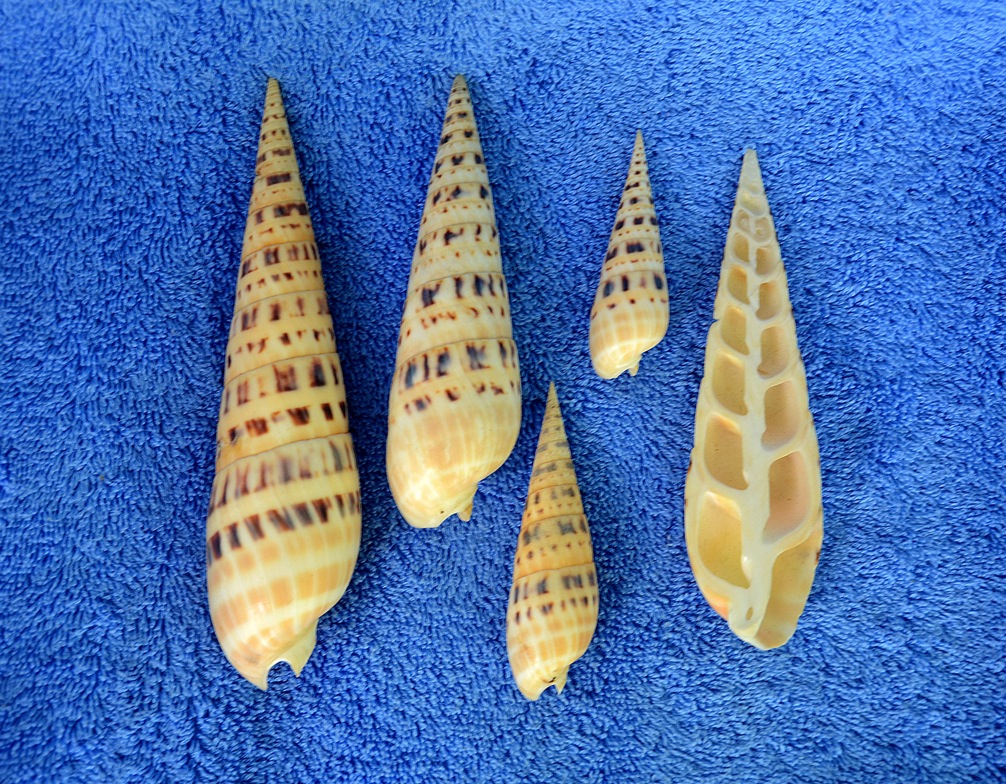
DSC_9468Acus maculata, Linneaus 1758. “The Marlin Spike”. Growth series from under 3″ to over 6″ including one cut to show growth spirals. From Guam!

Richard Kent has yet again supplied us with another shell…or should I say shells as our feature shell for this month. Terebras are a marvelous family of shells whose shapes never vary unlike some other families. They are always that wonderful long-tapering “spike” shape. Size, color patterns and such may vary…but never their shape. What makes this feature special is the cut-away shell so you can see the internal structure. You will want to take a chance on these!