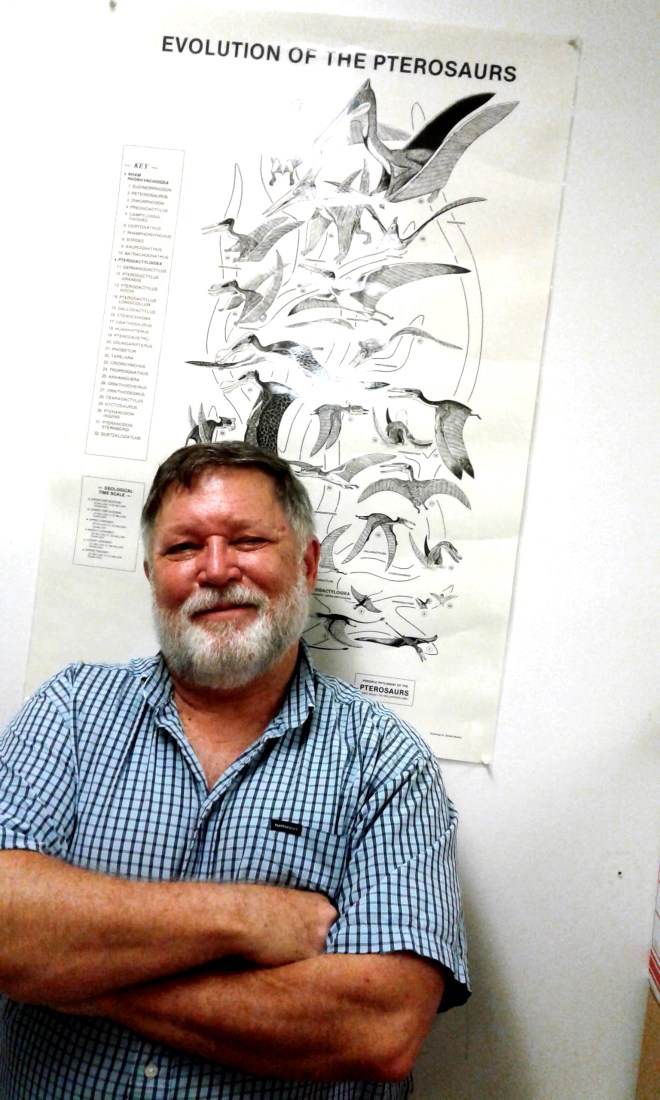
 Our program for October will be Dr. Ed Petuch. Ed recently retired from teaching Geology at Florida Atlantic University. Ed has written over 22 books mainly on the mollusks of Florida and the Caribbean. He is an expert on both Recent and Fossil Shells and named over 1200 mollusks both recent and fossil
Long known by many of the members of the Broward Shell Club, since he was a graduate student at the University of Miami, last year Ed donated many books from his library to the club. Ed has had a close relationship to many of our club members, naming many species of shells for both Alice and Bob Pace, Kevan and Linda Sunderland, Lynda Zylman and myself including others.
He is an expert on both Recent and Fossil shells. He has named over 1200 species of mollusks.
Ed is one of the most vibrant speakers you will ever hear and I know this program will be amazing. He will be presenting “Jewels of the Everglades: The Fossil Cowries of Southern Florida”—-
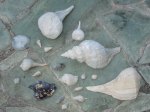
“The cowrie shells of Pliocene and Pleistocene Florida represent the single largest evolutionary explosion of cypraeids found anywhere on Earth. To date, 105 species of fossil cowries have been found in our local quarries and shell pits, including some of the rarest and most beautiful fossils known from anywhere in the world. Because of the special geology of the Everglades area, our fossil cowries are also the best-preserved in the world, often having the original shine and color pattern. With the exception of two species that are known from the fossil beds of the Carolinas, all the other cowries are found only in southern Florida, making these shells the most desirable fossils in our local area. Specimens of several of the largest and most beautiful species will be on display after the talk.”
Ed’s program will be based on his newly published book:
Jewels of the Everglades: The Fossil Cowries of Southern Florida, by Edward J. Petuch, David P. Berschauer and Robert F. Myers. This is available exclusively through the San Diego Shell Club for $95.00 plus shipping and handling ($5.00 in the USA). The Cypraeidae of Plio-Pleistocene southern Florida produced the single largest radiation of cowrie shells, known from one locality, ever found anywhere on Earth. With the exception of two widespread early Pliocene species, all the rest of the fossil cowries found in southern Florida were completely restricted to that region. Even within this relatively small area, many species and species groups of cowries had very limited geographical ranges, often being restricted to select reef tracts or estuarine environments and having ranges of only a few hundred square miles. This book contains over 350 images of over 100 species of fossil cowries from over four million years (covering the Pliocene to the Holocene) beautifully illustrated on 104 color plates, together with maps and in situ pictures of these unique fossil jewels. Hurry and get your copy while supplies last.
There is still time to order it and have Ed sign it at the club meeting. Here is the address and website or go to San Diego shell club and find the section labeled store.
this is a DO NOT MISS program, so see you Oct. 10.
P.S. If you can bring a refreshment to share that will be appreciated. We will probably have a large crowd this month.
 Broward Shell Club
You must be logged in to post a comment.