Conus (Rhizoconus) mustelinus Hwass in Bruguière, 1792 – The Weasel Cone
This attractive cone shell is solid mustard or maize in color with a central white band bordered by blackish dots above and below. The should has flames that spill over to cover the spire. It reaches an an average size of about 3” and is poisonous as are all cone shells. The sides are straight. There is little variation from one to the next. Color my vary slightly. The band is always in the center. It is a clean shell with a low gloss. A growth line or two is normal.
It is an Indo-Pcific specie found in and by the coral reefs.
How it got the common name of Weasel Cone is a good question.
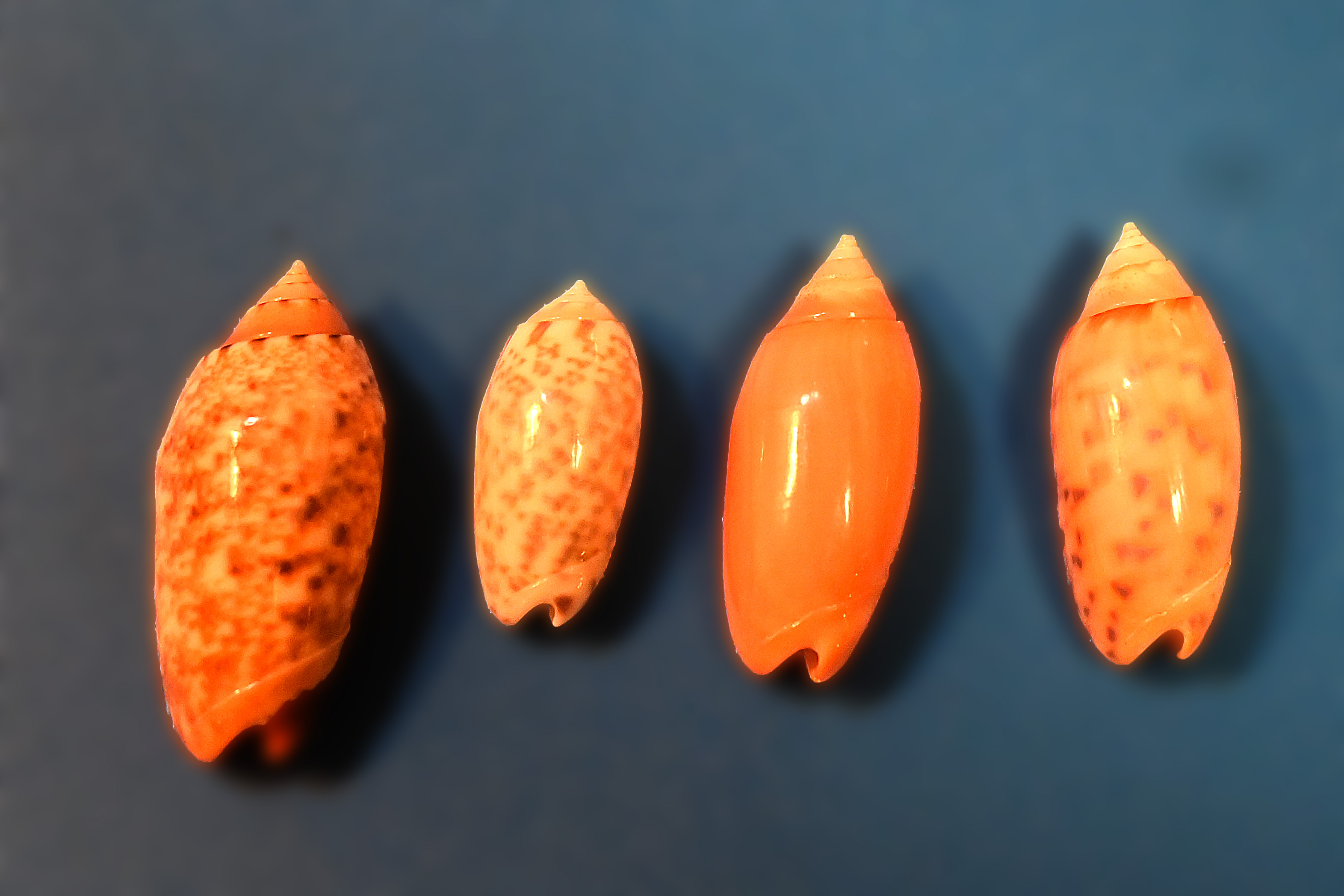
Oliva annulata Gmelin, 1791. 5 meter by diver, Sulu Island Philippines
Oliva mantichora Duclos, 1840. 15 meters by dive, Olango Island, Philippines
Oliva annulata amesthyna Rpding 179. 8’ in sanNego Bay, Okinawa
Oliva annulita carnicolor Dautzenberg 1927, 20 meters in samd. Sulu Archipelago, Philippines
The olives are attractie glossy shells and easy for us to collect. They are commonly found burrowed in the sand just outside of sand bars that are often exposed at low tide with just their siphon exposed. They leave behind them a trail that is easy to spot. They are gregarious and like to hang out together. They are scavengers who will share a meal. If you find one you should find a half dozen near by.
Oliva annulata Gmelin, 1791 is known as the Amethyst Olive due to the purple triangular markings that cover this colorful shell. There are numerous named varieties or forms that make it fun to collect.
Oliva annulata Gmelin, 1791 is cursed. Its name is a nomen duben which makes it a dubious name and therefor invalid.
At the moment Oliva amesthyna Rpding 1798 is the accepted name leaving collectors with a new propel, This the name of a variety or form leaving original type without a name.
Oliva mantichora Duclos, 1840 has been elevated to a full species as it should be. The black bars on the columned and shoulder are constant and distinguishes it from the others in the group.
Oliva carnicolor Dautzenberg 1927 should be a full species too. This solid flesh color form is found in entire populations rather than individual specimens mixed in with other forms.
Eventually the scientists will work our the names but don’t let their confusion spoil your collecting.
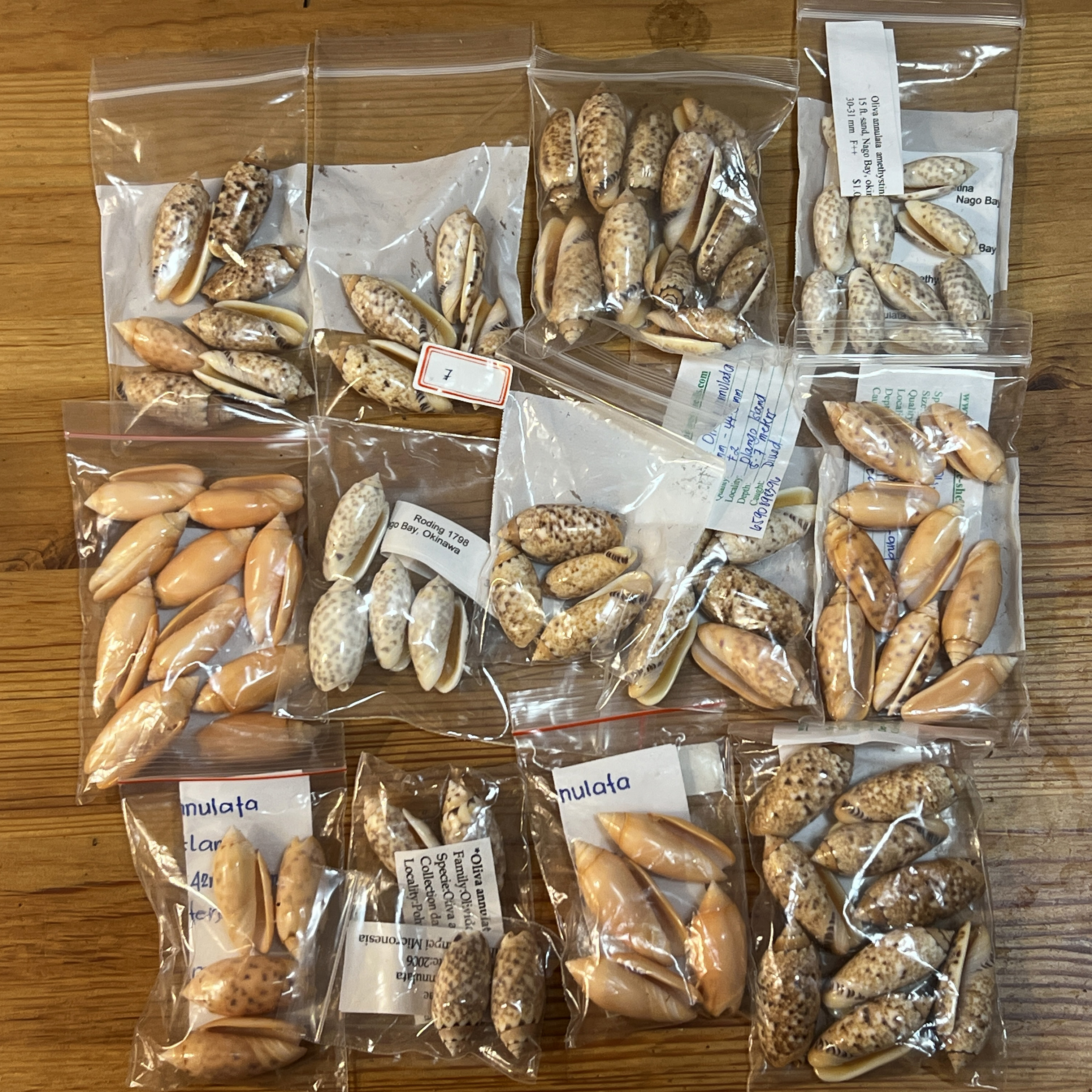
The photo below is of my collection of Amethyst Olivesfrom which these specimens were selected. The are Pacific Ocean shells found mostly in the Philippines. They range from Okinawa south to Indonesia and to the east to the Marshal Islands. .
Our program speaker for October is Anton E. Oleinik a professor in the Department of Geosciences Florida Atlantic University Boca Raton. His research centers on critical intervals in the Cenozoic history, such as the Eocene-Oligocene transition from the Greenhouse to the Icehouse world, Middle Miocene Climatic Optimum, and the first opening of the Bering Strait. These changes produced a series of profound changes in the high-latitude biota, including pulses of diversification and extinction
His current research is primarily focused on the biodiversity, paleogeography, and isotopic record of paleoclimates in the poorly studied areas of the northern Pacific (Alaska and Kamchatka). He teaches: Sedimentation and Stratigraphy, Coastal and Marine Science, Environmental Issues in Earth and Atmospheric Sciences, Global Environmental Change, and runs a Geology Field Camp.
Dr. Oleinik is no stranger to the Broward Shell Club, having given us several programs in the past. I know you will enjoy this Pompano based program.
Carole
His program is
Hidden treasures of Pompano Beach’s shallow waters: a glimpse at the enigmatic world of Broward County marine mollusks
Brief synopsis:
Mollusk diversity patterns is shallow-water habitats off Broward County, were assessed by 49 SCUBA-based roving surveys along contrasting bottom-types at depths ranging between 2.5 and 8 m and within 600 m of the coastal zone. Surveys were conducted between 2011 and 2019. Bottom types vary from quartz and skeletal sand to rubble consisting of late Holocene (1800 – 3200 ybp) coral fragments, and Pleistocene bedrock, forming hard bottom flats, ledges, and drop-offs with significant vertical relief. Most of these bottom types are located within the nearshore ridge complex (NRC). Roving surveys yielded 119 species of marine gastropods belonging to 42 families. Differences in mollusk community structure between bottom types and survey season, based on the presence/absence data were analyzed using non-parametric (nMDS) ordination techniques. The analysis suggests minor but noticeable differences in species composition between bottom types, with no significant differences in mollusk occurrences detected between observation seasons.
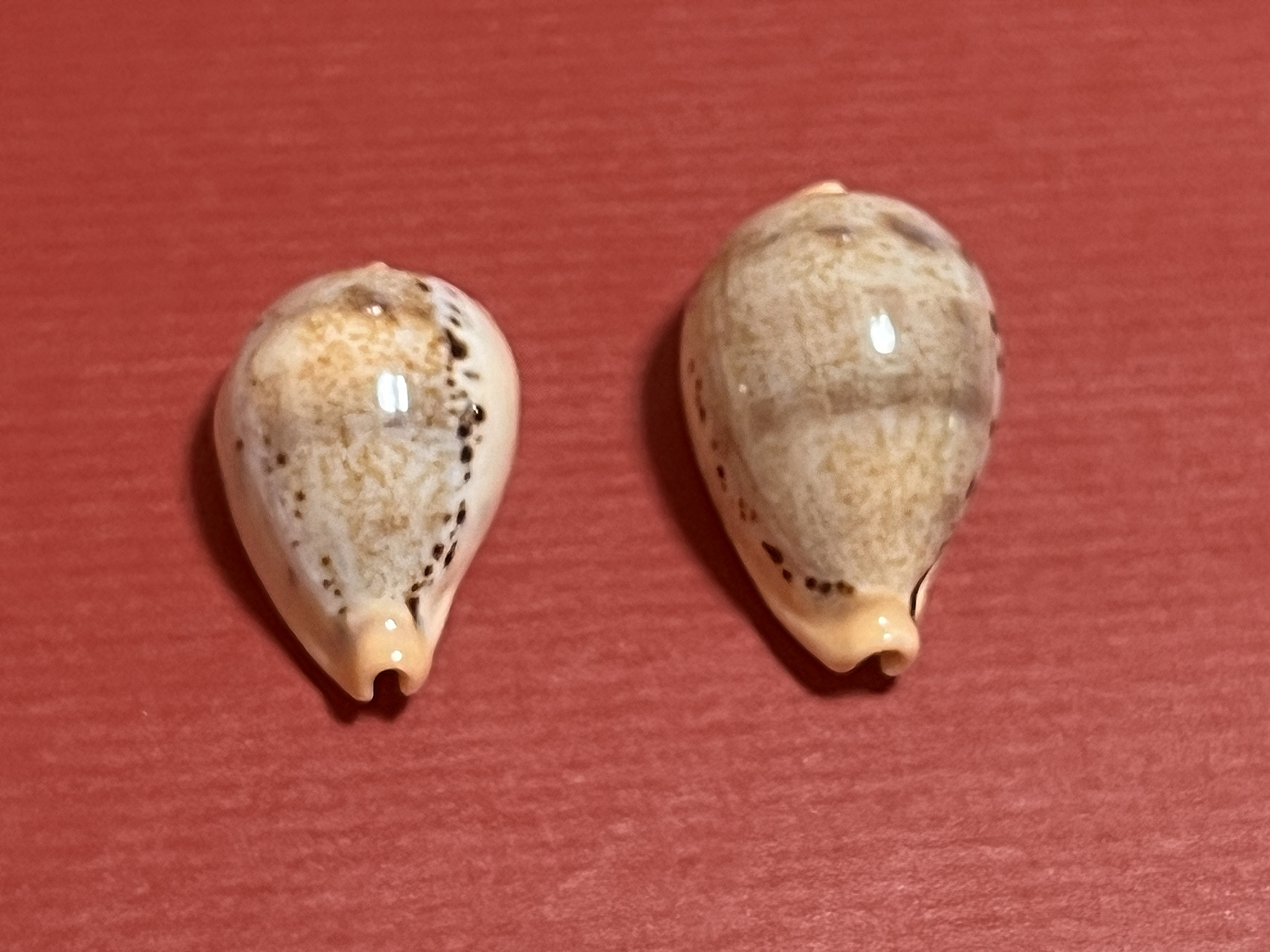
Cypraea hungerfordi Sowerby, 1888. Trawled by Ning Bo fishermen at 150-200 meters. Zhe Jing Province, China, Fall 2006
This shell was extremely rare until the 2000s when Chinese fishermen began bottom trawling at great depths. Once located, he Chinese flooded the market and then it was easy to purchase by the dozen. Ina few years the market was saturated the collecting ceased and now fresh specimens are rare again.
Size ranges between 1.5 and 1 3/4 Inches. The base is orange rapidy fading to a deep cream. The dorsum is beige speckles and encircle beneath black blotches.It is a beautifulshell
de in the winter of 2,,8 direct from China.
If you win keep one for yourself and give the second to a fellow collector. It is highly unusual for.
Chines shells seldom have such good collection data.
Imagine my surprise when we walked into Rockefellers Raw Bar and staring me in the face on the hostess stand was a shell crafted Christmas tree. Not just any kind, but one identical to those our crafters made for each table at the annual Holiday Party.
The mystery: Where did it come from? How did it get to South Carolina?
Could the winner at the party have brought it to the restaurant and gave it to them? Did they copy us? Or did we cry them? It seemed identical in dimensions and construction ao maybe it was from a craft kit?
The waitress wan’table to answer so it remains a mysery’
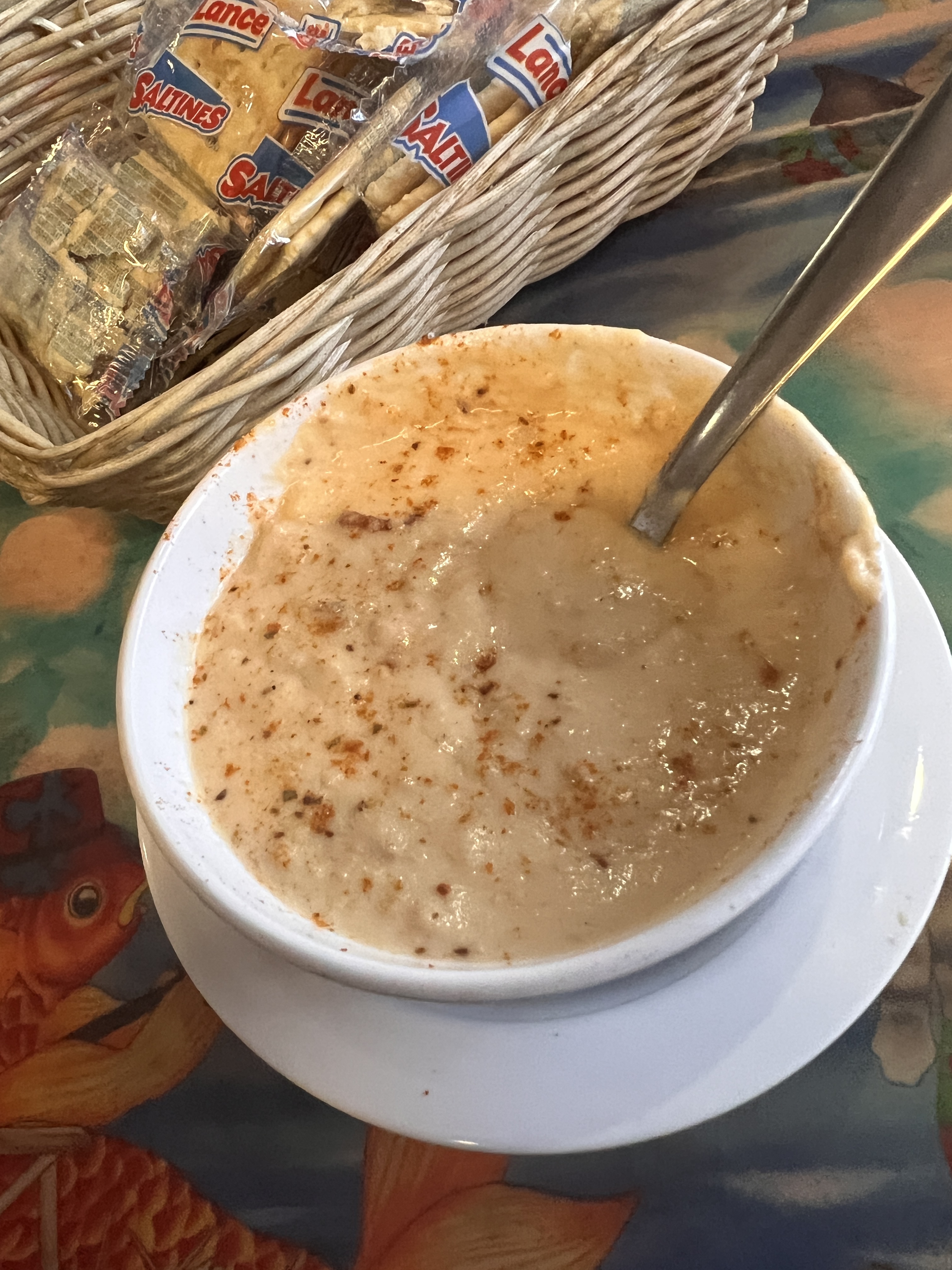
As we wee in coastal Carolina I couldn’t pass up the She Crab Soup. This version was more like a chowder, creamy thick and delicious.
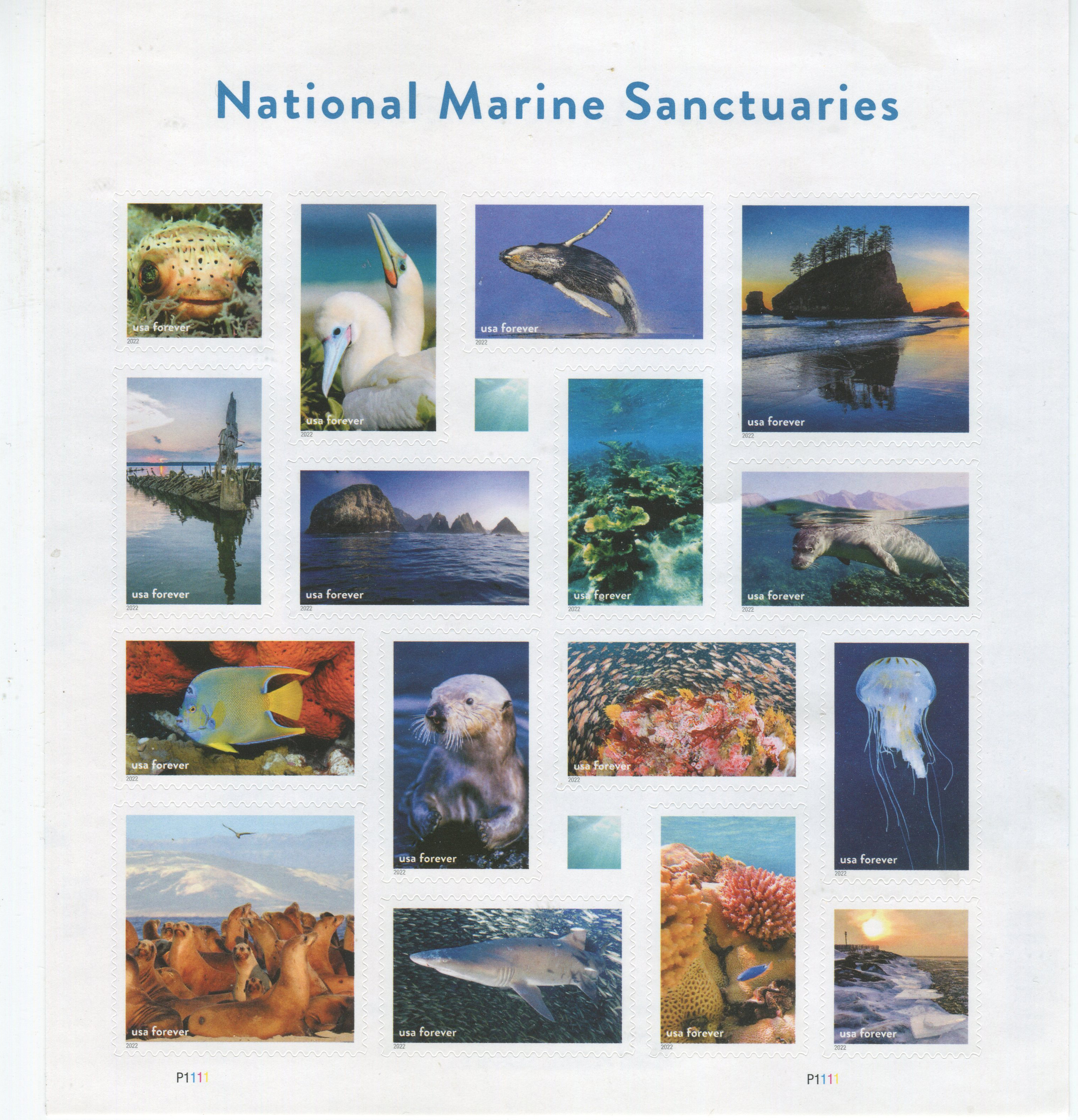
One full sheet of United States PostalService National Marine Sanctuary commemorative stamps. Each stamp represents a different habitat and sanctuary. On the back of the sheet is listing of all the sanctuaries. The sheet retails for $10.08 and the stamps are good forever.
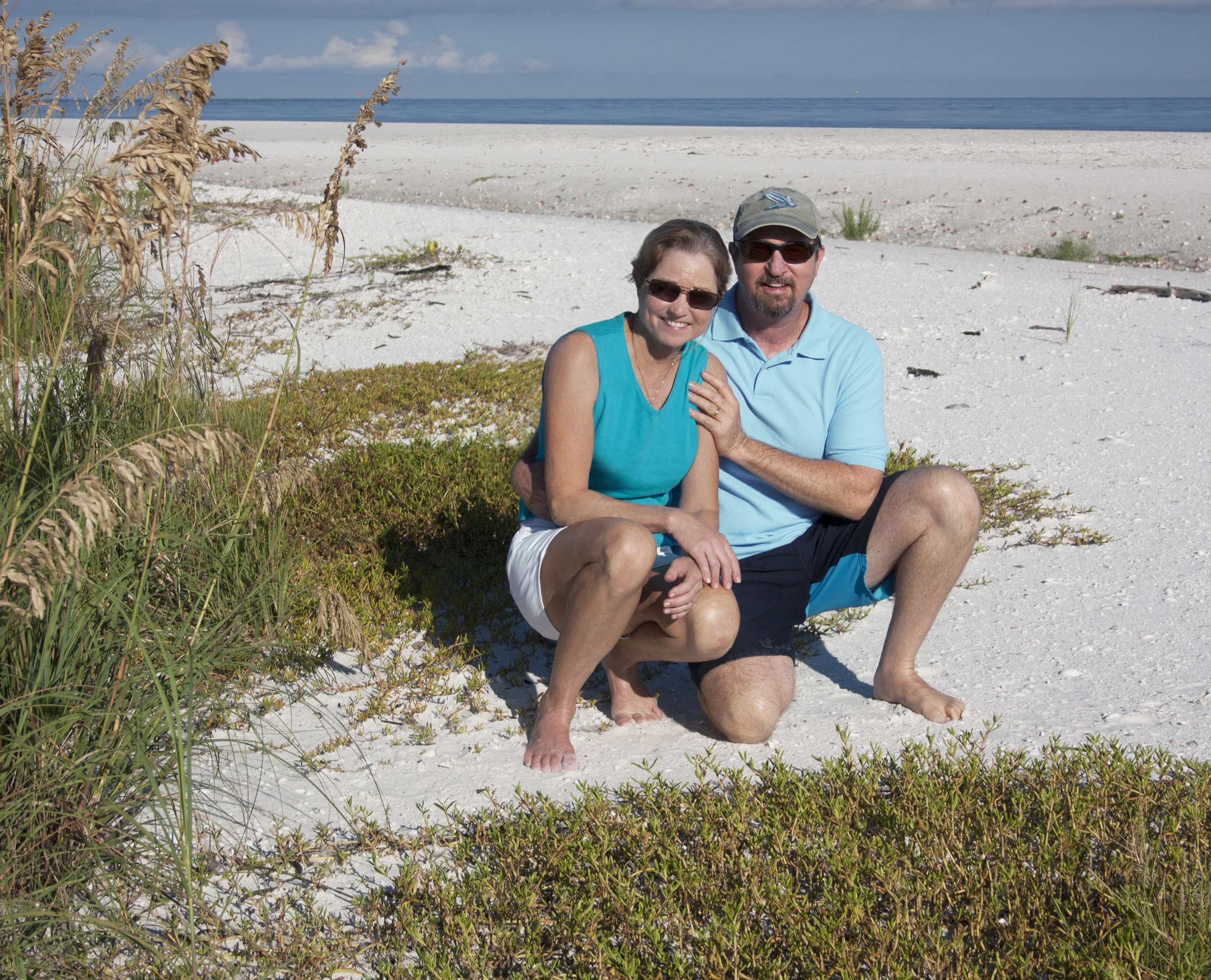
This is a very special program and I hope everyone will come out to hear Blair and Dawn Witherington. If you have their books, bring them to the meeting and they will sign them. There will also be books to buy that they have written.
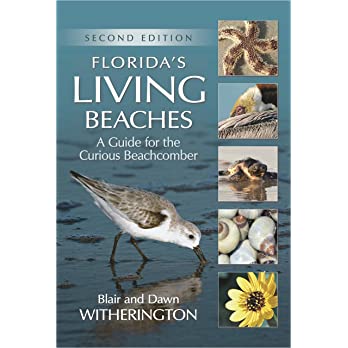
Blair and Dawn have written one of the most valuable beach books for Florida “Florida’s Living Beaches A Guide for the Curious Beachcomber” They cover much of what you would normally encounter in a beach walk.
Come hear this dynamic couple talk about their Florida beachcombing experiences and their new book.
Carole
\
Discover Our Living Beaches
Authors present an engaging photographic tour entitled “Our Beaches are Alive!”
Blair and Dawn Witherington will share illustrated stories from their newly updated book, Florida’s Living Beaches. Did you know that our wave-swept coastline offers much more than a sandy stroll amidst stunning scenery? As ever-changing ribbons of sand, these beaches foster unique life forms and accept beguiling castaways from a vast marine wilderness. Mysteries abound. What is this odd creature? Why does the beach look this way? How did this strange item get here? Blair and Dawn have sought to satisfy this beachcomber’s curiosity within four books on southeastern US beaches. Subjects covered include beach processes, plants, animals, minerals, and manmade objects. In their presentation Blair and Dawn suggest a series of “quests” to highlight one’s beachcombing journey and to show how each visit to a beach is unique—no two are exactly alike, and at any given beach, every day brings something different. The couple has a new book coming out in late November entitled, Living Beaches of the Gulf Coast.
Following their presentation, the Authors will sign copies of their books, which will be available for purchase as gifts, keepsakes, and tickets to beach adventure.
Blair and Dawn Witherington are professional naturalists. Blair is a research scientist with the Inwater Research Group and the University of Florida. He has baccalaureate and master’s degrees in biology from the University of Central Florida and a doctorate in zoology from the University of Florida. In 38 years of research, he has contributed numerous scientific articles and book chapters on sea turtle biology and sandy beaches. Dawn is a graphic design artist and scientific illustrator trained at the Art Institutes of Colorado and Ft. Lauderdale. Her art and design are prominent in natural history books, posters, exhibits, and a line of sea-themed greeting cards. Together, Blair and Dawn have merged their art, writing, photography, and design within a number of projects, including several books on beaches, seashells, and sea turtles.
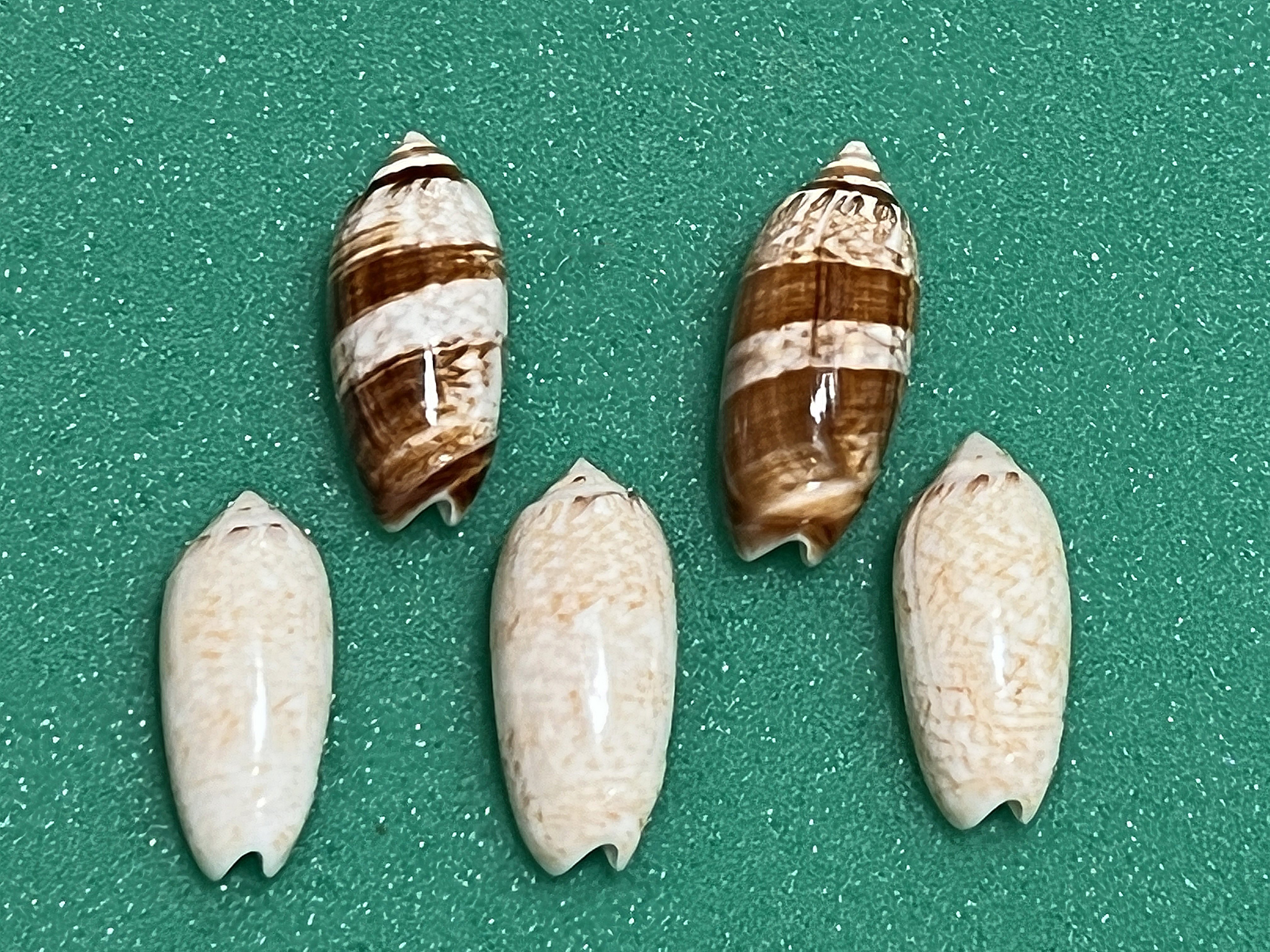
Oliva bifasciata Weinkauff, 1878is our Broward county olive. It’s range starts at the Palm Beach County line and goes south off shore through the Florida Keys. Of interest is that north of Browad County it is replaced by Oliva sayana. The two do not appear to overlap.
This attractive little olive of about one an a half to two inches in length comes in three varieties. The common is wheat colored and completely covered with fine dashes and lines. The second variety is milk white and almost void of decoration. The third has two chocolate brown bands that wide in width as the shell grows. The varieties appear to be location specific.
Until recently they were abundant living in sand near our Florida reefs. The receding tide would usually reveal a few fresh dead specimens and a tropical storm more than one could collect.
Sadly beach restoration projects and pollution have made these rather scarce
Oliva bifasciata is known as the Netted Olive although that name belongs to Oliva reticularis Lamarck, 1811 a very closely related species from the Bahamas. When R. Tucker Abbot wrote his then definitive “American Seashells” he called these shells Oliva reticularis, delegating bifasciata as a synonym along with several other names. It is common to see that name used in older collections.
As this is a local species, it would be interesting to hear our members’s collecting experiences. These specimens were dredged in a sand restoration project in Hollywood Beach in the early 1990s.
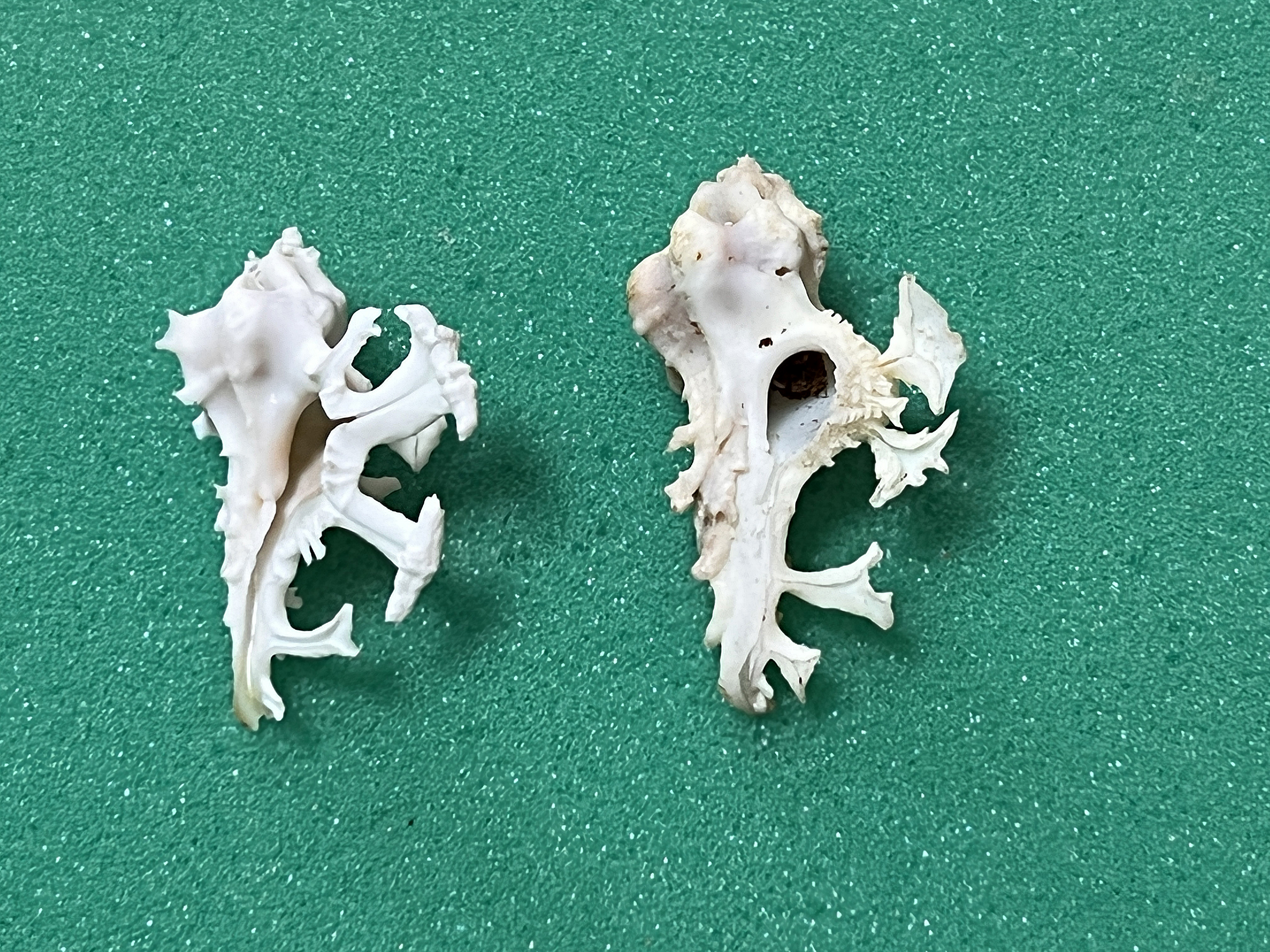
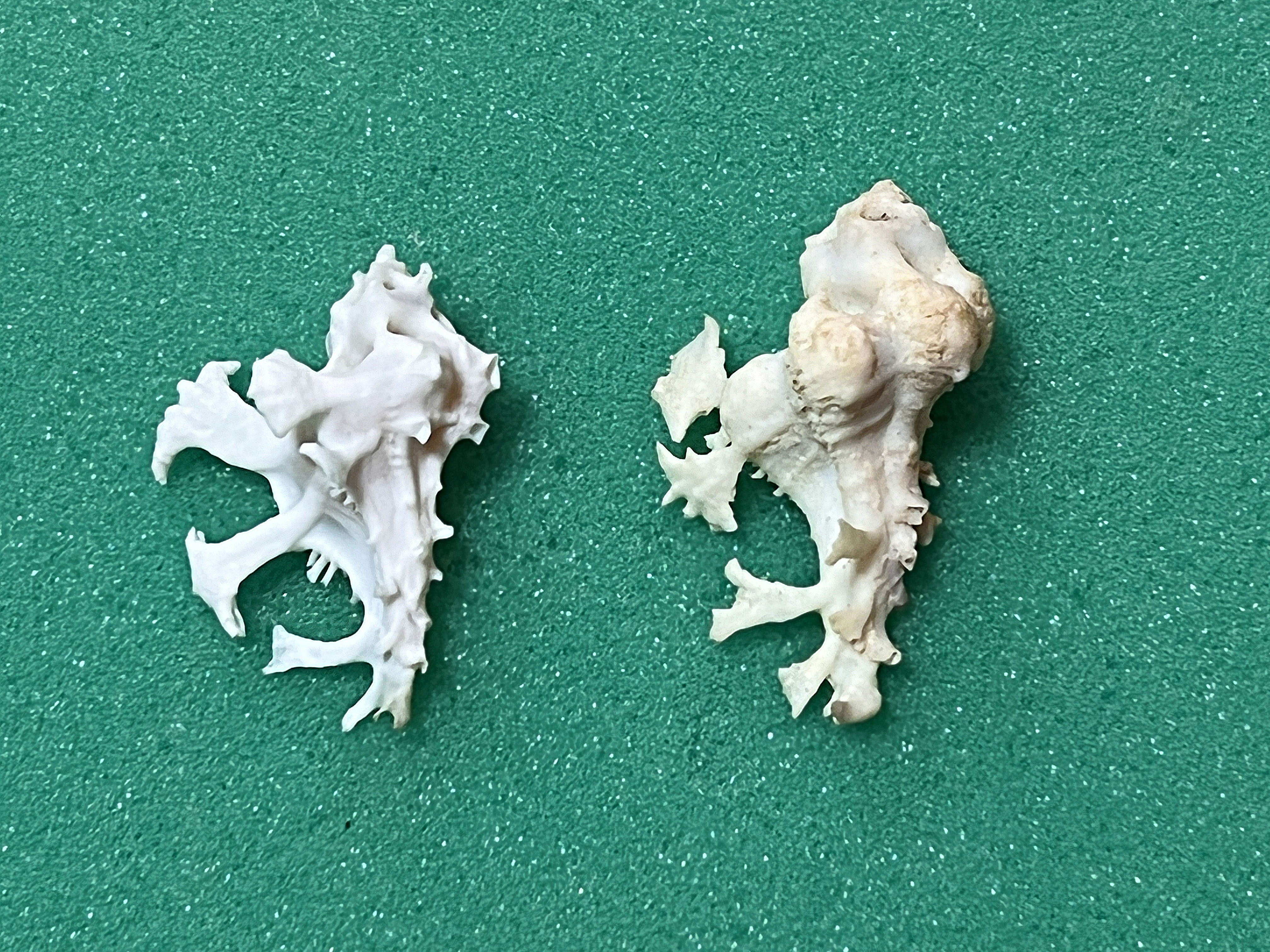
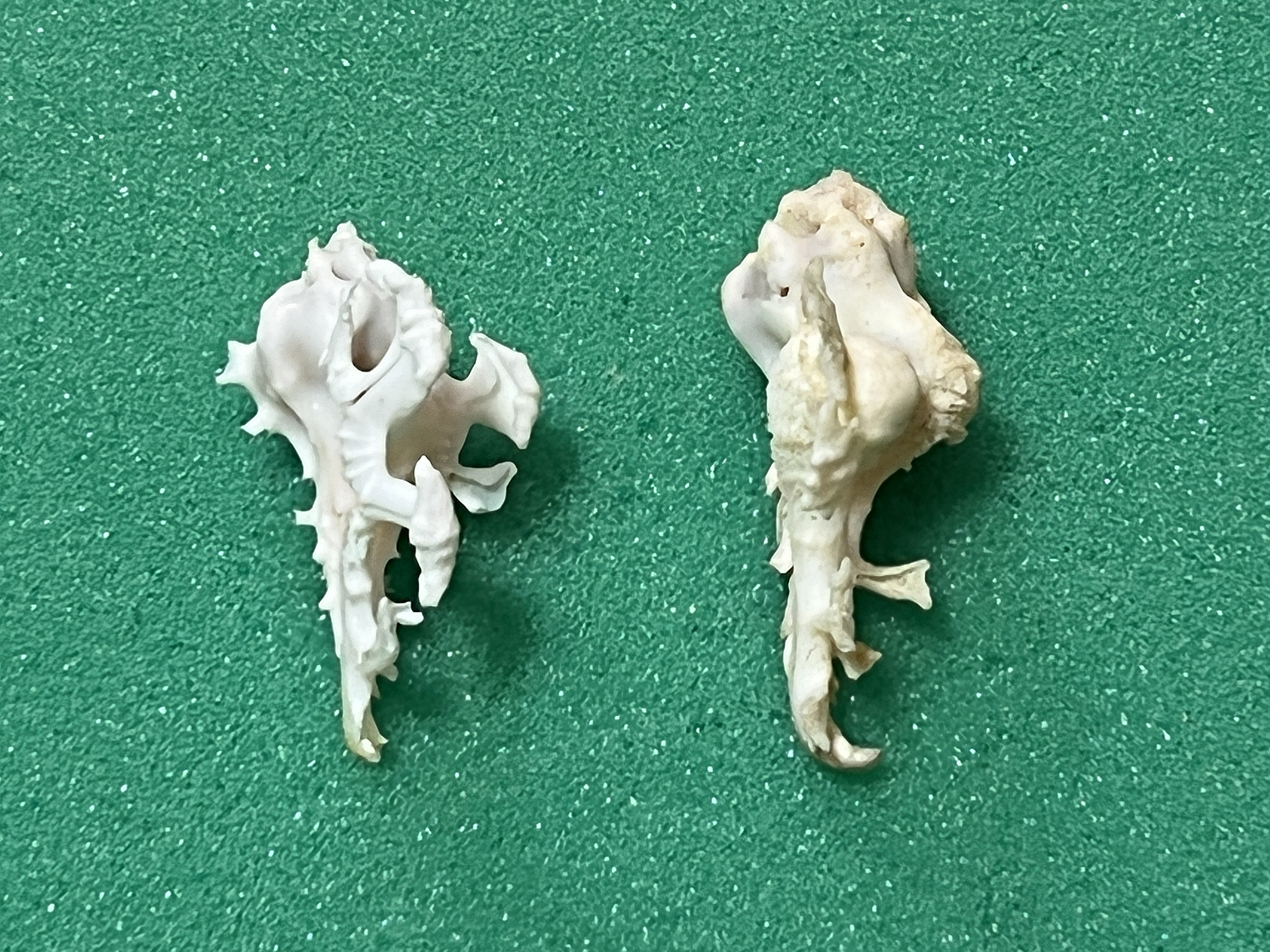
Not all shells are handsome. Not all shells are graceful. Not all shells look like wha we think a shell should look like.
Homalocantha are Murex found in the tropics waters of the Pacific. They reside in coral heads. We have two varieties of Homalocantha anatomical this month, Homalocantha anatomica zamboi Burch & Burch 1960 and Homalocantha anatomica pele Pilsbry 1918. The first is from the Philippines The second is indigenous to Hawaii. Hawaiaans consider Pele to be full species Authorities disagree.
Both are extremely similar with a dominant body while and large varices that look like webbed feet at the termination of growth. The difference being that Zamboi shoot out varies at the end of each growth cycle and in Pele a knob is formed instead Pele is generally larger. This specimens small to make a a better comparison. Adult size is between 2 and 3 inches.
S second difference is that Zamoi is always white. Pele can have brilliant colors, especially on the body white. Intense reds and yellows sometimes occur. shades of lavender are common. The price for a bright red specimen spirals out of control.
The development of the body sculpture is very consistent from one specimen to the next.. Occasional specimens have additional or missing digits. The difference between the two species is clear in the final phot. Look closely!


 Broward Shell Club
You must be logged in to post a comment.