SHELL OF THE MONTH – NOVEMBER 2012


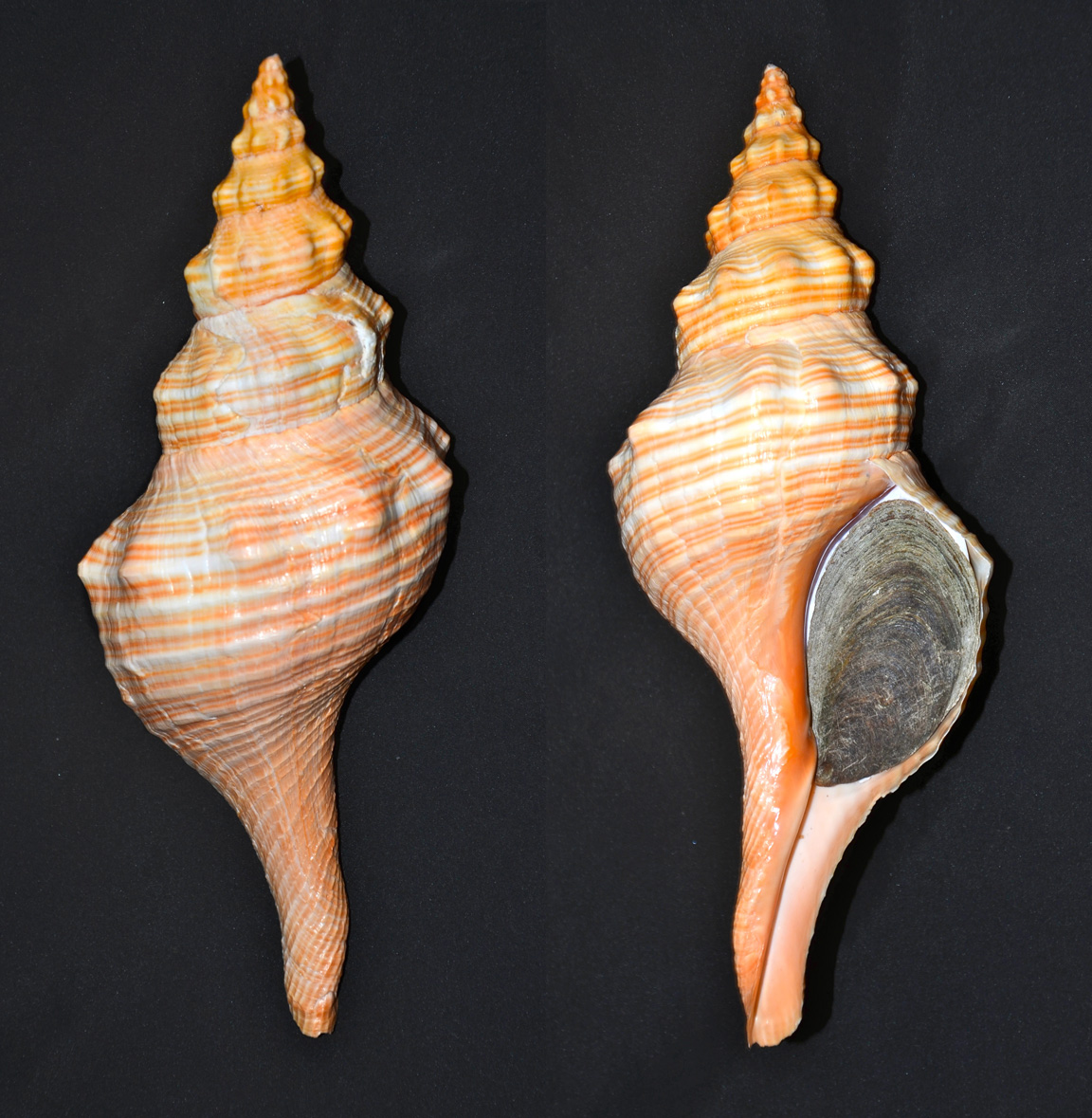
giganteaWebPleuroploca (now Triplofusus) gigantea, Kiener, 1840 Collected by diver in 20′ depth off Clearwater, Florida.


Yes…this is THE Florida State Shell, the Horse Conch and most of us are very familiar with it. It is found throughout Florida and was thus the perfect candidate for our state shell. It is a carnivorous specie and will attack the like of Strombus gigas and many other species to the point that Bahamians who find this shell rarely in the Bahamas always eliminate it for that reason.

SHELL OF THE MONTH OCTOBER 2012

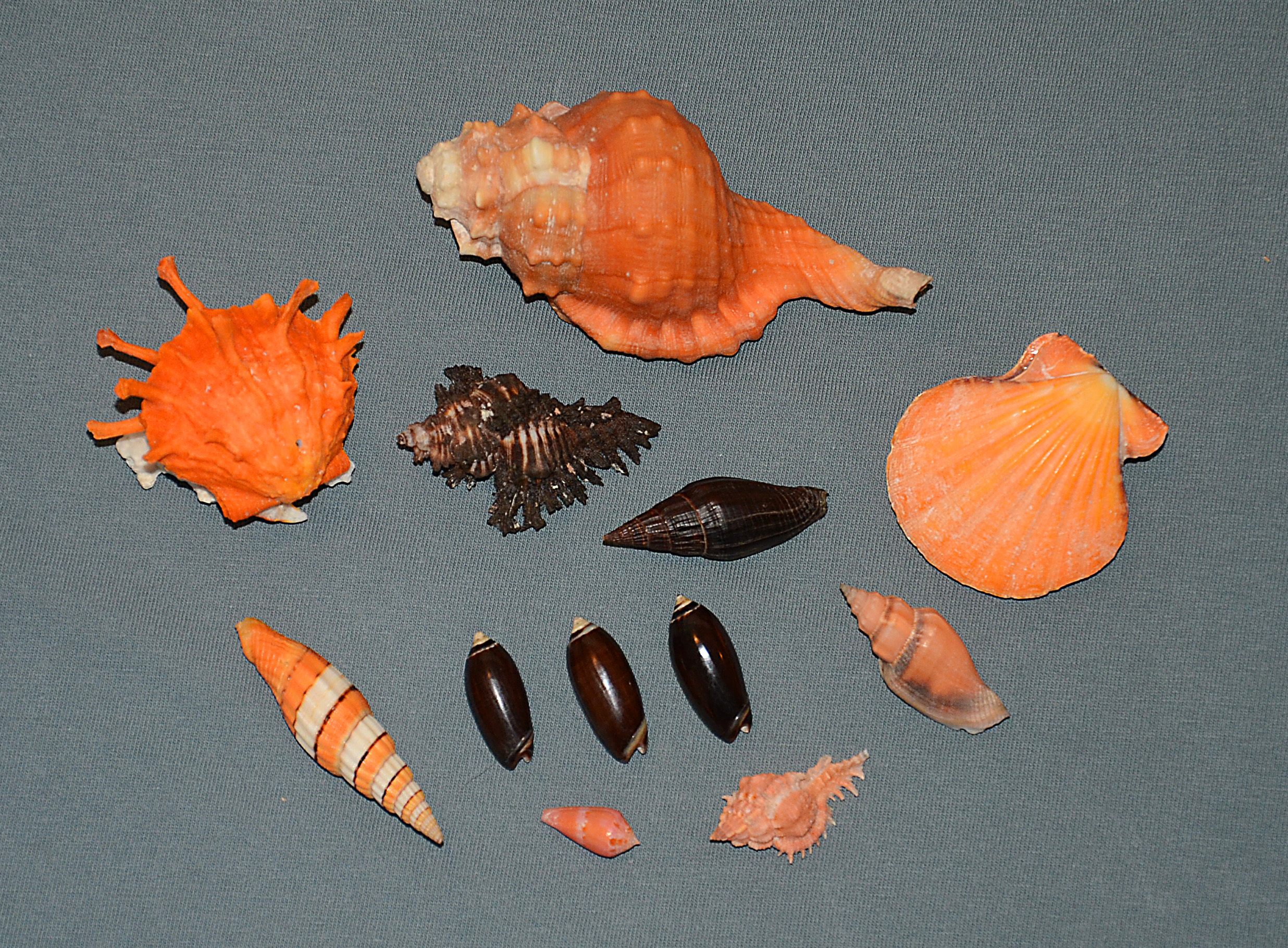
A SELECTION OF ORANGE AND BLACK SHELLS FOR HALLOWEEN
Chicoreus brunneus, Link 1807, young specimen, in reef & corals 15 meter, Camotes Sea, Bohol, Philippines
Chicoreus venustulus, Rehder & Wilson 1975, uncommon color variety, in reef corals 10-15 meter, Bohol, Philippines
Cymatium pyrum, Linne 1758, 30meters deep sandy & coral, Tagalinog Island, Phillippines, 2006
Oliva oliva form oriola, Lamark 1811, netted in sandy bottom, Negros Oriental, Philippines 2004
Vexillum citrinum, Gmelin 1791, by diver in reef 15-20 meter, Olango Island, Cebu Philippines 2005
Vexillum vulpecula, Linne 1758, scarce color variety, local fishermen by nets in sand and muddy bottom, near Samar Island, Philippines, June 2009
Conus coralinus, Habe & Kosuge 1970, sand pocket in reef by SCUBA 30meters, Mactan Island, Cebu, Philippines July 2008
Spondylus foliaceus, Schreibers 1793, color variety (sub-adult), 50meters deep attached to corals, Pamilacan island, Philippines
Strombus urceus, Linne 1758, unusual color variation, local fishermen by nets, off coast Bohol Island, Philippines, 2012


SHELL OF THE MONTH SEPTEMBER 2012

A conch is a conch believed the great naturalist Linnaeus, so in 1758 he classified our shell as Strombus Lambis. This didn’t sit well with his followers who observed a group of conchs with claw like extensions that they believed deserved their own genus.  Lamark in 1799 renamed our shell Pterocera Lambis – from the Greek, pteron, wing and keras, a horn. This is in my opinion a fantastic name. Unfortunately in 1798 Roding was also reclassifying the spider conchs and beat Lamark to the punch, hence ourshell is known today by the boring name Lambis lambis, Linnaeus 1758.
The distinctive feature of the spider conchs is that the mantle in the adult expands into a series of long finger-like processes each of which secretes a calcareous process or “claw” that give the shell its most distinctive appearance.
Lambis lambis is one of the few shells that exhibit sexual dimorphism. First, the females grow to almost twice the size of the males. Second, the claws point out in opposite directions, with the females longer and more finely developed. Third, they are different in color. The female tends to be a solid drab tan. The male mottled tan and cream while in some populations, as this one, a rich chocolate making it a most stunning shell.
It is interesting to note that the only other member in this small genus to exhibit sexual dimorphism is Lambis chiragra, Linnaeus 1758. The spider conchs, also known as scorpion shells, live in coral reef areas. They can be found in littoral and sublittoral zones, in tidal pools and low tide levels to a depth of around 25 meters. They are herbvivores.
Our specimen comes complete with the operculum, is from the Philippines and was donated from the collection of Richard Kent

SHELL OF THE MONTH AUGUST 2012

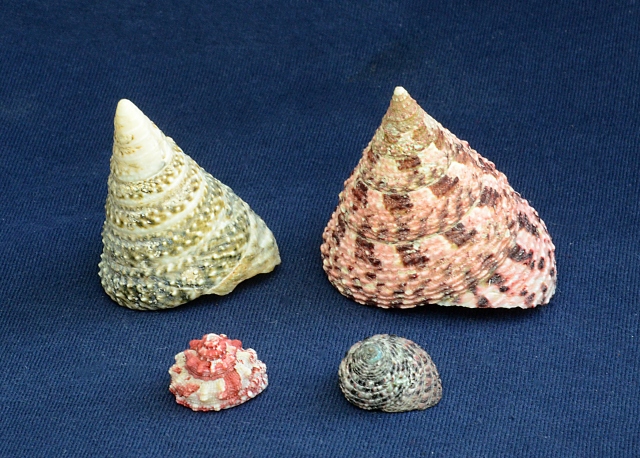
Tectus triserialis, Lamarck, 1822. Caught in 50 meters deep rocky & muddy bottom, Semirara Islands, Samar, Philippines.

Tectus conus, Gmelin, 1791. On rock and rubble, collected by local fishermen by nets near Rapu Rapu Island, Albay Gulf,  Philippines.

Trochus ferreirai, Bozzetti, 1996. Trawled in 50 meters depth, Masbate, Philippines.

Monodonta labio, Linné 1758. Rocky shore in shallow water, Negros Island, Philippines.

The Trochidae are conical shaped gastropods. They are herbivorous and found grazing on seaweed and algae covered rocks. Trochidae are found worldwide in tropical waters and well represented in the Philippines where all of our specimens were collected. These four specimens exhibit the diversity of the family in shape and size, although many come much much smaller and one, Tectus niloticus. grows so large that it dwarfs the largest of these. It is interesting that this family favors reds and greens, two colors not often found in other gastropods. These shells are pearlescent under the outer layer. This inner layer is called “nacre” or mother of pearl in plain English.  “Pearlized” specimens of the larger specie are found in the tourist shops. Trochus ferreirai was discovered less than twenty years ago and until very recently sold for over $20 each. Its red and white swirls make it very attractive Specimens of the upside down ice cream cone shaped Tectus triserialis, while not rare, are difficult to acquire. Tectus conus is the most popular of the lot, rightfully so due its large size, elegant shape and beautiful coloration.

Shells donated by Richard Kent

SHELL OF THE MONTH JULY 2012

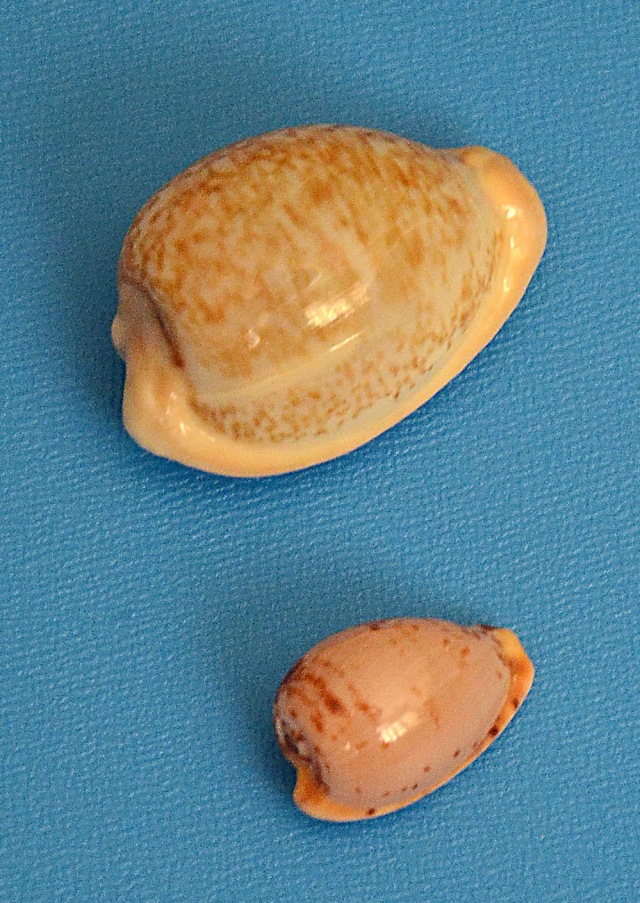
When B.C. Burgess wrote his monumental book “The Living Cowries” in 1970 little was known about the South African endemic cowries. In fact according to Burgess there existed no live collected specimens of either Cypraea fuscorobra or Cypraea edentula. In the years that have passed, SCUBA has become much more prevalent and live specimens of all the South Africans are available. Still they are anything but plentiful on the market. At the Cape of Good Hope the Atlantic and the Indian Oceans converge. All the major mollusc families have members indigenous to the area. Cypraea fuscorobra and Cypraea edentula are members of the genus Cypraeaovula, Gray 1824. Both belong to the “algoensis” group. Cypraeaovula are noted for ecological variations and hybridization. Some are quite difficult to identify, even with a guide book. Cypraea edentula, Gray 1825 lacks teeth and is called, as to be expected, the Toothless Cowrie. It is commonly between 18 and 24 millimeters in size. Small specimens are more available than large ones. Cypraea fuscorobra, Shaw 1909, has the boring common name of “Reddish Brown Cowrie.” It is rather globular in shape with a large callous and larger in size, the average being between 30-36 millimeters. Both retail in the $15 to $25 range. Choice specimens, especially of Cypraea edentula are hard to find. Both are prone to stress marks across the dorsums. Our two specimens both collected this year are donated by Richard Kent. They were acquired direct from a South African dealer, are of superior quality and fine starters for a South African collection. Many of the closely related and similar looking species are considerably more expensive and very difficult to acquire without a direct South African source.

Cypraea fuscorubra, Shaw 1910, Scuba on reef at 36-40m, Hout Bay, South Africa 2012

Cypraea edentula, Gray 1822, Scuba at 15m on reef, Port Elizabeth, South Africa 2012

SHELL OF THE MONTH JUNE 2012

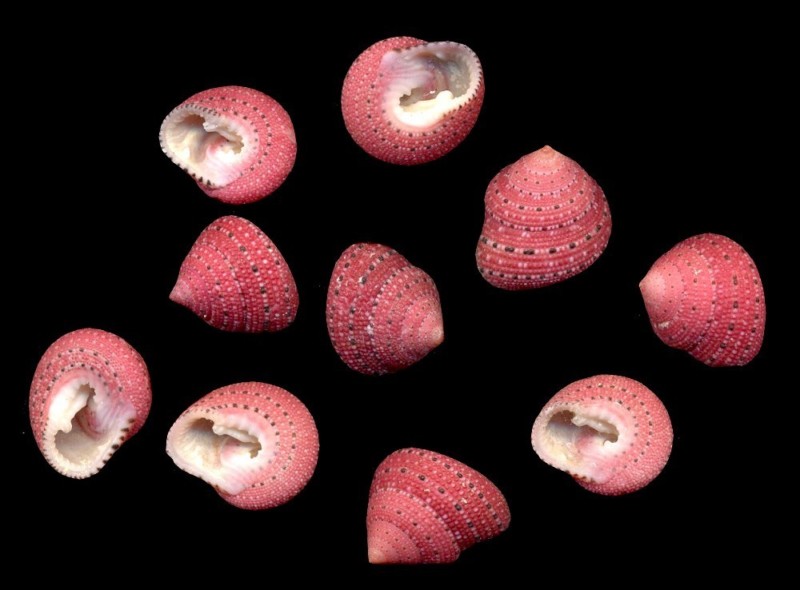
Clanculus puniceus (Philippi, 1846)  –  “The Strawberry Shell” – set of 6. Collected in Madagascar.

The Strawberry Top is one of the most “collectible” of the top shells, mainly for its wonderful, rich red coloring. Not many shells have a color like this! As a matter of fact, this shell was featured in our newspaper article show publicity a few years ago….and by the first day all of the dealers who had the shell in stock were sold out! The Clanculus are part of the Top-Shell Family, Trochidae. It is a very large worldwide family with numerous genera and hundreds of species. Most are top shaped (hence the name), but many are also “button” shaped and some even resemble Abalones. They have an iridescent interior and a round, many-whorled horny operculum. They occur from tidal rock pools to the deepest portions of the oceans. Most feed on seaweeds but many eat bryozoans and sponges.

SHELL OF THE MONTH – MAY 2012

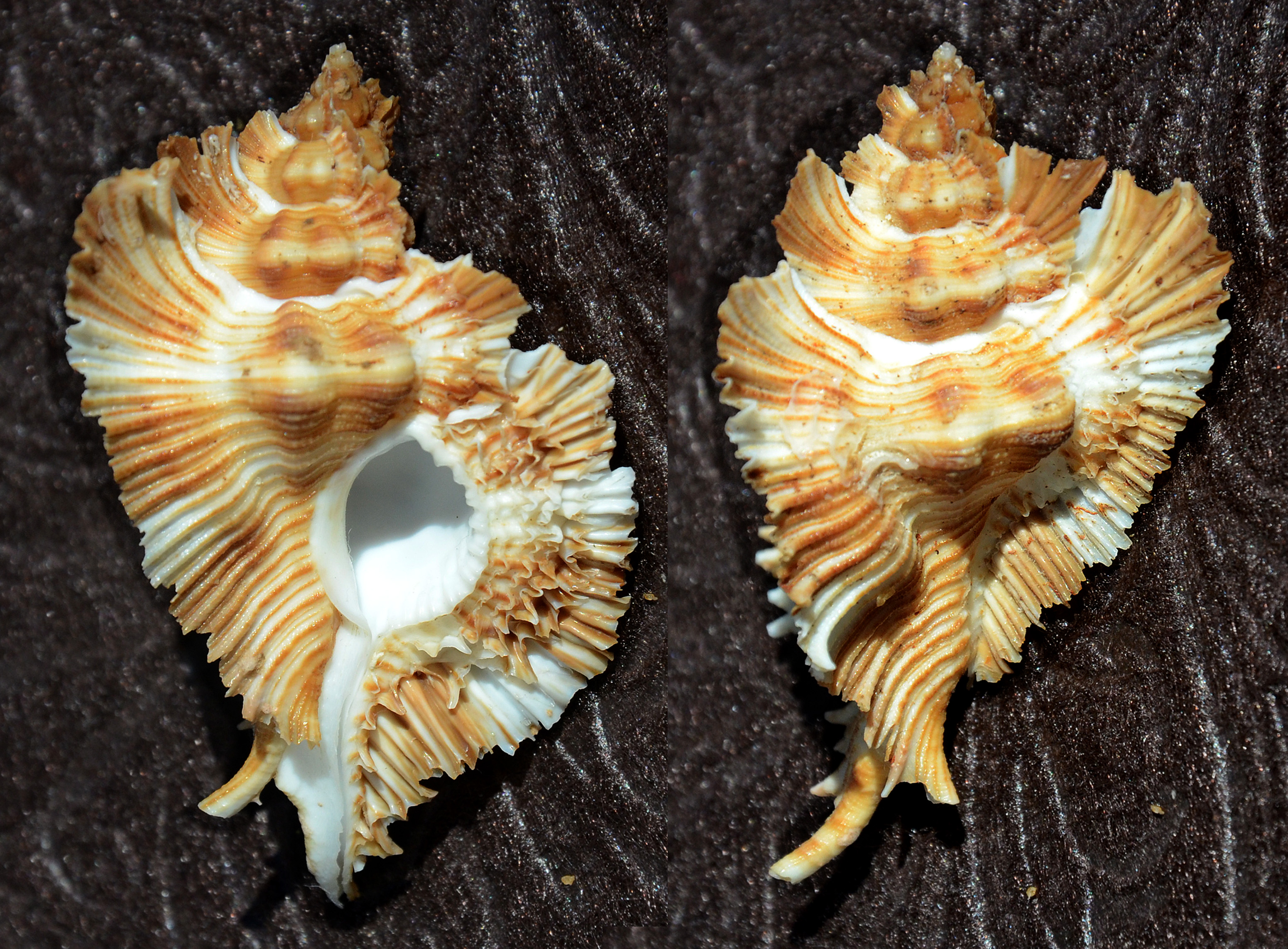
Pterynotus miyokoae, Kosuge, 1979
Tangle nets at 100-150 m deep
Olango Island, Cebu, Philippines.
2009  SIZE about 60mm

It sure is a mouthful to pronounce the name! Pterynotus miyokoae is one of the most spectacular of the murex with elegant “wings” and marvelous delicate sculpturing. Scholars debate how it ended up a Pterynotus, with some saying it should be a Chicoreus. Other Pterynotus shells are awkward in appearance, misproportioned with their wings irregularly developed. Miyokoae are brown banded while Pterynotus are solid white or pastels. Pterynotus are very variable whereas the miyokoae are amazingly consistent. This was a very expensive shell when Kosuge described it in 1979 but prices have greatly declined. As all miyokoae look exactly the same, the lack of variety has reduced the value. It is indigenous to the Philippines where recently albino populations have been discovered.


SHELL OF THE MONTH APRIL 2012

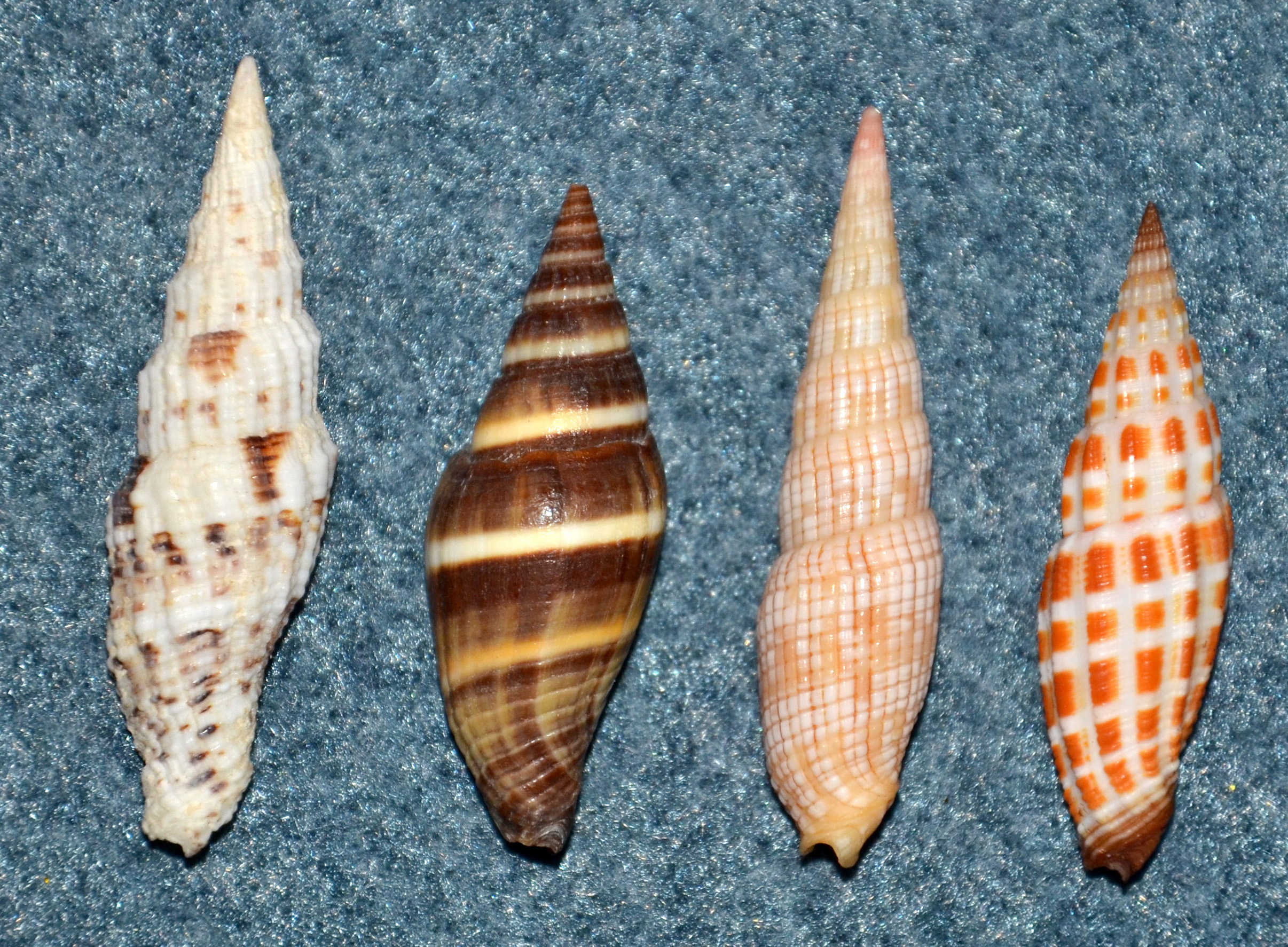
The Mitridae is an exceptionally large family of shells. They are commonly called Miter or Mitre shells depending on one’s choice of spelling. Vexillum was one of the many genera of Mitridae but now falls in its own family formerly called Vexillidae but now called Costellaridae. Confusing? In any event vexillum are still mitres shells and there are about 500 different kinds of them. Mitre are recognized by their sharp pointed spire and a long narrow aperture with three or more prominent folds inside the columnella. The mitres are carnivorous with varying diet depending on the individual specie. They are tropical and most are from the Indo-Pacific region. Generally they are found burrowed in the sand but also live among seaweed or under corals. Most like shallow water but a few prefer deep. Although all vexillum are all very similar in shape they vary widely in sculpture and color patterns as will be seen by examining these four specimens.

Vexillum mirabilis, Adams 1853, 10m by local divers, sandy and muddy bottom, Bohol, Philippines

Vexillum caffrum, Linne 1758, waterline in low tide, Yule Point, Queensland, Australia

Vexillum costatum, Gmelin 1991, tangle net @ 50m gravel, Olango Island, Cebu, Philippines

Vexillum stainforthi, Reeve, 1841, 110ft sandy mud by SCUBA Nago bay, Okinawa

Shells donated from the collection of Richard Kent


SHELL OF THE MONTH – FEBRUARY 2012

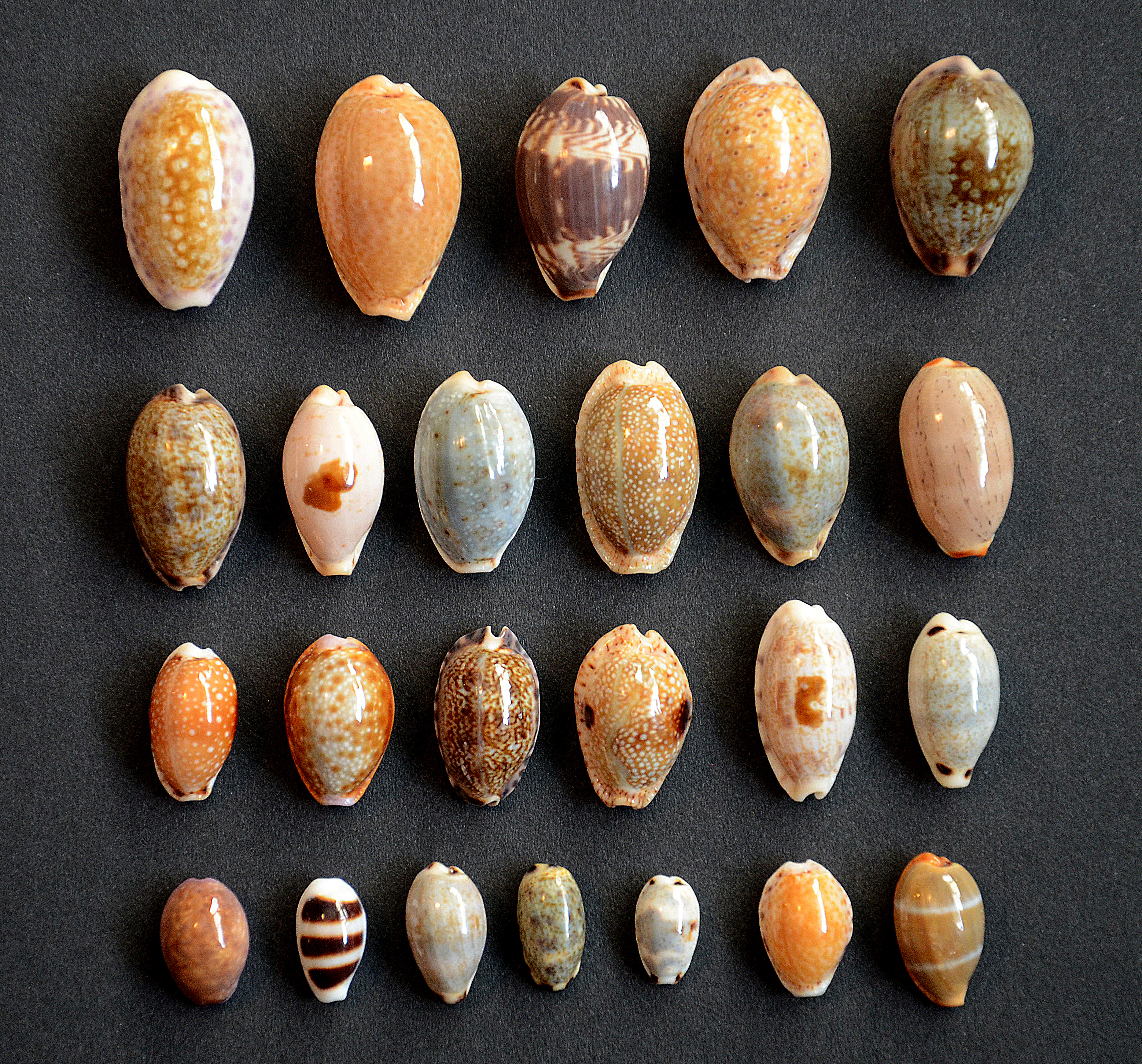
The cowries have always been a collectors favorite. No other family of shells comes close in popularity. It is no wonder since they are shiny, colorful, elegantly shaped, and come in a myriad variety of colors and patterns. The French call them by the beautiful name, porcellaines. The cowries are true works of art.

The cypraea are dwellers of the tropical seas (with some exception) with the largest concentration and variety of species in the Philippine islands. Most are nocturnal and are reef dwellers. Their mantle envelops the shell thus preserving the glossy surface. The color pattern varies and may be mottled, blotched, spotted, freckled, banded, striped, ringed, or various combinations or even solid. In size they range from several millimeters to our own giant Cypraea cervus that can grow up to six inches.

Twenty-four different specie of the smaller sized cypraea are included as our February Shell of the Month. Although this selection is intended as an introduction of the collecting of cowries, the is plenty here to interest even the more advanced collector such as the giant Cypraea spurca from Turkey and the unusual blue Cypraea robertsi from Ecuador. How many of our members posses a shell collected in Turkey? Anyone? The rarest shell in this collection is the very difficult to obtain Cypraea vrendenburgi that comes only from Indonesia.

All the shells come with complete data. They are donated by shell club member Richard Kent

Cypraea acicularis, Gmelin 1791, Brasil

Cypraea asellus, Linne 1758, Philippines

Cypraea arabicula, Lamarck 1810, Panama

Cypraea bovinii, Kiener 1843, Indonesia

Cypraea chinesis, Gmelin 1791, Philippines

Cypraea diluculum, Reeve 1845, Zanzibar

Cypraea erosa, Linne 1758, Micronesia

Cypraea gracilus, Gaskoin 1849, Okinawa

Cypraea helovla argella, Melvill 1889, Tanzania

Cypraea isabella, Linne 1758, New Caledonia

Cypraea kieneri depriesteri, Schilder 1933 Solomon Islands

Cypraea labrolineata, Gaskoin 1849, Indonesia

Cypraea listeri, Gray 1824, Australia

Cypraea lutea, Gmelin 1791, Philippines

Cypraea nebrites, Melville 1888, UAE

Cypraea ocellata, Linne 1758, India

Cypraea poraria, Linne 1758, Viet-Nam

Cypraea quadrimaculata, Gray 1824, Philippines

Cypraea robertsi, Hidalgo 1906, Ecuador

Cypraea saulae, Gaskoin 1843, Philippines

Cypraea spurca, Linne 1758, Turkey

Cypraea teres, Gmelin 1791, Hawaii

Cypraea vrenderburgi, Schilder 1927, Indonesia

Cypraea zonaria, Gmelin 1791, Senegal
SHELL OF THE MONTH – JANUARY 2012

The harps are among the most elegant and beautiful of all sea shells. They have a natural gloss, are finely sculptured, have detailed patterns and colored in a palette of color coordinated shades. The harps are also among the most difficult of shells to distinguish, they all look very much the same. Even the scientists who described them had trouble in recognizing them resulting in multiple names. To this day collectors and dealers remained confused as what the proper nomenclature is.

At first glance the only difference one will see is small, medium and large size, but look closer and study the details to see all that three are distinct.  The large shell is Harps major, Roding, 1798. The middle shell is Harpa harpa, Linne 1758 and the small one is a Harpa amouretta, Roding 1798.

The harps are tropical sand dwellers usually found in fairly shallow water. Most species are Indo-Pacific though one inhabits the west cost of Central America and a second the east coast of Africa.  Our three specimens come from Viet-Nam, the Philippines and Micronesia respectively. The first two are average size while the amouretta is from a dwarf population. The Harpa harpa is 60mm.