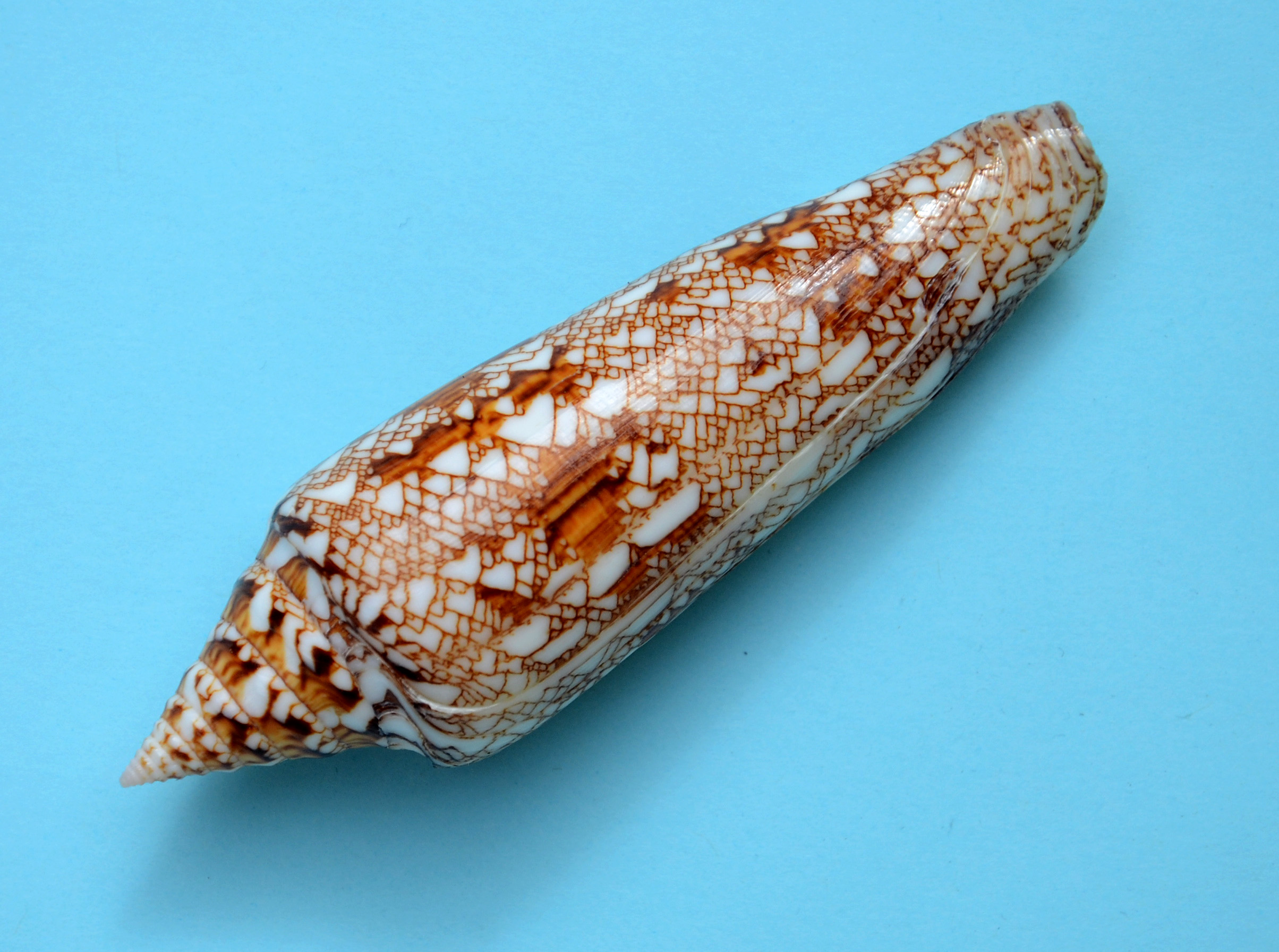
Conus bengalensis, Okutani,1968
“The Bengal Cone”
trawled by fisherman 100m
muddy sand bottom with rubble
Andaman Sea, off Phuket, Thailand 2010

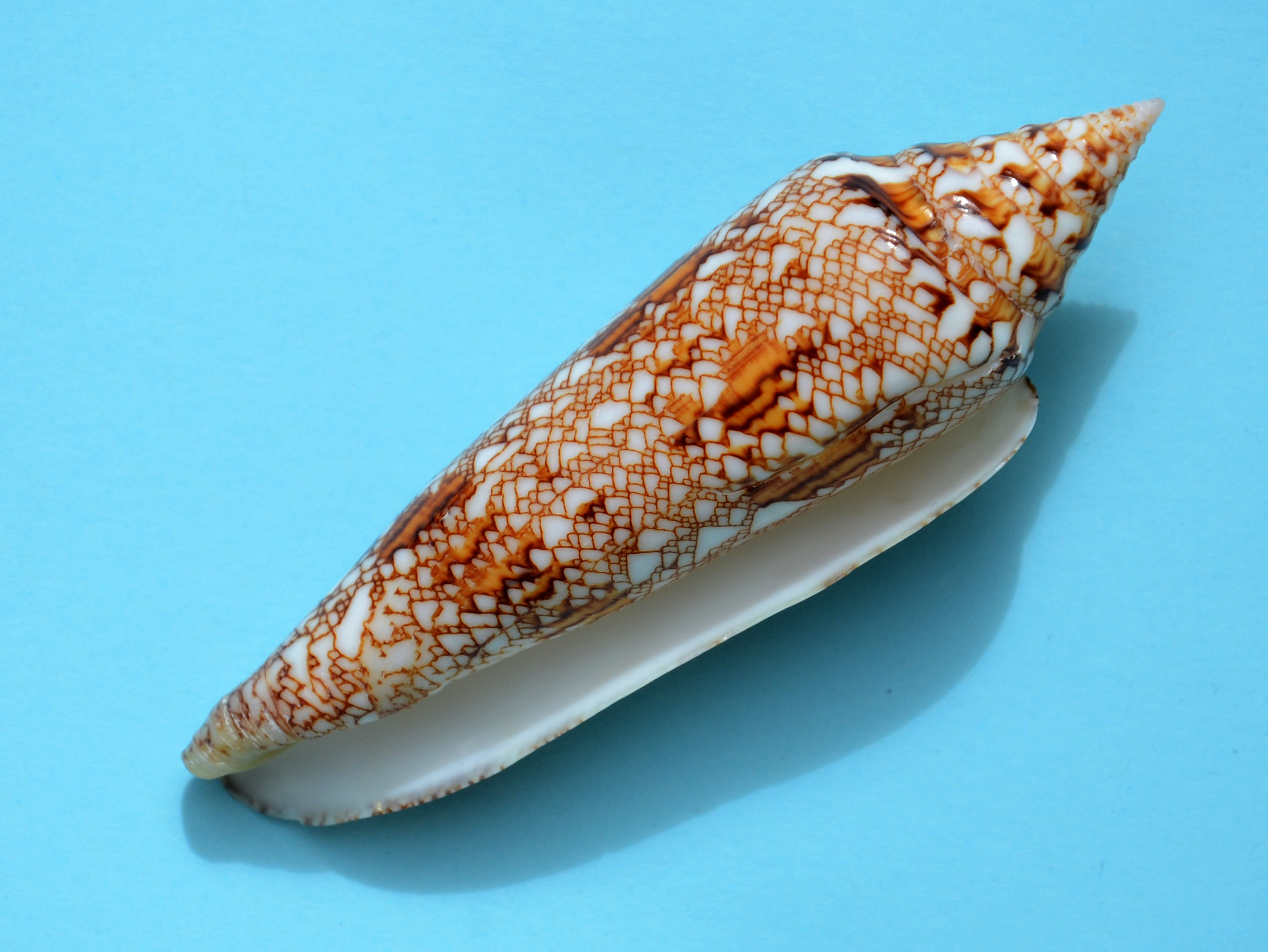
Conus bengalensis, Okutani,1968
“The Bengal Cone”
trawled by fisherman 100m
muddy sand bottom with rubble
Andaman Sea, off Phuket, Thailand 2010
CAMAENIDEA
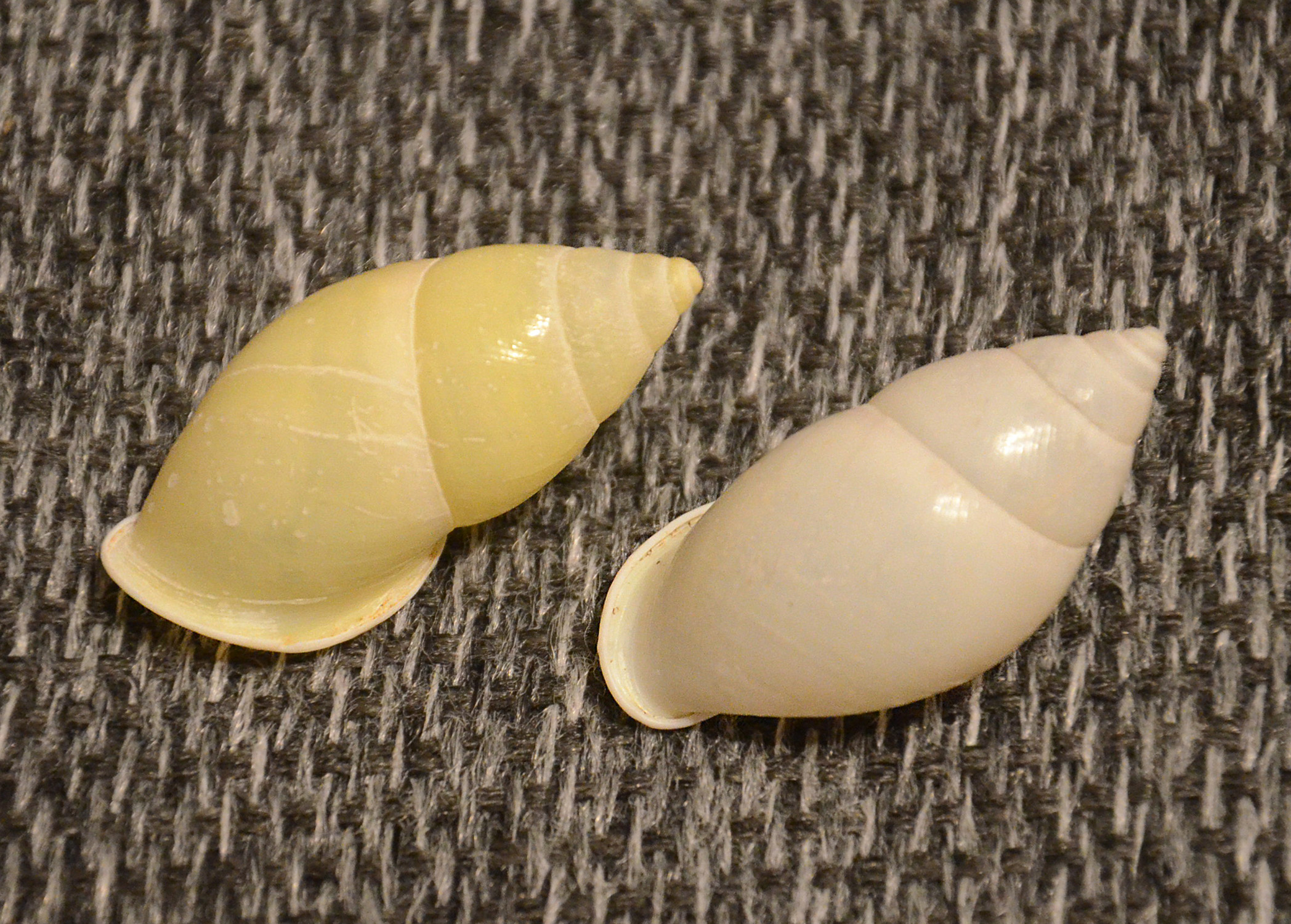
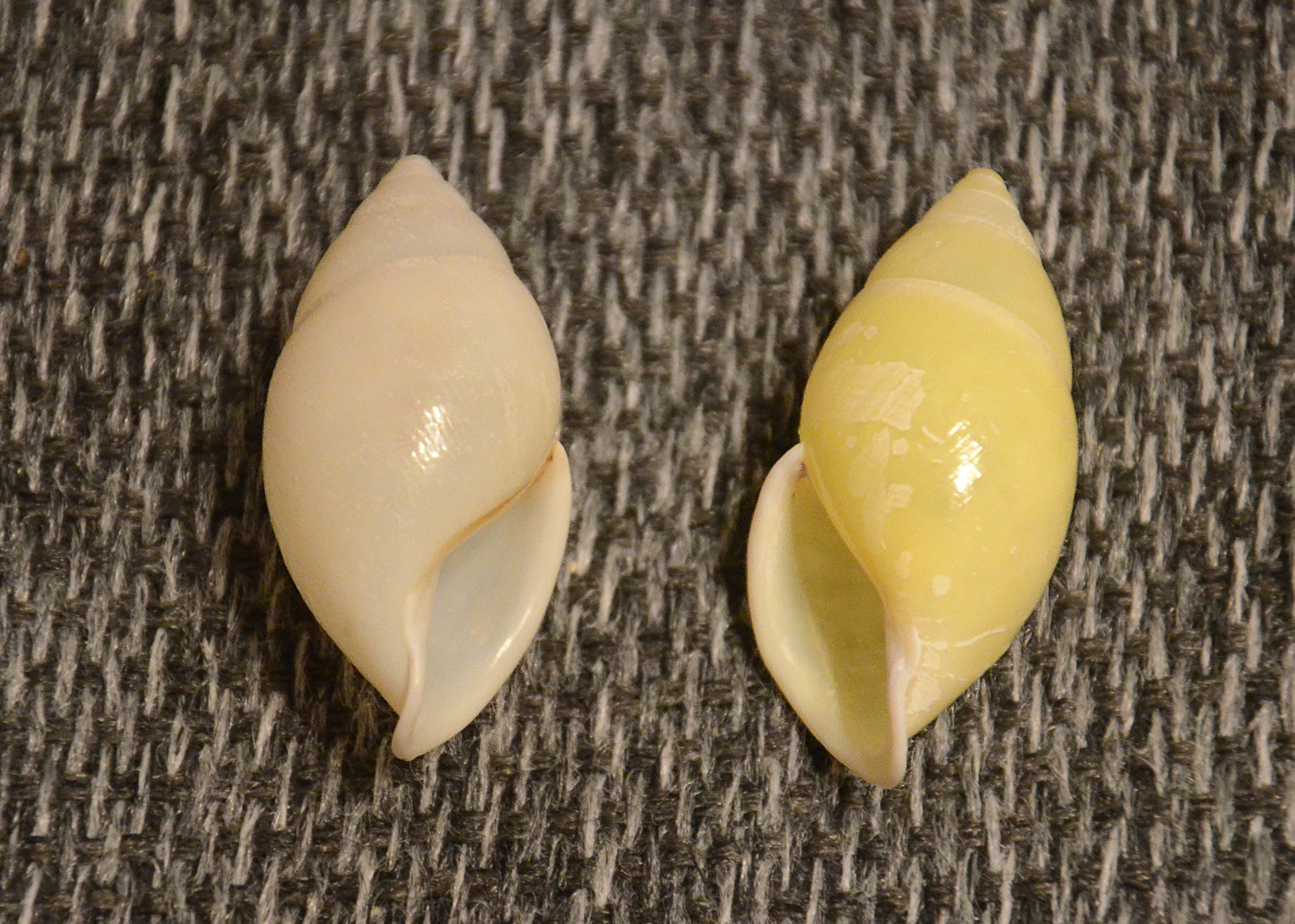
This month we have a pair of specimens, left and right handed, (dextral and sinistral) of an Indonesian tree snail that favors coffee leaves as it habitat. Both specimens are 41 and were recently named.
Amphidromus sekincauensis, Dhama 2007 In coffee plantation, on coffee leaves Mount Sincau, North Lampung South Sumatra, Indonesia November 2008

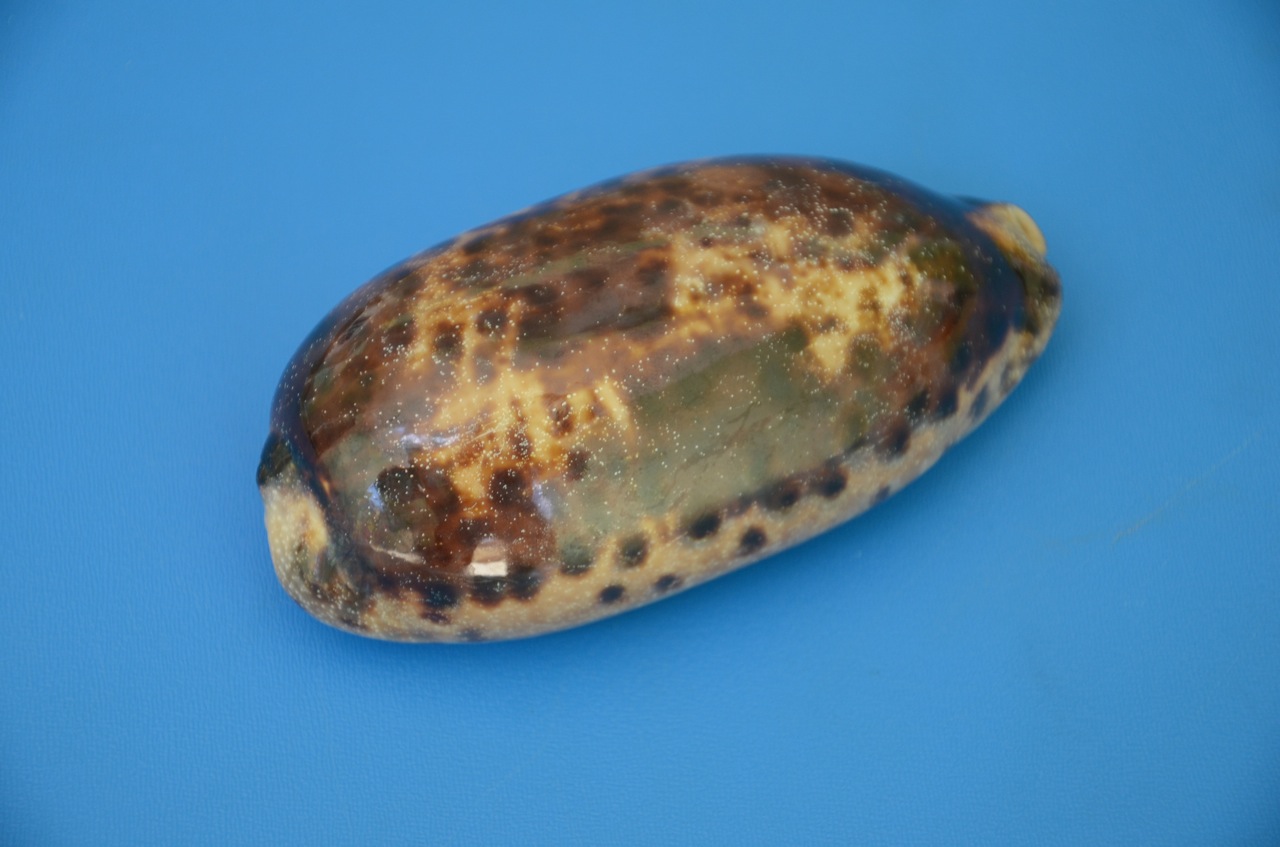
Cypraea testudinaria, Linne 1758 – the Tortoise Cowrie. It’s amazing how many shells Linnaeus classified, even more amazing that so many names remain valid today. Cypraea testudinaria is instantly recognizable. It is impossible to confuse with any other cypraea. Its shape, sizing and coloring is distinct. It is a heavy massive shell that grows up to 5″ in length. Cypraea testudinaria is cylindrical in shape, brownish in color, big irregular spots around the margins and a pattern of dark brown blotches that extend across the dorsum. It also has white flecks imbedded in the nacre making it look as if covered with dandruff. The white flecks seem to be a mystery, there doesn’t appear to be a published explanation. Outside of size, there is little variation, the pattern is rather consistent from one specimen to the next though some have larger dark area than others. The base seems to have more variation than the dorsum, ranging from light grey to almost pink to tan through shades of brown. Cypraea testudinaria is widespread across the tropical Indo-Pacific, however it is relatively uncommon. Like most cypraea it is a reef dweller. Our specimen was found exposed at night on reef rubble off Samar Island, Philippines in 2006. It is darker than average in color, fully mature and over 4″ in size. Donated by Richard Kent
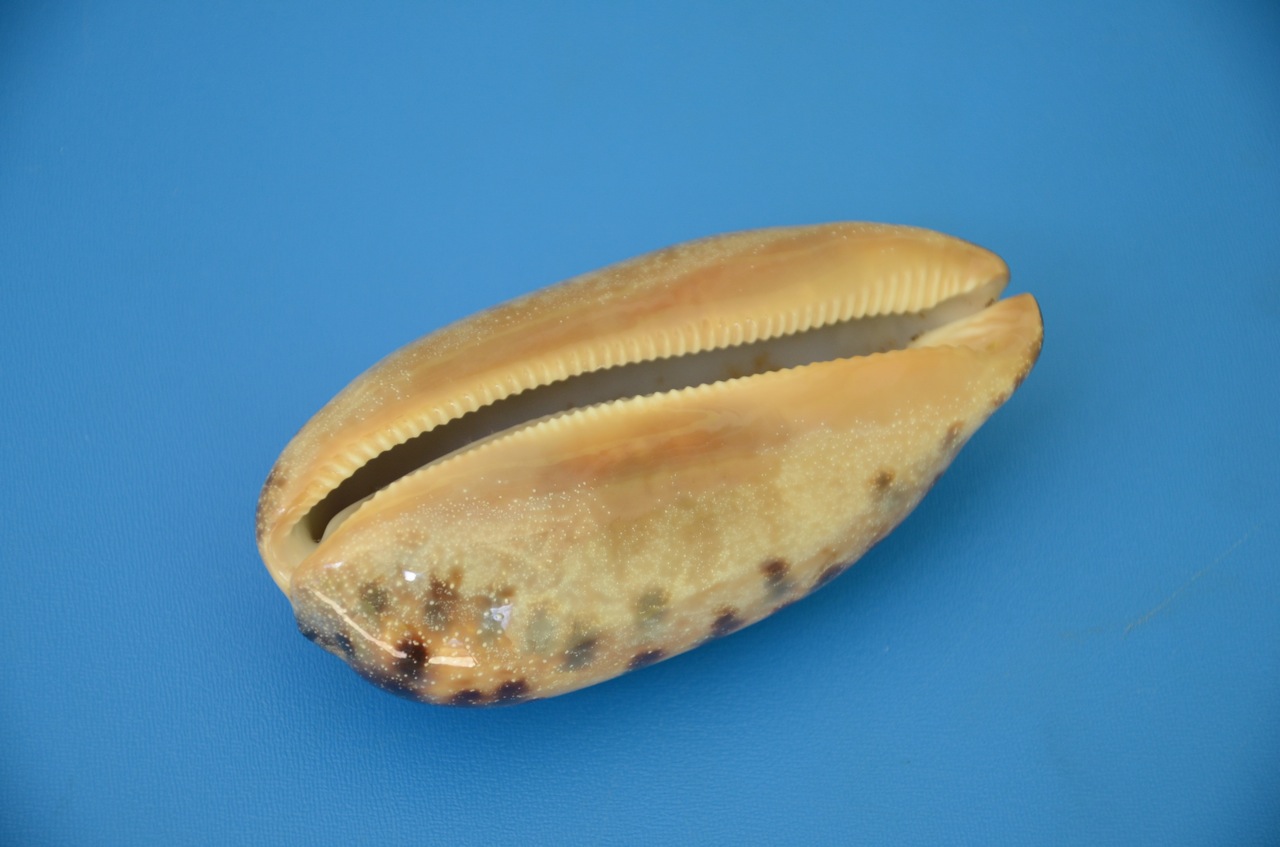
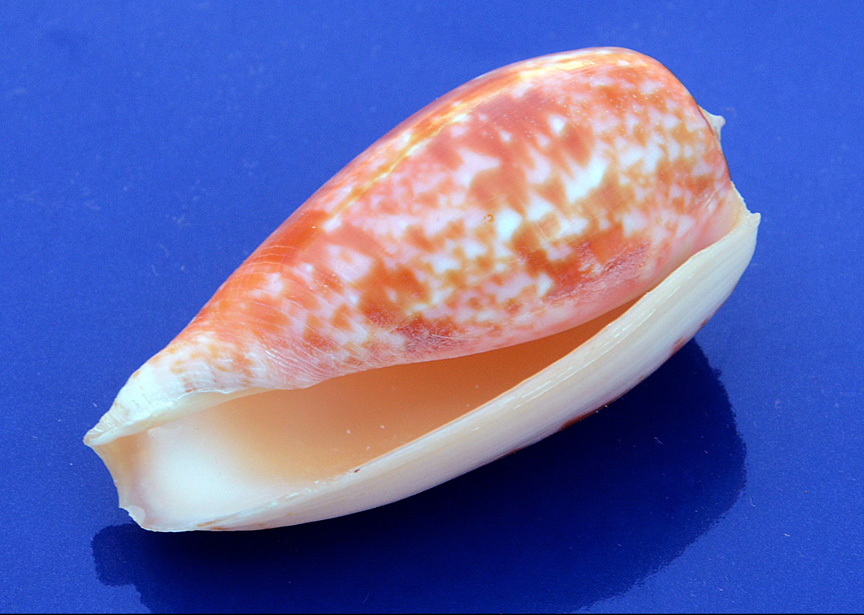
Most marginella are small shells often about 10-20 millimeters in size. There are exceptions. Our shells of the month are two of the largest, both being over 40mm. In addition they are large for their species. Thai fishing boats have been active in Burmese waters. Both specimens were collected by trawlers working off the coast of the Mergui Islands in the Andaman Sea during December of 2010
Marginella strigata (Unicolor Margin Shell) and Marginella Elegans (Elegant Margin Shell) are very similar. The obvious difference is one is patterned, the other not. Both are grey. The outer lip of strigata is tan, elegans is deep red brown.
The following description is adopted from Wikipedia:
Marginella is a genus of small tropical and warm-water marine gastropods in the family Marginellidae, the margin snails. It is the type genus of the family.
The shells of species in this genus are rounded, smooth and glossy, with a large aperture that appears to be toothed because it shows the edge of the collumellar folds. In many species the shells are colorful. The glossy surface of the shell results from the fact that the mantle covers most of the shell when the animal is active. The animal has a long siphon. When the animal is active, the foot extends much further out than the edge of the shell. Marginella are carnivorous and predatory. The shells of the species in this genus have spires which range from moderately elevated to flattened. The surface of the shell is glossy and porcellaneous, and it is often but not always colourful. The columella has four definite, subequal plaits on its anterior half. The outer lip is thickened, and generally denticulate inside, with distinct teeth or folds. The siphonal canal is not deeply incised. There is no operculum.
Marginella strigata Dillwyn, 1817 Trawled At 30-60 Meters Mergui islands, Burma Northern Andaman Sea 12/2010
Murex pecten, Lightfoot, 1786, commonly known at the Venus Comb Murex is our shell of the month. The Venus Comb is not only a collectors favorite but a popular subject for both photographers and still life painters. The shell has over one hundred spines, which provide protection from predation, and prevent the snail from sinking in the soft mud where it is often found feeding on bivalves. Its range is extensive, across the the entire Indo-Pacific region. Perfect specimens are hard to find because of the fragile spines. It is also difficult to acquire specimens with the operculum. Adult sizes are between 100 and 170mm but real large specimens aren’t found too often recently. Did you know that the flesh of this murex is edible? Our specimen came from Balicasag Island, Bohol, Philippines and was found by tangle net at a depth of 30-50 meters in 2008.
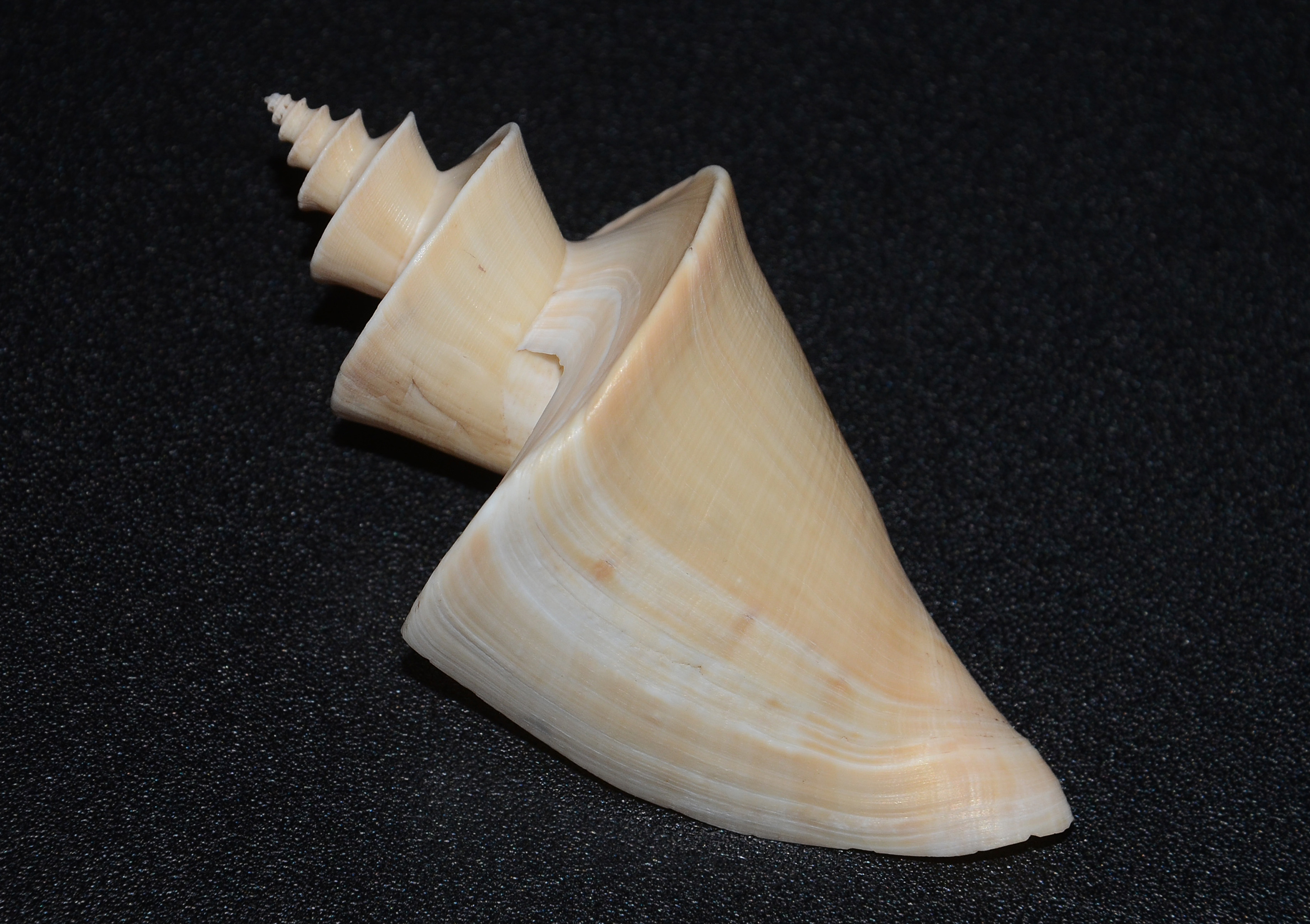
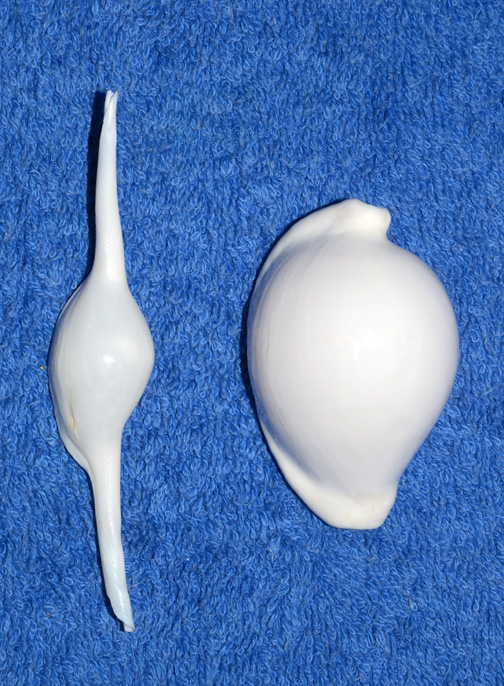
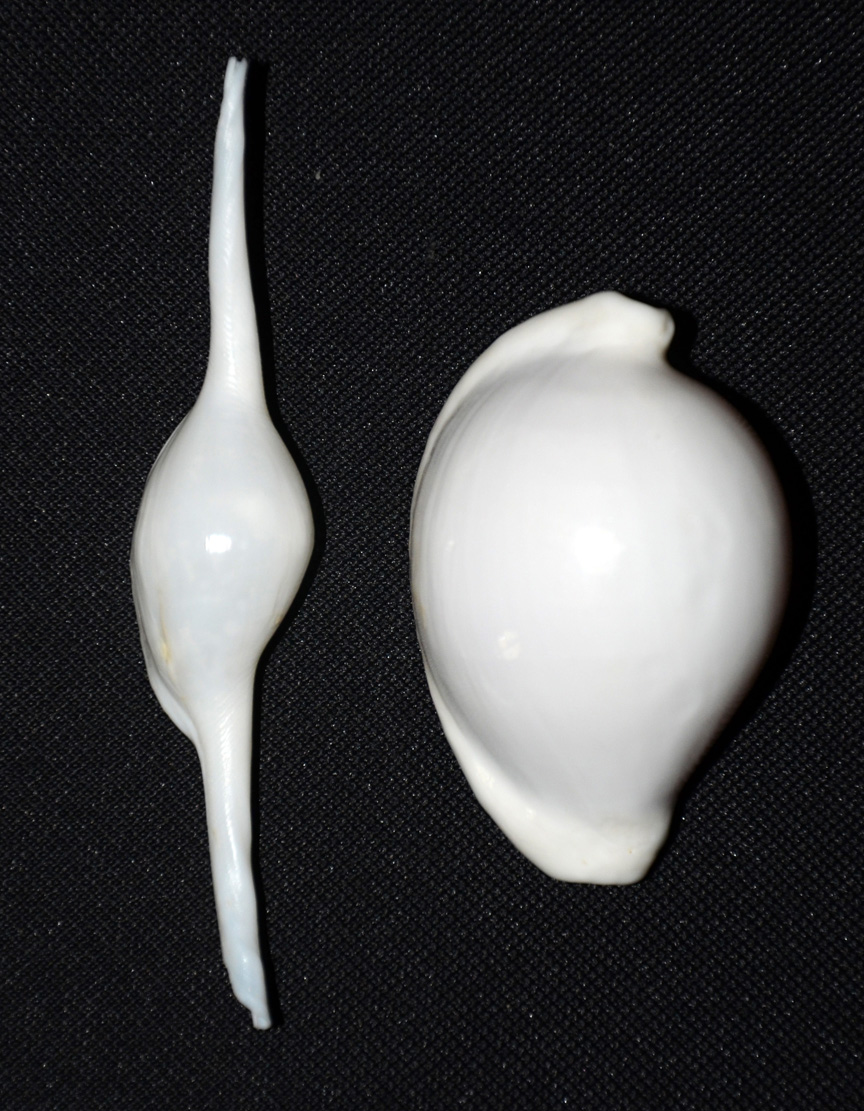
In honor of Easter, the April Shell of the Month is the Egg Cowrie, Ovula ovum, Linne 1758 along with its sister shell, the Elongated Egg Cowrie, also known at the Spindle Shell, Volva volva, Linne 1758. Side by side they certainly make for an odd couple!
These are members of the family Ovulidae and are closely related to Cypraea. Although this is a fairly large family, the majority of the specie are small shells with many under 10mm in size. The ovum and the volva are clearly the giants of the clan.
Ovula Ovum is a porcelan white shell that has a great range in size, from 32mm all the way up to 120mm. Our specimen is on the smaller end. The animal is black with a mantle that fully covers the shell. It is at home in corals and soft corals throughout the Indo-Pacific range. This specimen was found grazing on soft corals in near Port Moresby, New Guinea
Volva volva has an even greater size range running up to a whopping 186mm. Volva volva although normally white will sometimes be found in rose, pink or even a pale purple shade. The extremities are drawn out into long canals and the shape too is variable. Our specimen is large in size, typical in shape and color. Its mantle is white with long tan to brown papillae ringed with a darker shade. Our specimen comes from a coastal reef off Negros Island in the Philippines. Both shells were donated by Richard Kent
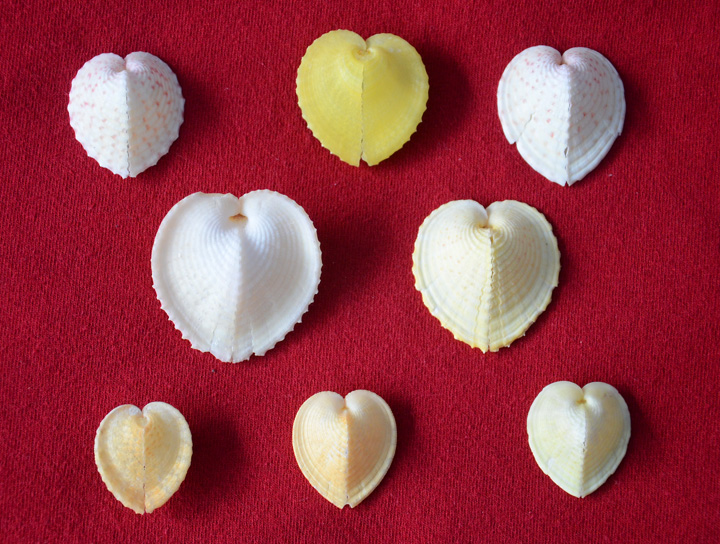
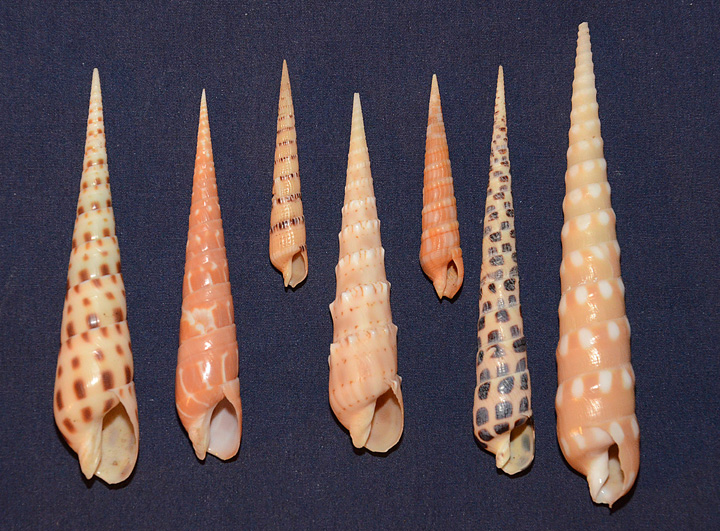
This set of Heart Cockles is most appropriate for February Shell of the Month as we honor St. Valentine. Corculum cardissa, Linné 1758, is a most unusual bivalve. It’s anatomy is rotated ninety degrees. The valves open down the center rather than at the sides.Set of seven Terebra, from left to right
Terebra areolata, Link 1807 off shore shallow water in sand Nha Trang, Viet Nam
Terebra dimidiata, Linné 1758 20′ in sand Nago Bay, Okinawa 1985
Terebra pertusa, Born 1778 diver 7-10m Olango Island, Cebu, Philippines 2008
Terebra crenulata, Linné 1758 40′ in sand night SCUBA Tuamotus, French Polynesia 2000
Terebra nebulosa, Sowerby, 1825 diver 7-10m Olango Island, Cebu, Philippines 2008
Terebra, subulata, Linné 1767 in sand at night Rabaul, Papua New Guinea
Terebra guttata, Roding, 1798 15-10m inside reef by diver Balayon Bay Batangas, Philippines 2007
Terebra are closely related to Conus and Turris. They all have a poison apparatus to kill their prey. Terebra feed mainly marine worms. Terebra live worldwide, with most species in the Indo-Pacific region. Terebra is one of four genera in Terebridae, the others being Hastula, Duplicaria and Impages. Many of the smaller species are near impossible to identify. The largest specimen presented in this group just over 5″ and the smallest is 2 1/2″. Terebra maculata, LInné 1758, not offered here is far and away the largest growing Terebra reaching a size of 10″. In Florida we have Terebra taurinus, Lightfoot 1786 which grows to 5″ and Terebra floridanus, Dall, 1889 which grows to 3″ plus several dozen much smaller species.
You must be logged in to post a comment.