The Amethyst Olive
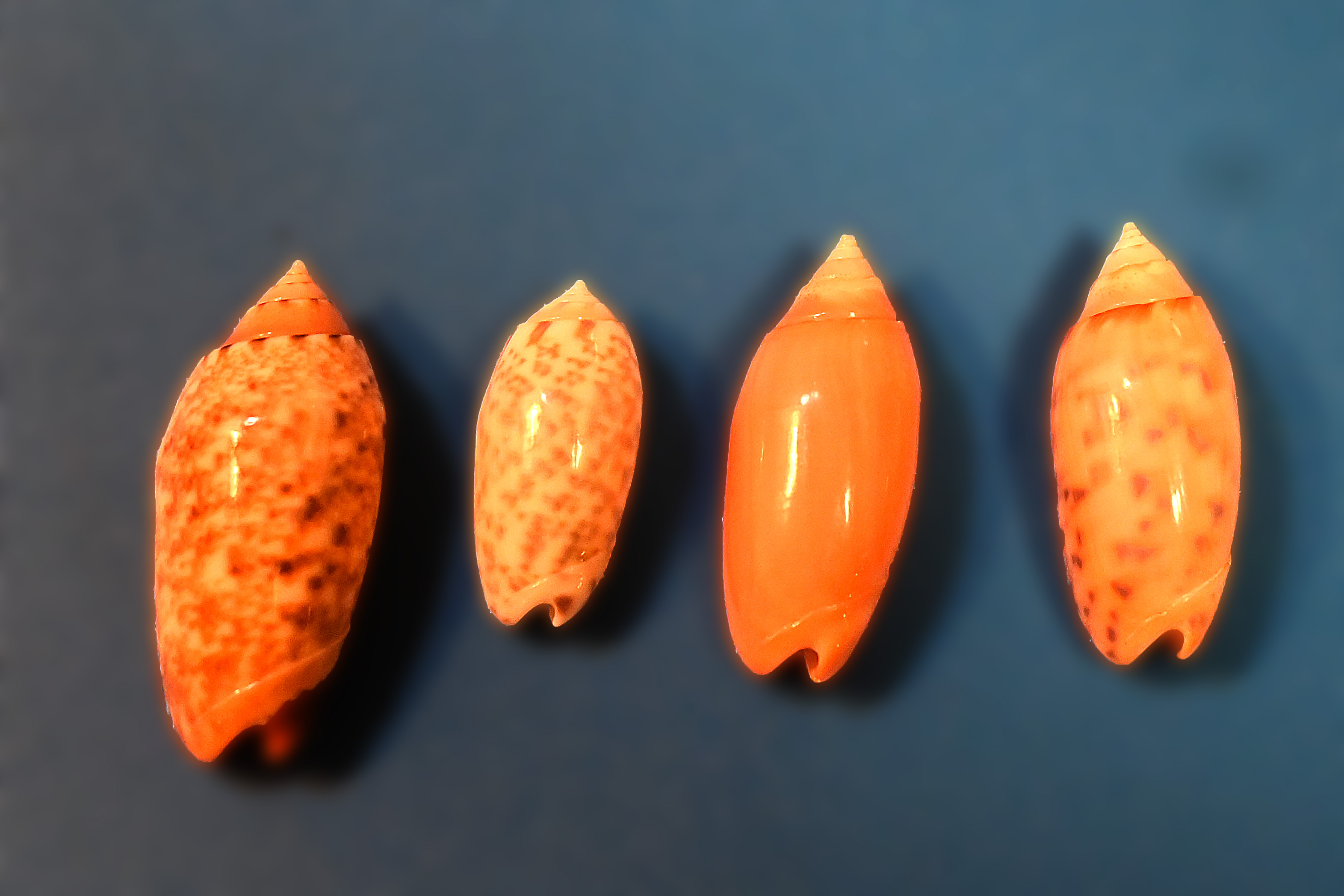
Oliva annulata Gmelin, 1791. 5 meter by diver, Sulu Island Philippines
Oliva mantichora Duclos, 1840. 15 meters by dive, Olango Island, Philippines
Oliva annulata amesthyna Rpding 179. 8’ in sanNego Bay, Okinawa
Oliva annulita carnicolor Dautzenberg 1927, 20 meters in samd. Sulu Archipelago, Philippines
The olives are attractie glossy shells and easy for us to collect. They are commonly found burrowed in the sand just outside of sand bars that are often exposed at low tide with just their siphon exposed. They leave behind them a trail that is easy to spot. They are gregarious and like to hang out together. They are scavengers who will share a meal. If you find one you should find a half dozen near by.
Oliva annulata Gmelin, 1791 is known as the Amethyst Olive due to the purple triangular markings that cover this colorful shell. There are numerous named varieties or forms that make it fun to collect.
Oliva annulata Gmelin, 1791 is cursed. Its name is a nomen duben which makes it a dubious name and therefor invalid.
At the moment Oliva amesthyna Rpding 1798 is the accepted name leaving collectors with a new propel, This the name of a variety or form leaving original type without a name.
Oliva mantichora Duclos, 1840 has been elevated to a full species as it should be. The black bars on the columned and shoulder are constant and distinguishes it from the others in the group.
Oliva carnicolor Dautzenberg 1927 should be a full species too. This solid flesh color form is found in entire populations rather than individual specimens mixed in with other forms.
Eventually the scientists will work our the names but don’t let their confusion spoil your collecting.
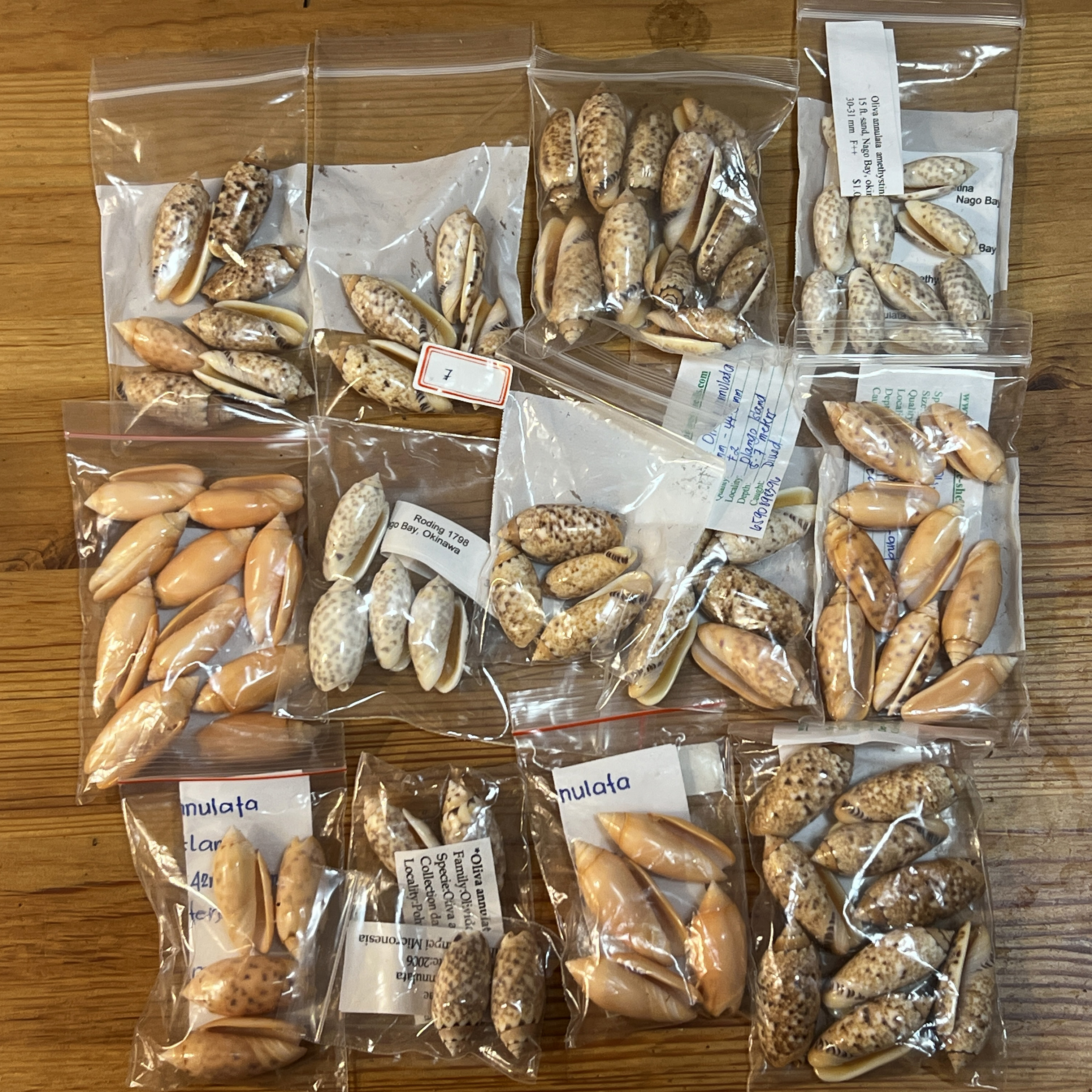
The photo below is of my collection of Amethyst Olivesfrom which these specimens were selected. The are Pacific Ocean shells found mostly in the Philippines. They range from Okinawa south to Indonesia and to the east to the Marshal Islands. .
 Broward Shell Club
You must be logged in to post a comment.